Mosses are among the most fascinating and ancient plant groups on Earth. Despite its small size, the moss life cycle is incredibly complex and plays a vital role in ecosystems worldwide. Found in forests, rocks, soil, and even urban environments, moss thrives in moist and shaded areas, contributing to biodiversity and environmental balance.
Unlike flowering plants, moss reproduces via spores rather than seeds, giving it a unique life cycle. Understanding how moss grows, reproduces, and survives helps us appreciate its ecological importance.
🔎 Quick Answers (Most Common Questions)
1. What is the life cycle of moss?
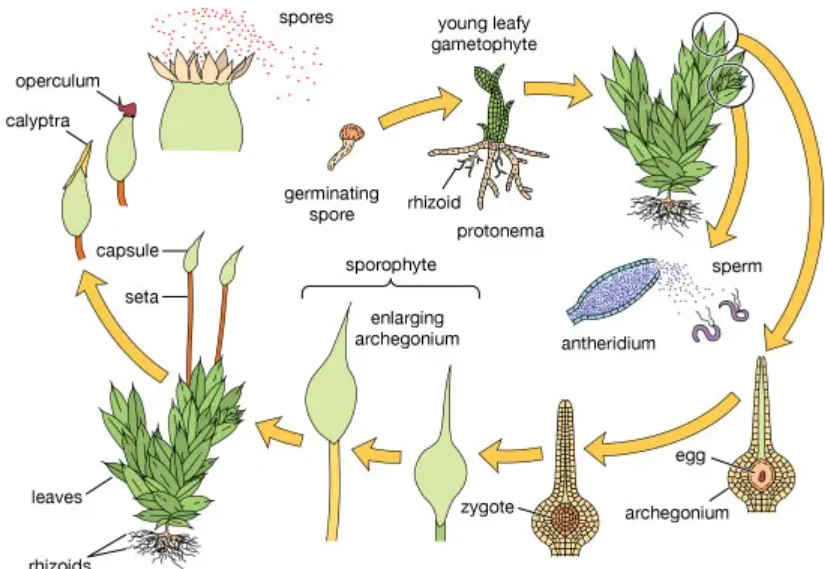
The moss life cycle alternates between two stages: the gametophyte (the green plant) and the sporophyte (the spore-producing structure).
2. Does moss need water to reproduce?
Yes, moss requires water for fertilization because sperm must swim to reach the egg.
3. Where does moss grow best?
Moss grows best in damp, shaded environments such as forests, rocks, and moist soil.
Quick Life Cycle Table
| Stage | Description | Key Feature |
| Spore | A tiny reproductive cell is released into the air | Dispersal stage |
| Protonema | Early thread-like growth | First visible stage |
| Gametophyte | Mature green moss plant | Produces sex organs |
| Fertilization | Sperm meets egg in water | Requires moisture |
| Sporophyte | A capsule grows on a stalk | Produces spores |
| Spore Release | The wind spreads spores | Cycle repeats |
The History Of Their Scientific Naming
The scientific naming of moss has evolved over centuries as botanists studied plant classification more deeply.
- Moss belongs to the division Bryophyta, derived from Greek words “bryon” (moss) and “phyton” (plant).
- Early botanists, such as Carl Linnaeus, grouped mosses with algae and fungi because of their simple structure.
- Later, scientists recognized mosses as a distinct plant group due to their unique reproductive systems.
- Moss species are named using binomial nomenclature (genus and species), ensuring global consistency.
- Advances in DNA research have refined classification, distinguishing mosses from liverworts and hornworts.
Today, mosses are recognized as among the earliest land plants, providing insight into plant evolution.
Their Evolution And Their Origin
Mosses are among the oldest land plants, dating back over 450 million years. They evolved from aquatic green algae, gradually adapting to life on land.
Unlike vascular plants, mosses lack specialized tissues for transporting water. Instead, it relies on direct absorption through its surface. This adaptation enabled moss to survive in early terrestrial environments characterized by harsh conditions.
Moss evolution played a critical role in shaping Earth’s ecosystems. As they spread across land, they helped break down rocks into soil, paving the way for larger plants—their ability to retain moisture created microhabitats for other organisms.
Fossil records show that moss-like plants existed during the Paleozoic era. Over time, they developed the unique alternation of generations life cycle, which remains unchanged today.
Even now, moss continues to thrive in diverse environments—from rainforests to deserts—demonstrating its resilience and evolutionary success.
Important Things That You Need To Know
When discussing moss, many people confuse it with sea moss. While both share the name “moss,” they are very different organisms.
🌊 Understanding Sea Moss and Its Benefits
Sea moss is actually a type of red algae, not a land plant like moss. It grows in ocean waters and is widely used as a superfood.
- Sea moss gel is made by soaking and blending dried sea moss.
- It is rich in minerals like iodine, calcium, and magnesium.
- Many people consume it for its health benefits.
⭐ Key Benefits
- Sea moss benefits include improved digestion and immune support.
- Sea moss gel benefits may help with skin health and energy levels.
- True sea moss (Irish moss) is considered the most nutrient-rich variety.
❓ What is sea moss good for?
It is commonly used for:
- Boosting immunity
- Supporting thyroid health
- Improving skin and hair
Although both moss and sea moss are beneficial, they belong to entirely different biological groups.
Their Main Food and Its Collection Process
Moss does not “eat” food like animals. Instead, it produces its own food through photosynthesis.
🌱 How Moss Gets Its Food
- Moss absorbs sunlight using chlorophyll.
- It takes in carbon dioxide from the air.
- Water is absorbed directly through its leaves.
⚙️ Food Production Process
- Sunlight hits moss leaves.
- Chlorophyll captures light energy.
- Water and carbon dioxide combine.
- Glucose is produced as food.
💧 Nutrient Collection
- Moss absorbs nutrients from rainwater.
- Minerals are collected from the surrounding surfaces.
- It can survive in nutrient-poor environments.
This simple yet effective system allows moss to grow in places where other plants cannot survive.
Their Life Cycle and Ability to Survive in Nature
🌿 Alternation of Generations
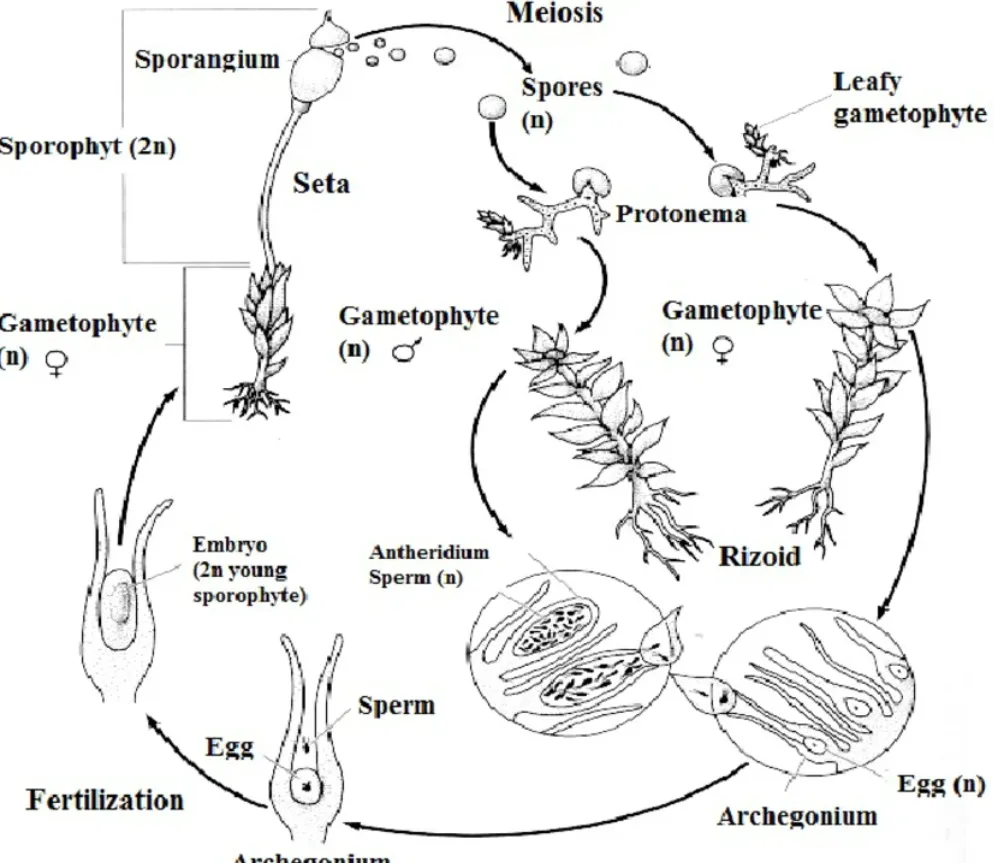
Moss life cycle includes two main stages:
- Gametophyte stage (dominant, green plant)
- Sporophyte stage (spore-producing structure)
💧 Dependence on Water
Moss requires water for reproduction. This limits it to moist environments but also gives it a survival advantage in such areas.
🌍 Survival Strategies
- Can survive drying out (desiccation tolerance)
- Quickly absorbs water when available
- Grows in harsh environments like rocks
🌱 Growth Process
- Spore lands on a moist surface
- Develops into protonema
- Forms a mature gametophyte
- Produces reproductive organs
Moss’s ability to withstand extreme conditions makes it one of the most resilient plants.
Their Reproductive Process and Raising Their Children
Moss reproduction is unique and fascinating.
🌸 Reproduction Steps
- Male organs (antheridia) produce sperm
- Female organs (archegonia) produce eggs
- Water allows sperm to swim to the egg
- Fertilization forms a zygote
🌱 Development
- The zygote grows into a sporophyte
- Capsule produces spores
- Spores are released into the environment
👶 Raising “Children.”
- Moss does not care for offspring like animals
- Spores grow independently
- Favorable conditions ensure survival
This process ensures moss can spread widely across different environments.
Importance of Them in This Ecosystem
🌍 Soil Formation
Moss helps break down rocks into soil, supporting plant growth.
💧 Water Retention
It acts like a sponge, holding water and preventing soil erosion.
🌱 Habitat Provider
Moss creates microhabitats for insects and microorganisms.
🌬️ Air Quality
It absorbs pollutants and improves air quality.
🌳 Forest Health
Moss plays a key role in maintaining forest ecosystems.
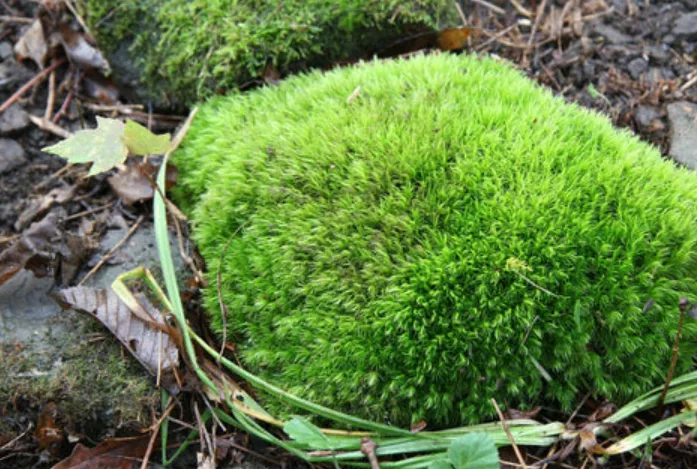
What to Do to Protect Them in Nature and Save the System for the Future
- Avoid destroying moss habitats
- Reduce pollution and chemical use
- Protect forests and wetlands
- Promote sustainable gardening
- Avoid over-harvesting moss
- Support conservation programs
- Educate others about the importance of moss
- Maintain moisture-rich environments
Frequently Asked Questions (FAQs)
1. How long does the moss life cycle take?
It varies but typically takes several weeks to months, depending on conditions.
2. Can moss grow without soil?
Yes, moss can grow on rocks, trees, and other surfaces.
3. Why is moss important?
It helps retain moisture, supports ecosystems, and improves soil.
4. Does moss need sunlight?
Yes, but it prefers indirect or low light.
5. Is moss a plant or algae?
Moss is a non-vascular plant.
6. How do moss spores spread?
They are carried by wind or water.
7. Can moss survive drought?
Yes, moss can dry out and revive when water returns.
8. Is moss harmful to other plants?
No, moss is generally harmless and beneficial.
Conclusion
The moss life cycle is a remarkable example of nature’s simplicity and resilience. From tiny spores to lush green carpets, moss demonstrates how even the smallest organisms can play a significant role in the ecosystem.
Its unique reproduction, ability to survive extreme conditions, and contribution to environmental health make moss an essential part of our planet. Understanding moss not only deepens our appreciation for biodiversity but also highlights the importance of preserving natural habitats.
Also Read: monarch life cycle