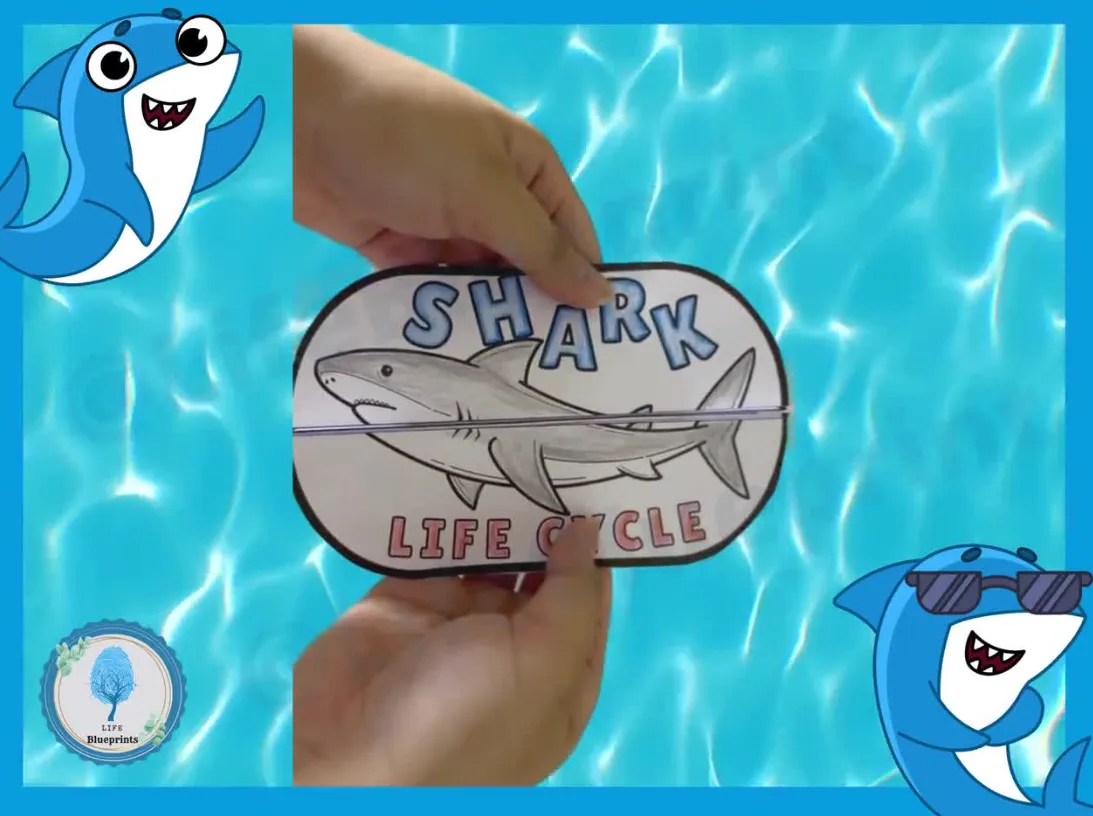
The life cycle of the shark is one of the most fascinating topics in marine biology because sharks are ancient, diverse, and highly adapted ocean predators. A shark is a cartilaginous fish, meaning its skeleton is made mostly of cartilage rather than bone. Sharks belong to the class Chondrichthyes and are closely related to rays and skates. Today, scientists recognize more than 500 shark species, ranging from tiny deep-sea sharks to the enormous whale shark, the largest living fish.
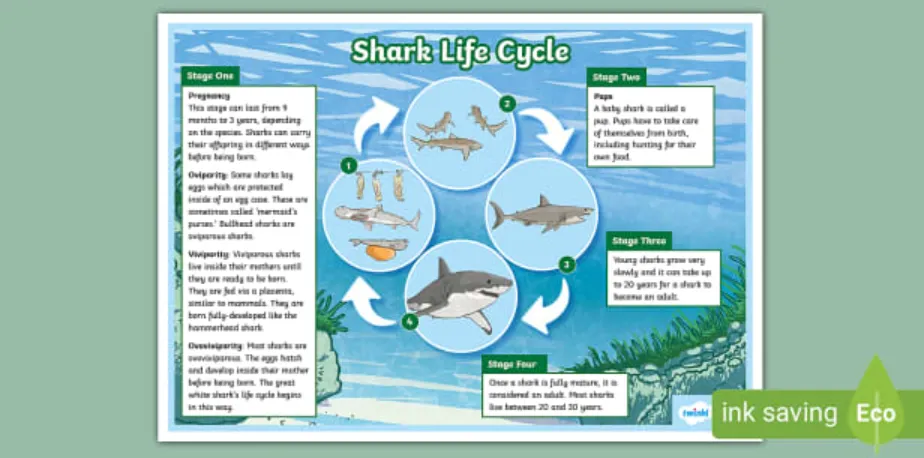
The life cycle of sharks usually includes four main stages: embryo, pup, juvenile, and adult. However, the timing of each stage varies greatly by species. A great white shark may live 70 years or more, while the Greenland shark may live for several centuries. This slow growth and late maturity make many sharks vulnerable to overfishing and habitat damage.
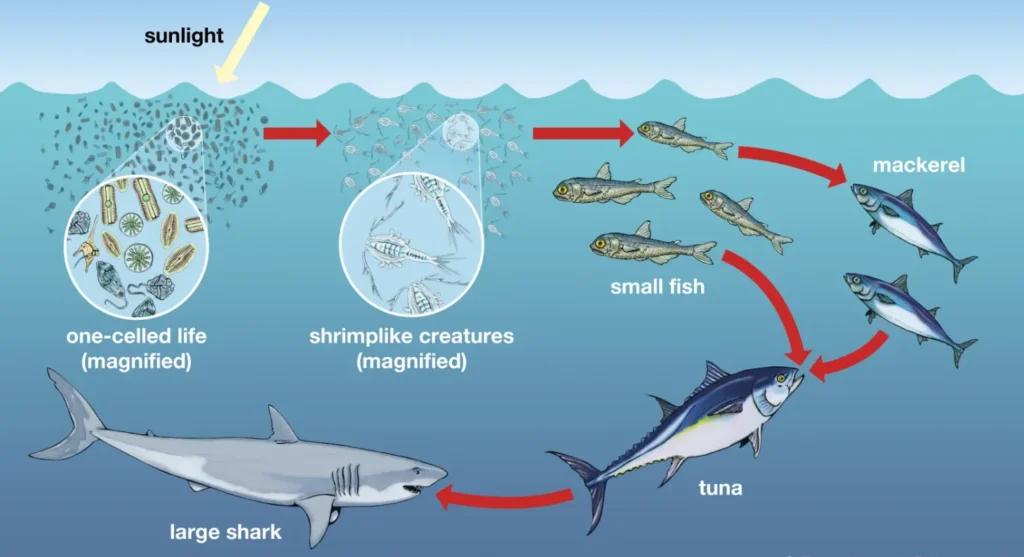
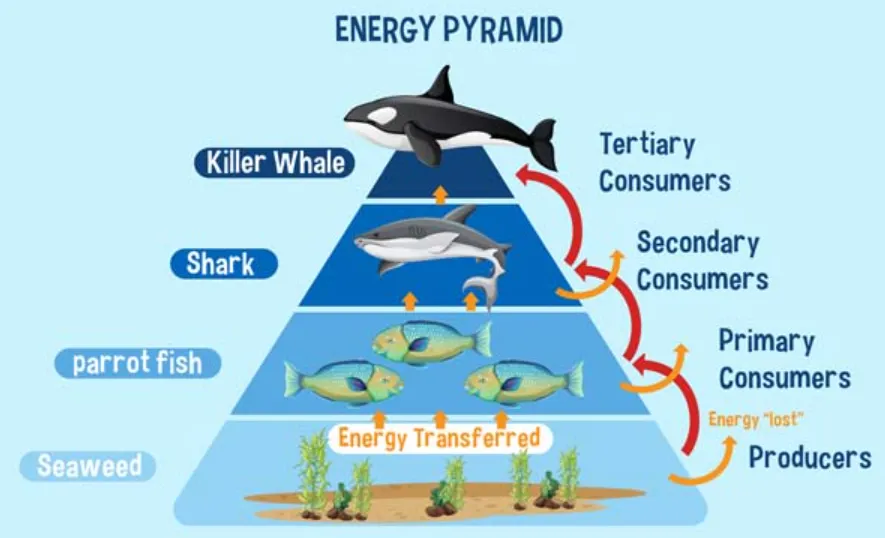
Sharks are important because they help regulate marine food webs. As predators and scavengers, they remove weak or sick animals, control prey populations, and help maintain healthier ocean ecosystems.
Q: What are the main stages in the life cycle of the shark?
A: The main stages are embryo, pup, juvenile, and adult.
Q: Do sharks lay eggs or give birth?
A: Some sharks lay eggs, while others give birth to live young. It depends on the shark species.
Q: How long can sharks live?
A: Many sharks live for decades. Some, like the Greenland shark, may live for at least 250 years and possibly more than 500.
Quick Life Cycle Table
| Shark Life Stage | What Happens | Simple Example |
| Embryo | The shark develops inside an egg case or inside the mother’s body. | Egg-laying sharks develop in protective egg cases. |
| Pup | A baby shark is born or hatches. It must survive on its own. | A baby great white shark is about 4 feet long at birth. |
| Juvenile | The young shark grows, learns to hunt, and avoids larger predators. | Many juveniles stay in safer nursery areas. |
| Adult | The shark reaches maturity, hunts efficiently, migrates, and reproduces. | Adult sharks help balance ocean food chains. |
The History of Their Scientific Naming, Evolution, and Origin
Scientific Naming of Sharks
The word “shark” is a general term, not a specific species name. Sharks include hundreds of species, each with its own scientific name. For example, the great white shark is called Carcharodon carcharias, and the whale shark is called Rhincodon typus.
Scientific names help researchers avoid confusion because common names can vary by country or language. A name like “white shark” may be understood locally, but Carcharodon carcharias identifies the same species globally.
Evolutionary Origin
Sharks are among Earth’s oldest surviving vertebrate groups. Their ancestors appeared hundreds of millions of years ago, long before humans and even before many modern land animals. Their survival depends on efficient body design, keen senses, replaceable teeth, and flexible cartilage skeletons.
Ancient Marine Adaptation
Modern sharks evolved into many forms. Some became fast open-ocean hunters, some adapted to coral reefs, and others moved into deep, cold waters. The whale shark evolved into a giant filter feeder, while the great white shark evolved into a powerful predator. This variety shows how successful sharks have been in different marine environments.
Their Reproductive Process, Giving Birth And Rising Their Children
Mating and Internal Fertilization
Sharks reproduce through internal fertilization. Male sharks have reproductive organs called claspers that transfer sperm to the female. This makes shark reproduction different from that of many bony fish, which release eggs and sperm into open water.
Because sharks invest more energy into fewer offspring, they usually produce stronger and more developed young than many fish species.
Egg-Laying Sharks
Some sharks are oviparous, meaning they lay eggs. These eggs are often enclosed in tough protective cases, sometimes called “mermaid’s purses.” The embryo develops inside the egg until it is ready to hatch.
This method is common in some smaller bottom-dwelling sharks.
Live-Bearing Sharks
Many sharks give birth to live young. In some species, embryos develop inside the mother without a placenta-like structure. In others, embryos receive nourishment through a placenta-like connection.
Live birth gives shark pups a better chance of survival because they are usually larger and more active when born.
No Parental Care After Birth
Most sharks do not raise their young after birth or hatching. A shark pup is independent from the beginning. It must swim, hide, hunt, and avoid predators on its own.
This is why nursery habitats are very important. Shallow coastal waters, mangroves, reefs, and protected bays can give young sharks a safer place to grow.
Stages of the Life Cycle of the Shark
Stage 1: Embryo
The first stage of the shark’s life cycle begins as an embryo. Depending on the species, the embryo may develop either inside an egg case, outside the mother’s body, or inside the mother’s body.
During this stage, the embryo forms key shark features, including fins, gills, jaws, teeth, and sensory organs. Sharks are born with strong survival tools, including their senses of smell and movement detection, and hunting instincts.
Stage 2: Pup
A baby shark is called a pup. Shark pups are not helpless like many mammal babies. They are usually born ready to swim and survive.
For example, a newborn great white shark is already about 4 feet long. This size gives it an advantage, but young sharks still face danger from larger fish, bigger sharks, and changing coastal habitats.
Stage 3: Juvenile
The juvenile stage is a long period of growth. Young sharks improve their hunting skills, expand their range of movement, and grow larger.
Many species use nursery grounds during this stage. These areas help reduce predator risk and provide food. However, juvenile sharks are vulnerable to coastal fishing, pollution, and habitat destruction.
Stage 4: Adult
Adult sharks are mature enough to reproduce. They may migrate long distances, defend feeding areas, and become top predators in their ecosystem.
This adult stage is especially important because many sharks mature slowly. When adult sharks are removed from the ocean faster than they can reproduce, populations decline quickly and recover slowly.
Their main diet, food sources, and collection process are explained
The diet of a shark depends strongly on its species, size, age, and habitat. Not every shark eats the same food. Some are active hunters, some are scavengers, and some are filter feeders.
Main Shark Food Sources
- Small fish: Many sharks eat sardines, herrings, mackerel, reef fish, and other schooling fish.
- Squid and octopus: Fast-swimming sharks often feed on cephalopods.
- Crustaceans: Smaller sharks may eat crabs, shrimp, and lobsters.
- Marine mammals: Larger predators such as the great white shark may feed on seals and sea lions.
- Plankton: The whale shark feeds mainly on plankton, small fish, and tiny marine organisms by filtering water through its mouth.
How Sharks Collect Food
Sharks use powerful senses to locate prey. Their olfactory receptors are extremely sensitive, and they can detect movement and electrical signals in water.
A hunting shark may follow vibrations, use stealth, and strike quickly. Filter-feeding sharks, such as whale sharks, swim with their mouths open to collect plankton-rich water.
Sharks also help clean the ocean by eating weak, injured, or dead animals, reducing disease spread and keeping food webs healthier.
Important Things That You Need To Know
When people search for the life cycle of the shark, they may also see many related terms online. Some are directly related to marine biology, while others are related to entertainment or product searches.
The word shark can refer to the real ocean animal, but it can also appear in brand names, movies, songs, and household products. For example, “shark vacuum” and “shark flexstyle” are product-related search terms, not biological shark topics. They do not describe shark reproduction, diet, lifespan, or evolution.
The whale shark is one of the most important LSI keywords for this topic because it is the largest living fish and an excellent example of shark diversity. Unlike the image many people have of a fierce hunter, the whale shark is a gentle filter feeder.
The great white shark is another important term because it is one of the best-known large predatory sharks. It helps people understand shark growth, live birth, long lifespan, and apex predator behavior.
Terms like ‘baby shark‘ may bring entertainment results, but in biology, a baby shark is correctly called a pup. Similarly, Shark Tale refers to a movie title, not to the scientific life cycle of sharks.
So, for learning purposes, focus on real biological terms such as shark, whale shark, great white shark, baby shark pup, and shark life stages.
How Long Does A Shark Live
The lifespan of a shark varies greatly between species. Some smaller sharks may live only a few decades, while large, slow-growing species can live far longer.
- Species matters most: There is no single lifespan for all sharks. A reef shark, a great white shark, a whale shark, and a Greenland shark all age differently.
- Great white sharks are long-lived: NOAA reports that they can live 70 years or more. This long lifespan means they grow slowly and need time to replace population losses.
- Greenland sharks are extreme survivors: they are among the longest-living vertebrates known. NOAA states scientists estimate it lives at least 250 years and may live over 500 years.
- Whale shark lifespan is still being studied: the whale shark may live for many decades, but exact lifespan estimates vary because it is difficult to age such a large, migratory fish accurately. The Florida Museum notes estimates of up to 60 years, while other research suggests some individuals may live longer.
- Slow maturity increases risk: Long-lived sharks often mature late. This means they cannot quickly replace individuals lost to fishing, bycatch, or habitat damage.
- Captivity does not always mean longer life: Many large sharks do poorly in captivity because they need huge swimming ranges, natural prey patterns, and stable ocean-like conditions.
- Healthy habitats support longer life: Sharks live longer when they have clean water, enough prey, safe nursery areas, and lower fishing pressure.
- Human threats reduce natural lifespan: Bycatch, finning, illegal fishing, boat strikes, plastic pollution, and habitat loss can kill sharks before they reach adulthood.
In simple words, the answer to “How long does a shark live?” is: many sharks live for decades, some live more than 70 years, and a few species may live for centuries.
Life Cycle of the Shark Lifespan in the Wild vs. in Captivity
Shark Lifespan in the Wild
In the wild, sharks can follow their natural life cycle. They migrate, hunt, breed, use nursery habitats, and respond to seasonal changes.
Wild sharks are more likely to reach their natural lifespan when ecosystems are healthy. However, they also face predators when young, food competition, parasites, disease, and human pressures.
Large species like the great white shark may live 70 years or more in the wild, while the Greenland shark may live for centuries in cold deep waters.
Shark Lifespan in Captivity
Captivity is complicated for sharks. Some small shark species can live successfully in public aquariums when conditions are carefully managed.
However, many large, migratory sharks do not adapt well to tanks. They need huge spaces, long-distance movement, natural feeding behavior, and complex ocean conditions.
Main Difference
In the wild, sharks face natural dangers and human threats. In captivity, they may avoid fishing threats but can suffer from stress, limited space, diet changes, and unnatural behavior.
For most large shark species, protecting wild habitats is better than keeping them in tanks.
Importance of the Life Cycle of the Shark in this Ecosystem
Sharks Balance Marine Food Webs
Sharks are important predators in marine ecosystems. By feeding on fish, squid, seals, rays, and other smaller animals, they help maintain population balance.
Without sharks, some prey species may increase to the point of disrupting the food chain.
Sharks Remove Weak and Sick Animals
Many sharks feed on weak, injured, or dead animals. This helps reduce disease spread and supports a cleaner marine environment.
This role makes sharks both predators and natural cleaners of the ocean.
Sharks Support Habitat Health
Shark behavior can influence how prey animals move and feed. This can indirectly protect habitats such as coral reefs and seagrass beds.
WWF explains that sharks can help maintain ecosystem balance and climate resilience, including indirectly protecting carbon-storing habitats such as seagrass meadows.
Sharks Support Ecotourism
In many coastal areas, shark diving and responsible wildlife tourism create income for local communities. Living sharks can be worth more to coastal economies than dead sharks sold in the wildlife trade.
What to do to protect them in nature and save the system for the future
1. Reduce Overfishing
- Support science-based fishing limits.
- Stop illegal shark fishing.
- Protect slow-growing species from unsustainable harvest.
- Use better monitoring for shark catches.
Overfishing is one of the biggest threats to sharks, rays, and chimaeras worldwide.
2. Prevent Bycatch
- Use shark-safe fishing gear.
- Release accidentally caught sharks quickly.
- Train fishers in safe handling methods.
- Improve tracking of bycatch numbers.
3. Protect Nursery Habitats
- Conserve mangroves, estuaries, coral reefs, and shallow coastal waters.
- Limit coastal pollution.
- Prevent destructive development in shark nursery zones.
4. Reduce Demand for Shark Products
- Avoid shark fin, shark meat, and unsustainable shark-derived products.
- Support traceable seafood.
- Choose restaurants and brands that follow responsible sourcing.
5. Support Marine Protected Areas
- Create protected zones in important feeding, breeding, and migration areas.
- Enforce protection rules properly.
- Include local communities in conservation planning.
Healthy sharks need healthy oceans, and protecting sharks also protects fisheries, reefs, seagrass beds, and coastal livelihoods.
Fun & Interesting Facts About the Life Cycle of the Shark
- Sharks are older than dinosaurs: Shark ancestors existed long before dinosaurs appeared.
- A baby shark is called a pup: In biology, the correct term for a baby shark is pup.
- Sharks do not have bones: their skeletons are mostly cartilage.
- The whale shark is the largest fish. It can reach enormous sizes and feeds mainly by filtering small organisms from the water.
- Some sharks lay eggs: Egg-laying sharks produce tough egg cases that protect embryos.
- Some sharks give live birth: Many species give birth to fully formed pups.
- Great white sharks live a long time: A great white shark may live 70 years or more.
- Greenland sharks may live for centuries: They are among the longest-living vertebrates known.
- Sharks replace teeth: Many sharks continuously replace lost or damaged teeth throughout life.
- Not all sharks are dangerous to humans: Most shark species are not a major threat to people, and many avoid humans.
Frequently Asked Questions (FAQs)
Q: What is the life cycle of the shark?
A: The life cycle of the shark usually includes four stages: embryo, pup, juvenile, and adult. The exact timing depends on the shark species.
Q: Do sharks give birth or lay eggs?
A: Both are possible. Some sharks lay eggs, while others give birth to live pups. Shark reproduction varies widely among species.
Q: What is a baby shark called?
A: A baby shark is called a pup. Shark pups are usually independent from birth or hatching.
Q: How long does a shark live?
A: Many sharks live for decades. Great white sharks may live 70 years or more, while Greenland sharks may live for several centuries.
Q: What does a shark eat?
A: Sharks may eat fish, squid, crabs, rays, seals, plankton, or dead animals, depending on the species. The whale shark is a filter feeder, while the great white shark is a large predator.
Conclusion
The life cycle of the shark is a powerful example of survival, adaptation, and ecological balance. From embryo to pup, juvenile, and adult, sharks pass through stages that prepare them for life in some of the world’s most challenging marine environments.
Sharks are not just predators; they are essential regulators of the ocean. They help control prey populations, remove weak animals, support healthier habitats, and maintain food-web balance. Yet their slow growth, late maturity, and low reproductive rate make them vulnerable to Overfishing, bycatch, pollution, and habitat loss.
Understanding the shark’s life cycle helps people see why shark conservation matters. Protecting sharks means protecting coral reefs, seagrass beds, fisheries, coastal economies, and the future health of the ocean itself.
Also Read: life cycle of a great white shark