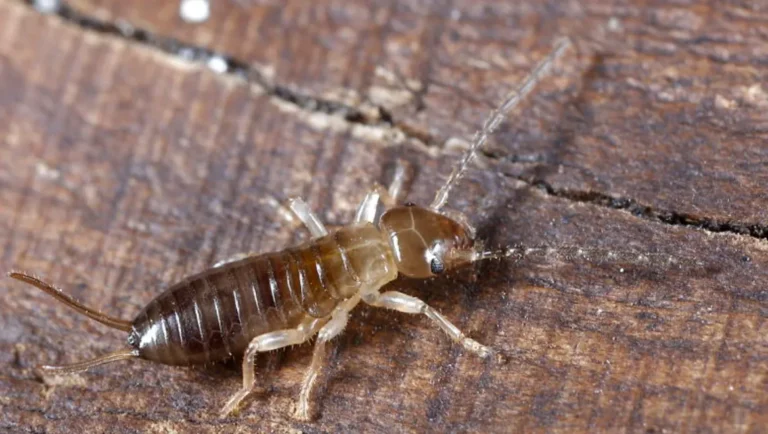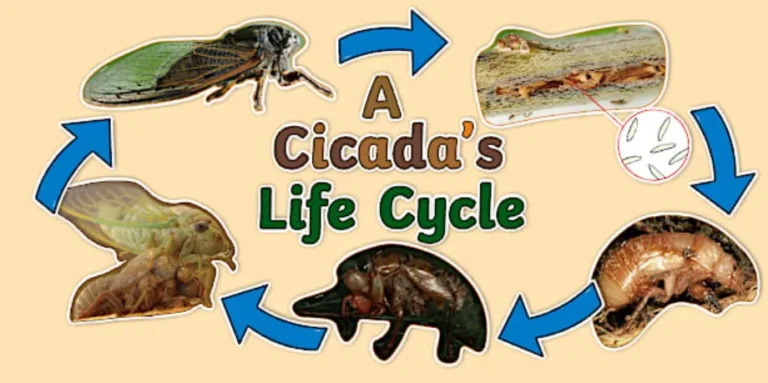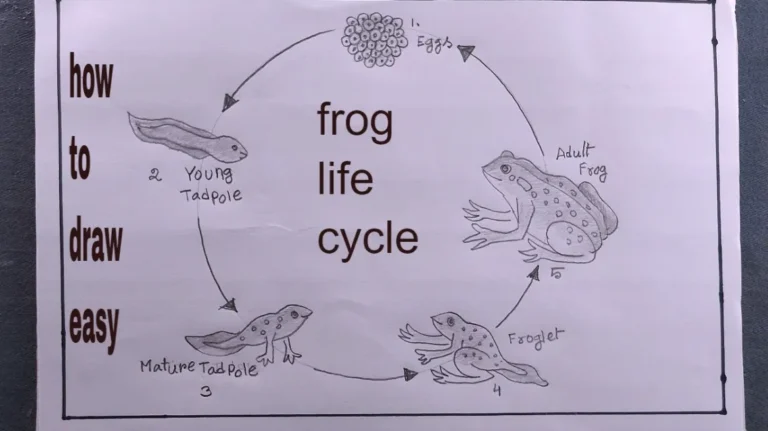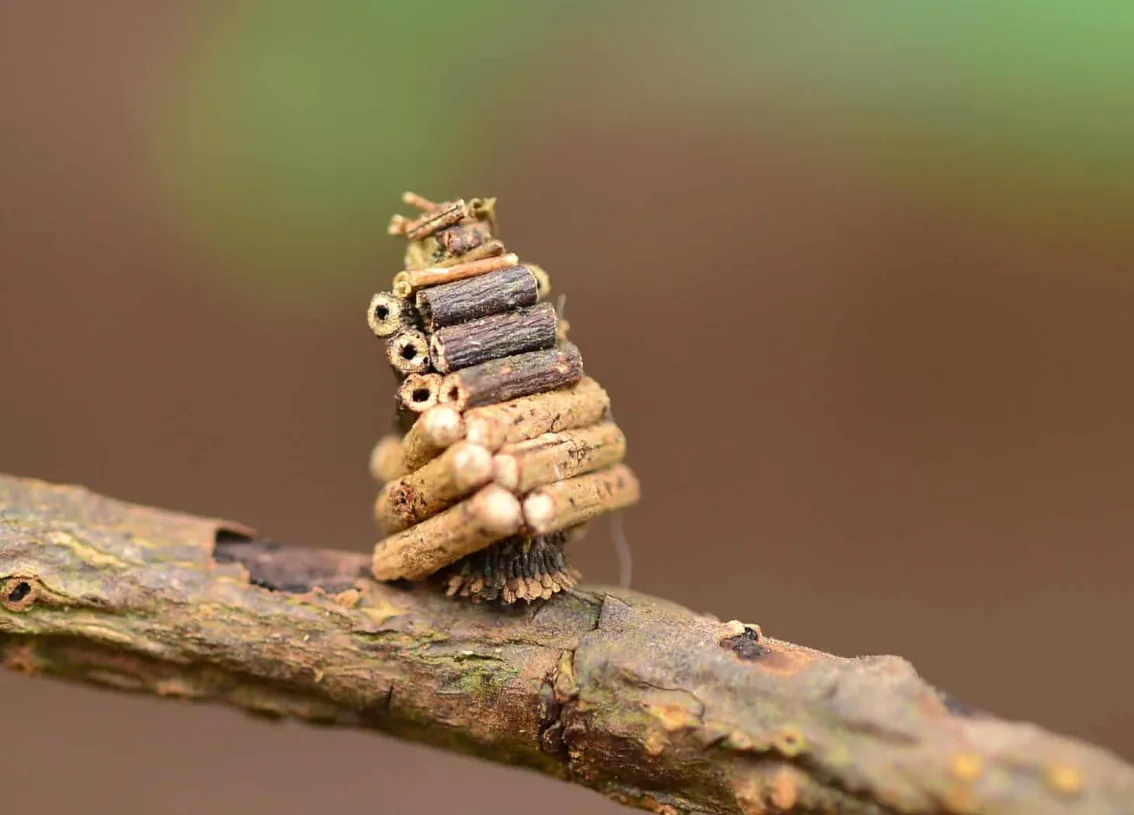
The bagworm moth life cycle is among the most unusual in the moth world because the insect spends most of its active life hidden inside a portable protective case, often called a “bag.” These insects belong to the moth family Psychidae, commonly known as bagworm moths, case moths, or case-bearing caterpillars. Their famous bag is made from silk and covered with tiny plant materials such as leaves, bark, needles, or twigs. This helps the bagworm moth caterpillar blend into its surroundings while feeding and growing.
The most familiar outdoor species in North America is the evergreen bagworm moth or Thyridopteryx ephemeraeformis. It commonly feeds on juniper, arborvitae, cedar, cypress, pine, spruce, and several deciduous trees. In many regions, it has one generation per year: eggs overwinter in the old female bag, larvae hatch in spring, caterpillars feed through summer, pupate in late summer, and adults emerge mainly for mating.
Q: What are the four stages of the bagworm moth life cycle?
A: The four stages are egg, larva, pupa, and adult moth.
Q: Why does a bagworm moth caterpillar carry a bag?
A: The bag protects the caterpillar from predators, weather, and drying out. It also provides camouflage.
Q: Is the plaster bagworm moth the same as the evergreen bagworm moth?
A: No. The plaster bagworm moth is usually an indoor case-bearing moth, while the evergreen bagworm moth is an outdoor plant-feeding species. The household casebearer can complete its egg-to-adult cycle in about 62–86 days, averaging around 74.2 days under reported conditions.
Quick Life Cycle Table
| Stage | What Happens | Common Timeframe | Key Detail |
| Egg | Eggs remain inside the old female bag or pupal case | Winter to spring for many outdoor species | A female may produce hundreds of eggs in some species |
| Larva | Caterpillar hatches, feeds, and builds a silk bag | Spring to late summer | This is the most damaging feeding stage |
| Pupa | Mature larva attaches the bag and transforms inside | About 2–3 weeks in many outdoor bagworms | The bag becomes a pupal shelter |
| Adult | Male moth flies to find a female; the female often remains in the bag | Late summer to fall | The adult stage mainly exists for reproduction |
The History of Their Scientific Naming, Evolution, and Origin
Scientific Family: Psychidae
Bagworm moths belong to the family Psychidae, a group of moths known for larvae that build protective cases. The name is linked to their case-bearing habit, which distinguishes them from many other moth families. Instead of living exposed on leaves, the larvae create a mobile shelter and enlarge it as they grow.
The Evergreen Bagworm Name
The common outdoor species Thyridopteryx ephemeraeformis is often called the evergreen bagworm moth because it frequently attacks evergreen plants such as arborvitae, juniper, cedar, and cypress. The scientific name helps separate it from indoor case-bearing species such as the plaster bagworm moth.
Evolution of the Bag-Building Habit
The bag-building habit is an evolutionary survival strategy. The larva uses silk and local materials to create camouflage. A bagworm feeding on cedar may decorate its bag with cedar fragments, while one feeding on broadleaf plants may use leaf pieces. This makes each bag look slightly different.
Origin and Distribution
Bagworm moths occur in many parts of the world, but species vary by region. In North America, evergreen bagworm moth populations are especially known from landscapes, nurseries, forests, and ornamental plantings. Their local buildup can become serious because many species’ females cannot fly.
Their Reproductive Process, Giving Birth And Rising Their Children
Mating Behavior
The reproductive process of the bagworm moth is unusual because males and females often look completely different. In the evergreen bagworm, the male becomes a dark, winged moth, while the adult female remains wingless and caterpillar-like inside her old bag—the female releases pheromones to attract males.
Egg Laying Inside the Bag
After mating, the female lays eggs inside the old pupal case or bag. This bag becomes a natural egg chamber. In several outdoor bagworm species, eggs remain protected through winter and hatch when temperatures and seasonal conditions become favorable in spring.
No Parental Care After Egg Laying
Bagworm moths do not raise their young like mammals or birds. The female’s role ends after reproduction. The eggs remain inside the bag, and once they hatch, the tiny larvae crawl out and begin building their own individual protective cases.
Young Larvae Dispersal
Newly hatched larvae may stay on the same host plant if food is available. Some also disperse by “ballooning,” where they release silk and are carried by the wind to nearby plants. This helps them spread, but it also means infestations can gradually expand through a landscape.
Stages of Bagworm Moth Life Cycle
1. Egg Stage
The egg stage begins after the female mates and deposits eggs inside her bag or old pupal case. For the evergreen bagworm moth, eggs are usually laid in late summer or fall and remain protected through winter. This is why old hanging bags should not be ignored; they may contain the next generation. Extension sources report that female bagworms can produce several hundred eggs, depending on species and conditions.
2. Larva Stage
The larval stage is the most visible and important. The newly hatched bagworm moth caterpillar begins feeding almost immediately and constructs a small silk case. As it grows, it adds plant fragments to the outside of the bag. On evergreen plants, the bag may look like a tiny pinecone or cluster of dried needles.
This stage causes the most plant damage because larvae consume foliage. If many larvae feed on the same shrub or tree, leaves or needles can turn brown, and severe defoliation may occur.
3. Pupa Stage
When mature, the caterpillar securely attaches its bag to a twig or branch with strong silk. It then seals itself inside and enters the pupal stage. During this stage, the larva transforms into an adult form. Many outdoor bagworms pupate in late summer, typically in August or September, depending on the climate and region.
4. Adult Moth Stage
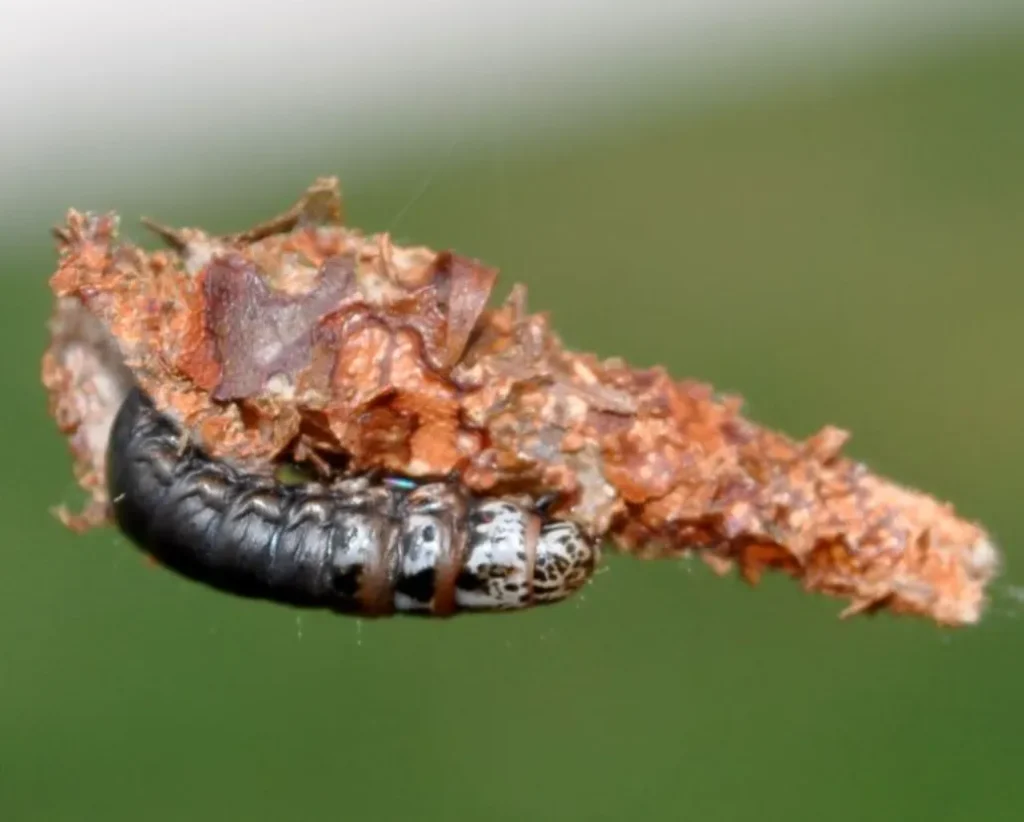
The adult stage is short and focused on reproduction. Male moths emerge with wings and fly to locate females. Female evergreen bagworms are wingless and usually remain inside the bag. Adult males have reduced feeding ability and live only long enough to mate. After mating, the female produces eggs, and the cycle begins again.
Their main diet, food sources, and collection process are explained
The diet of a bagworm moth caterpillar depends on the species and habitat. Outdoor bagworms mainly feed on plant foliage, while indoor case-bearing moths such as the plaster bagworm moth feed on materials such as spider webs, lint, hair, dead insects, and natural fibers in humid indoor spaces.
Main Outdoor Food Sources
Outdoor evergreen bagworm moth larvae commonly feed on:
- Arborvitae
- Juniper
- Cedar
- Cypress
- Pine
- Spruce
- Maple
- Oak
- Sycamore
- Other ornamental shrubs and trees
They scrape and chew foliage, often starting with the tender outer parts. Small larvae may cause light browning, but mature larvae can remove more foliage and create visible damage.
Food Collection Process
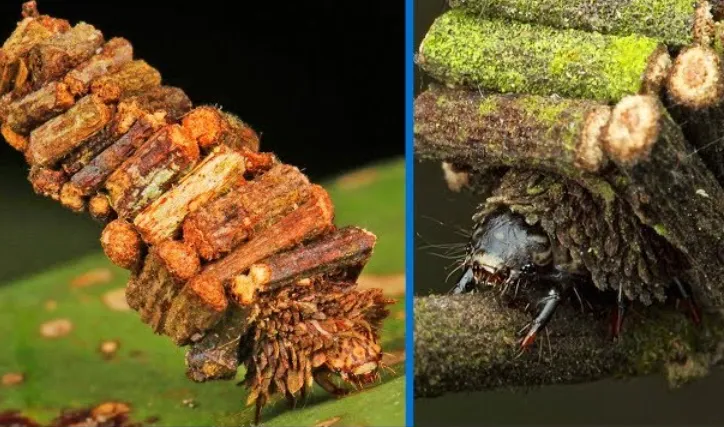
The caterpillar does not collect food in the way ants or bees collect resources. Instead, it carries its bag with it and feeds directly from leaves, needles, or plant surfaces. Its head and front body extend from the opening of the bag while the rest of the body remains protected.
As the caterpillar feeds, it also collects tiny pieces of plant material to strengthen and camouflage the bag. This is why the bag often matches the host plant. A bagworm on cedar may look woody and needle-covered, while one on a broadleaf plant may look leafy and rough.
Important Things That You Need To Know
The bagworm moth life cycle is often misunderstood because people confuse it with that of other case-bearing insects. The outdoor bagworm moth that damages trees is not always the same as the indoor plaster bagworm moth seen on walls, ceilings, closets, or humid corners. Outdoor species usually feed on living plants, while the indoor household casebearer is associated with lint, spider webs, dead insects, and natural fibers.
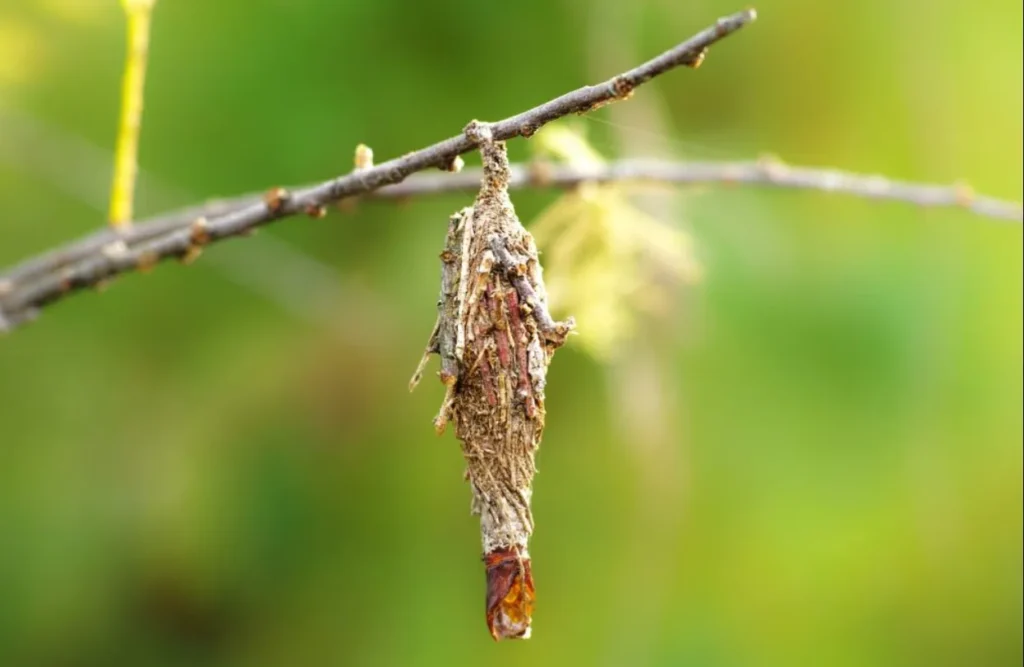
A bagworm moth caterpillar’s house is not a real house; it is a silk case covered with environmental materials. This case works as armor, camouflage, and a pupation chamber. When people search for “bagworm moth caterpillar house,” they usually mean the portable bag that hangs from plants or moves along walls.
The evergreen bagworm moth is especially important for gardeners because it can damage arborvitae, juniper, cedar, and other ornamental evergreens. Hand-picking bags may control small infestations during winter or early spring. Still, large infestations require careful timing, as young larvae are easier to manage than older ones, which are protected inside large bags.
In warm, humid regions such as Florida, people may also notice bagworm moths, which are often found in indoor plaster. The Florida household casebearer, Phereoeca uterella, can complete its life cycle much faster than the outdoor evergreen bagworm under favorable indoor conditions.
How Long Does A Bagworm Moth Live
The lifespan of a bagworm moth depends on the species, climate, food availability, and whether we are referring to the full life cycle or only the adult stage.
- Full life cycle of the outdoor evergreen bagworm moth:
- In many temperate regions, the evergreen bagworm moth completes one generation per year. Eggs overwinter, larvae hatch in spring, caterpillars grow through summer, pupation occurs in late summer, and adults emerge for mating.
- Egg stage duration:
- Outdoor bagworm eggs may remain inside the old female bag for several months through winter. This long egg stage is one reason infestations return the next year if old bags are left on plants.
- Larval stage duration:
- The larval stage may last most of the growing season. In central Maryland, eggs hatch around May, and larvae complete growth by August or early September.
- Pupal stage duration:
- Pupation commonly takes about 2–3 weeks for many outdoor bagworms. Texas A&M notes that after a roughly three-week pupal period, adult moths emerge.
- Adult male lifespan:
- Adult males live a short time because their main purpose is to find a female and mate. They do not have a long feeding period.
- Adult female lifespan:
- The adult female is usually wingless and remains inside or near the bag. After mating and egg production, she dies.
- Plaster bagworm moth life cycle:
- The plaster bagworm moth, or household casebearer, can complete development from egg to adult in about 62–86 days, with an average of 74.2 days reported.
- Main survival stage:
- For outdoor bagworms, the egg stage is the main overwintering stage, while the larval stage is the main feeding and growth stage.
Bagworm Moth Lifespan in the Wild vs. in Captivity
Lifespan in the Wild
In the wild, the bagworm moth life cycle is controlled by weather, predators, host plants, and season. The outdoor evergreen bagworm moth usually follows a yearly cycle. Eggs survive winter inside the old bag, larvae hatch in spring, feed during summer, pupate in late summer, and reproduce in late summer or fall.
Wild bagworms face many risks. Birds, parasitic wasps, spiders, and harsh weather can reduce survival. However, the protective bag gives the caterpillar a significant advantage by hiding it from many predators.
Lifespan in Captivity
In captivity or indoor conditions, lifespan depends on the species. Indoor plaster bagworm moths may develop faster when humidity, food, and temperature are favorable. The household casebearer has been reported to complete its egg-to-adult cycle in about 74.2 days on average, though timing can vary.
Captivity does not always mean a longer life. If food, moisture, or proper surfaces are missing, larvae may fail to develop. For observation purposes, they need suitable food sources and a safe place to attach their cases.
Importance of the Bagworm Moth Life Cycle in this Ecosystem
Part of the Food Web
Bagworm moths are part of the natural food web. Their eggs, larvae, pupae, and adults can become food for birds, spiders, predatory insects, and parasitoid wasps. Even when they damage plants, they still play a biological role as prey.
Natural Plant Population Pressure
By feeding on leaves and needles, bagworms can influence plant growth. In natural ecosystems, this may help cycle plant material and create small feeding gaps. However, in ornamental landscapes, the same feeding behavior can become a serious problem when populations increase.
Camouflage and Adaptation Example
The bagworm case is a remarkable example of insect adaptation. It shows how an insect can use silk and local materials to survive. The life cycle teaches important lessons about camouflage, metamorphosis, and insect-plant relationships.
Indicator of Landscape Balance
A few bagworms may be normal. Large infestations, however, may suggest stressed plants, a lack of natural enemies, or repeated survival of overwintering egg bags. Monitoring their life cycle helps gardeners understand when intervention is necessary.
What to do to protect them in nature and save the system for the future
Protect Natural Habitat
- Maintain mixed plantings rather than relying on a single type of evergreen.
- Diverse landscapes support predators and reduce the risk of a single pest dominating.
- Avoid removing all wild vegetation unless it is invasive or diseased.
Avoid Unnecessary Chemical Use
- Do not spray pesticides without confirming the pest and life stage.
- Young larvae are more vulnerable, while mature bagworms inside strong bags are harder to control.
- Overuse of broad-spectrum pesticides can harm beneficial insects.
Encourage Natural Enemies
- Support birds, parasitoid wasps, spiders, and predatory insects.
- Plant flowering native plants to provide nectar and shelter for beneficial insects.
- Avoid destroying every small insect habitat in gardens.
Monitor Instead of Panic
- Inspect evergreens in winter and early spring for old bags.
- Remove heavy infestations by hand when practical.
- Learn to identify the difference between outdoor bagworm moth cases and indoor plaster bagworm moth cases.
Keep Indoor Spaces Clean and Dry
- To prevent plaster bagworm moths, reduce indoor humidity.
- Remove spider webs, lint, pet hair, and dead insects.
- Vacuum closets, wall corners, baseboards, and storage areas regularly.
Fun & Interesting Facts About Bagworm Moth Life Cycle
- Bagworm moth caterpillars build their own portable cases using silk and natural materials.
- The bag often matches the plant the caterpillar feeds on, making it difficult to notice.
- Female evergreen bagworm moths are wingless and may never leave their bags.
- Male bagworm moths can fly, but their adult life is short and focused mainly on mating.
- The old bag can contain eggs, which means a dead-looking bag on a tree may still hold the next generation.
- Young larvae can spread by releasing silk and floating on the wind, a behavior called ballooning.
- A plaster bagworm moth case indoors may look like a tiny, gray, seed- or rice-shaped pouch stuck to a wall.
- Bagworm moths go through complete metamorphosis: egg, larva, pupa, and adult.
- The larval stage is the most important stage for feeding, plant damage, and bag building.
- In many outdoor species, there is only one generation per year, but indoor species may develop faster under favorable conditions.
Frequently Asked Questions (FAQs)
Q: What is the bagworm moth life cycle?
A: The bagworm moth life cycle includes four stages: egg, larva, pupa, and adult moth. In many outdoor species, eggs overwinter, larvae hatch in spring, caterpillars feed through summer, pupae form in late summer, and adults emerge to mate.
Q: What does a bagworm moth caterpillar eat?
A: Outdoor bagworm moth caterpillars eat leaves and needles from plants such as arborvitae, juniper, cedar, cypress, pine, spruce, and some deciduous trees. Indoor plaster bagworm moth larvae may feed on lint, spider webs, dead insects, hair, and natural fibers.
Q: Are bagworm moths harmful to humans?
A: Bagworm moths are not dangerous to humans. They do not bite or sting people. The main concern is plant damage outdoors or a nuisance presence indoors.
Q: How do I identify an evergreen bagworm moth?
A: The evergreen bagworm moth is usually noticed by its hanging bag on evergreen plants. The bag may look like a small pinecone or bundle of twigs. Adult males are dark-winged moths, while females remain wingless inside the bag.
Q: How long does a plaster bagworm moth live?
A: The plaster bagworm moth life cycle can average around 74.2 days from egg to adult under reported conditions, with a range of about 62–86 days.
Conclusion
The bagworm moth life cycle is a fascinating example of insect survival, camouflage, and complete metamorphosis. From hidden eggs inside an old bag to the active bagworm moth caterpillar feeding and building its portable case, each stage has a clear purpose. The larval stage is the longest and most noticeable because it creates the protective bag and causes most plant damage. The pupal stage transforms the insect, while the adult stage focuses almost entirely on reproduction.
Understanding the difference between the outdoor evergreen bagworm moth and the indoor plaster bagworm moth helps homeowners, gardeners, and nature lovers respond correctly. Bagworms are not simply pests; they are part of the ecosystem, food web, and natural balance. With careful monitoring, clean indoor habits, plant diversity, and responsible pest management, people can reduce damage while still respecting the role of these unique moths in nature.
Also Read: what is the full life cycle of mozzarella