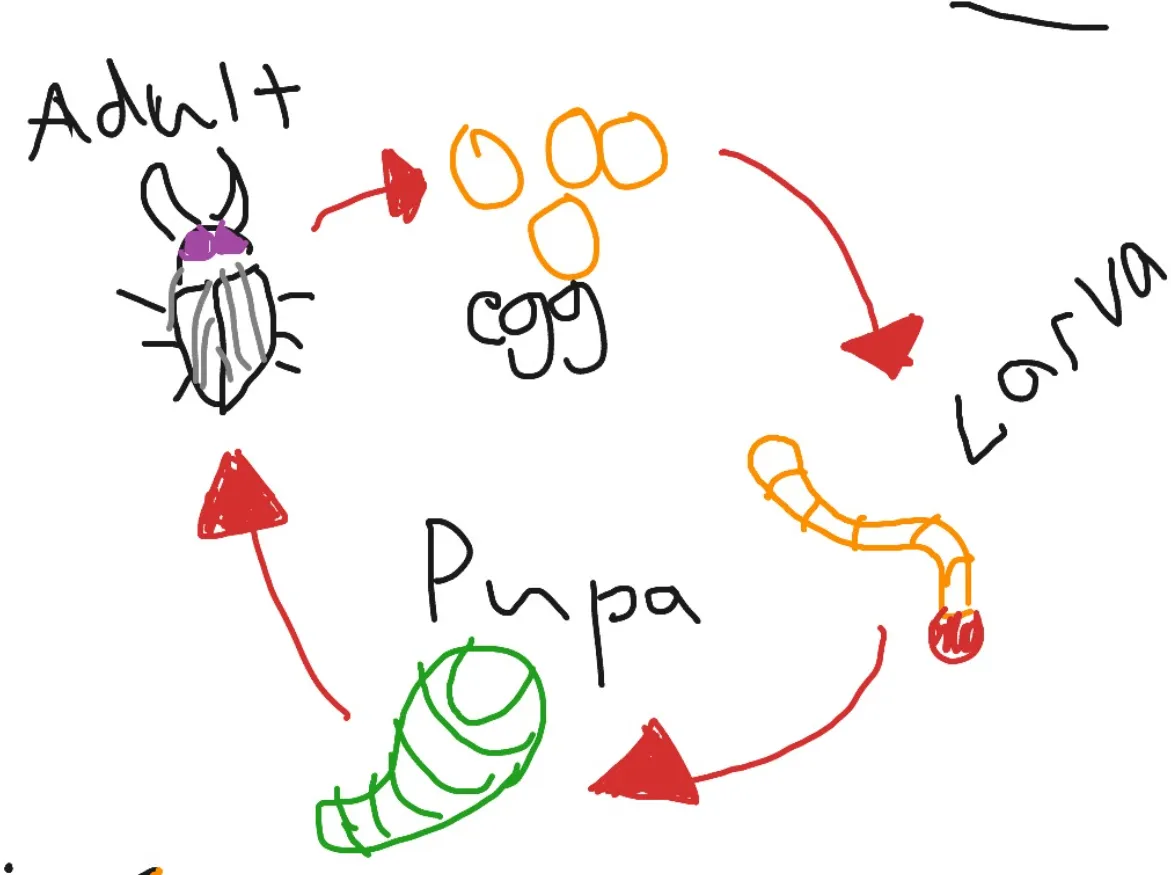
The darkling beetle’s life cycle is a fascinating journey that showcases nature’s efficiency and adaptability. These beetles, belonging to the family Tenebrionidae, are found worldwide, especially in dry and desert environments. From tiny eggs to larvae (commonly known as mealworms) to adult beetles, their life stages play a vital role in ecosystems.
Darkling beetles are not just ordinary insects—they contribute to decomposition, soil health, and even serve as food for other animals. Their ability to survive harsh environments makes them an important species in ecological balance.
Quick Answers (Most Common Questions)
- What is the life cycle of a darkling beetle?
- It consists of four stages: egg → larva (mealworm) → pupa → adult beetle.
- How long do darkling beetles live?
- Their lifespan ranges from 3 to 12 months, depending on species and environment.
- Do darkling beetles bite humans?
- A darkling beetle bite is extremely rare and harmless—they are not aggressive.
Quick Life Cycle Table
| Stage | Duration | Description |
| Egg | 1–2 weeks | Tiny white eggs are laid in soil or organic matter |
| Larva (Mealworm) | 8–12 weeks | Active feeding stage, grows rapidly |
| Pupa | 1–3 weeks | Transformation stage, no feeding |
| Adult Beetle | 2–6 months | Reproduction and survival stage |
The History Of Their Scientific Naming
The scientific classification of darkling beetles is rooted in centuries of entomological research.
- The family name Tenebrionidae comes from the Latin word tenebrio, meaning “darkness,” reflecting their dark-colored bodies.
- First formally described by early naturalists in the 18th century, these beetles were grouped based on physical traits such as hardened wings and nocturnal behavior.
- Carl Linnaeus, the father of taxonomy, played a role in classifying early beetle species, although the family was later expanded significantly.
- Over time, scientists identified over 20,000 species, making Tenebrionidae one of the largest beetle families.
- Their names also reflect ecological roles—many species are associated with dry, dark habitats, such as deserts or under logs.
Today, their scientific naming continues to evolve with genetic research, helping scientists better understand their diversity and evolutionary relationships.
Their Evolution And Their Origin
Darkling beetles have a long evolutionary history that dates back millions of years. Fossil evidence suggests that their ancestors existed during the Mesozoic era, adapting to changing climates and environments.
These beetles evolved primarily in arid and semi-arid regions, which explains their remarkable ability to survive with minimal water. Their thick exoskeleton helps reduce moisture loss, a key adaptation for desert survival.
Over time, different species of darkling beetles diversified across continents. Some adapted to forest environments, while others remained in deserts. Their evolution was influenced by:
- Climate changes
- Availability of organic material
- Predator-prey relationships
One of the most interesting evolutionary traits is their ability to harvest moisture from the air. Certain desert species can collect fog on their bodies and channel it toward their mouths.
Their origin is closely tied to decomposition ecosystems. As scavengers, they evolved to feed on decaying plant and animal matter, making them essential recyclers in nature.
Today, darkling beetles are found worldwide, showcasing their adaptability and evolutionary success.
Their Main Food and Its Collection Process
Darkling beetles are primarily scavengers that feed on decaying organic material.
Main Food Sources
- Dead plants and leaves
- Animal remains
- Fungi
- Stored grains (in some species)
Collection Process
- They use strong mandibles to break down organic matter.
- Their antennae help detect food sources, even in darkness.
- Larvae (darkling beetle larvae) are especially active feeders, consuming large amounts to grow quickly.
- Adults often feed at night to avoid predators and conserve moisture.
Their feeding habits make them highly beneficial for ecosystems. By breaking down organic material, they help recycle nutrients back into the soil.
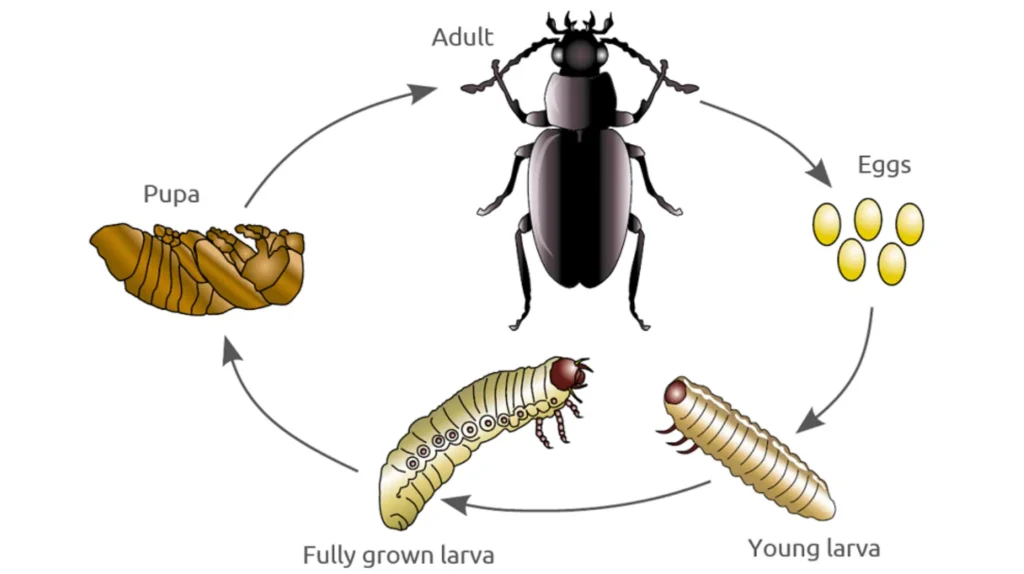
Their Life Cycle and Ability to Survive in Nature
Egg Stage
Female darkling beetles lay hundreds of eggs in soil or in hidden areas. These eggs are protected from predators and environmental stress.
Larval Stage (Mealworms)
This is the longest stage. The larvae actively feed and grow, shedding their skin multiple times.
Pupal Stage
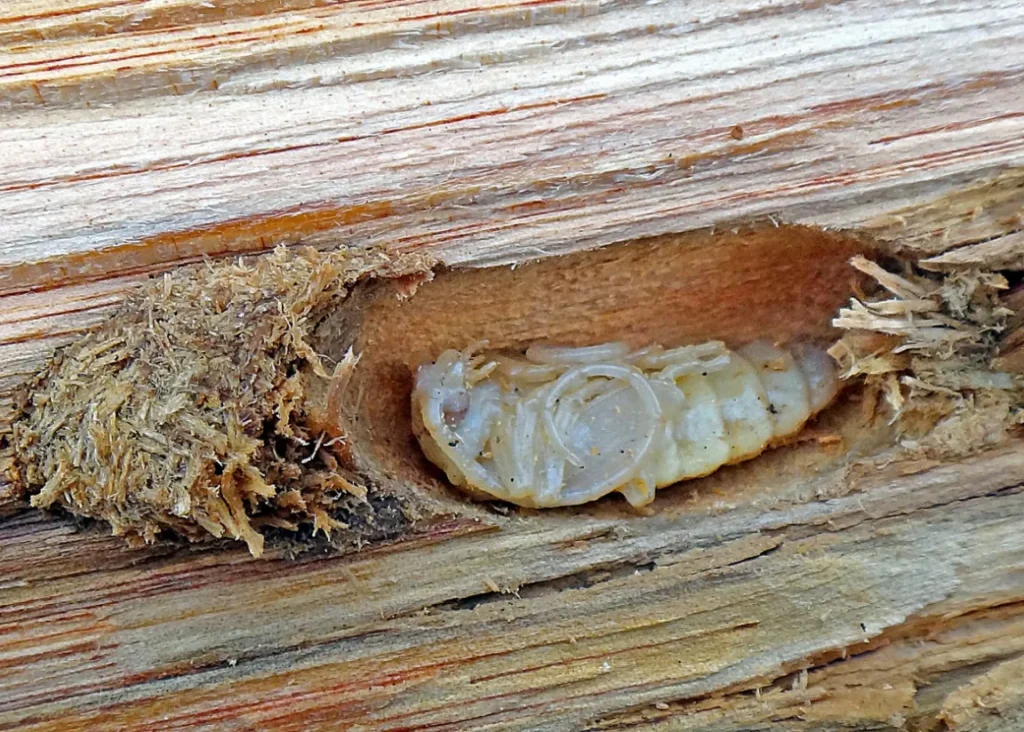
The larva transforms into a pupa. During this stage, it does not eat and remains hidden.
Adult Stage
The adult beetle emerges fully developed. It focuses on reproduction and survival.
Survival Abilities
- Can live in dry environments
- Nocturnal behavior reduces water loss
- Hard exoskeleton protects against predators
- Ability to store energy during the larval stage
These traits make darkling beetles incredibly resilient.
Their Reproductive Process and Raising Their Children
Darkling beetles have a simple but effective reproductive system.
- Mating usually occurs shortly after adulthood.
- Females lay hundreds of eggs in safe, hidden locations.
- Eggs hatch within 1–2 weeks.
- There is no parental care—larvae must survive independently.
- Larvae grow rapidly by consuming organic material.
- Pupation occurs after several molts.
- Adults emerge ready to repeat the cycle.
Despite the lack of parental care, the species’ high reproductive rate ensures its survival.
Importance of Them in this Ecosystem
Nutrient Recycling
Darkling beetles break down organic matter, returning nutrients to the soil.
Food Chain Role
They serve as food for birds, reptiles, and small mammals.
Soil Health
Their burrowing helps aerate soil and improve its structure.
Waste Reduction
They help clean up dead plants and animals, reducing waste in ecosystems.
These roles make them essential for maintaining ecological balance.
Important Things That You Need To Know
Darkling beetles are often misunderstood, so here are some key facts:
The darkling beetle is harmless and beneficial, not a pest in most cases. Their larvae, known as darkling beetle larvae, are commonly used as feed for reptiles and birds.
A darkling beetle bite is extremely rare and not dangerous. They prefer to avoid humans.
You might find a darkling beetle in the house, especially in stored grains or dry areas. This usually indicates a nearby food source.
Their darkling beetle lifespan varies, typically ranging from a few months to a year.
In terms of darkling beetle size, they are usually between 1 and 2.5 cm long, depending on species.
These beetles are more helpful than harmful and play a crucial role in nature.
What to Do to Protect Them in Nature and Save the System for the Future
- Avoid using harmful pesticides in natural areas
- Preserve natural habitats like forests and deserts
- Reduce pollution that affects soil quality
- Support sustainable farming practices
- Encourage composting to provide food sources
- Educate others about their ecological importance
- Protect biodiversity to maintain balanced ecosystems
- Avoid unnecessary killing of insects
By protecting darkling beetles, we help maintain the health of entire ecosystems.
Frequently Asked Questions (FAQs)
- What do darkling beetles eat?
- They eat decaying organic matter, including plants and dead animals.
- Are darkling beetles harmful?
- No, they are generally harmless and beneficial.
- How long is the darkling beetle’s life cycle?
- It typically lasts 3–6 months from egg to adult.
- Can darkling beetles fly?
- Most species cannot fly because their wings are fused.
- Where are darkling beetles found?
- They are found worldwide, especially in dry environments.
- Do darkling beetles need water?
- They get most of their moisture from food.
- Why are they called darkling beetles?
- Because of their dark color and nocturnal behavior.
- Can they survive indoors?
- Yes, especially if food sources like grains are available.
Conclusion
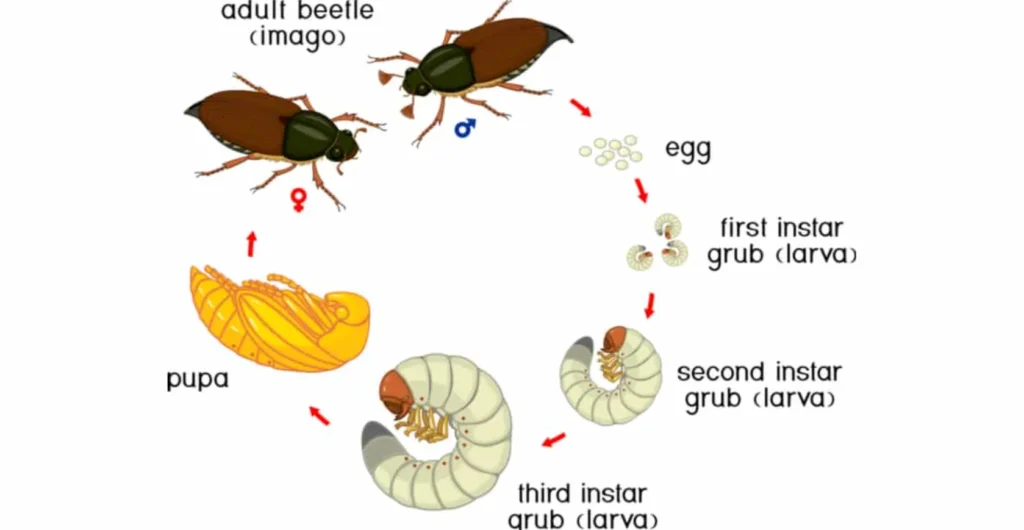
The darkling beetle life cycle is a perfect example of nature’s efficiency and resilience. From eggs to larvae, pupae, and adults, each stage plays a vital role in their survival and ecological contribution.
These beetles are more than just insects—they are essential recyclers, soil enhancers, and key players in the food chain. Their ability to adapt to harsh environments highlights their evolutionary success.
Understanding their life cycle and importance helps us appreciate their role in maintaining ecological balance. By protecting them and their habitats, we contribute to a healthier and more sustainable environment.
Also Read: life mosquito cycle