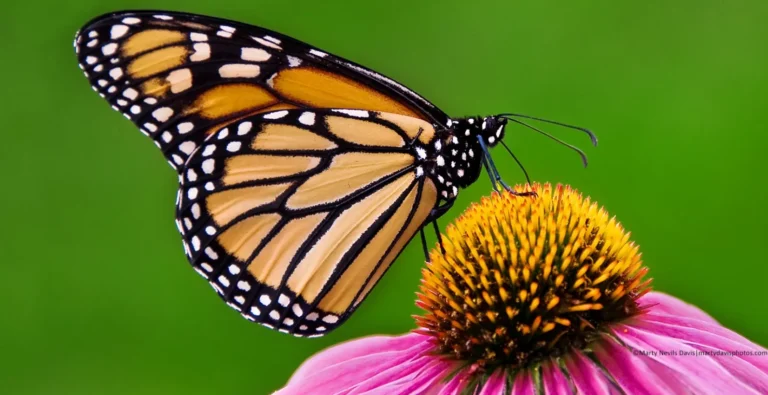
The life cycle of a monarch butterfly is one of the most fascinating natural transformations in the world. From a tiny egg to a vibrant orange-and-black winged insect, monarchs represent resilience, adaptation, and the beauty of evolution. These delicate creatures are not just visually stunning—they play a crucial role in ecosystems across North America and beyond.
Monarch butterflies are well known for their incredible migration patterns, covering thousands of miles each year. But behind this remarkable journey lies a complex and delicate life cycle that ensures their survival. Understanding their growth stages helps us appreciate their importance and highlights the urgent need for conservation in 2026, as monarch populations continue to face environmental threats.
In recent years, climate change, habitat loss, and pesticide use have significantly impacted monarch populations. As a result, scientists and conservationists are focusing more on educating people about their life cycle and ecological value. By learning how monarchs grow, reproduce, and survive, we can help preserve their future.
This article explores everything you need to know about monarch butterflies—from their origin and scientific classification to their life cycle, reproduction, and ecological significance. It also provides actionable steps to protect them and answers frequently asked questions to deepen your understanding.
Their Evolution And Their Origin
Monarch butterflies (Danaus plexippus) have a rich evolutionary history that dates back millions of years. Their origin is believed to be in North America, where they adapted to various climates and ecosystems over time.
Evolutionary Background
Monarch butterflies belong to the family Nymphalidae, commonly known as brush-footed butterflies. Their evolution is closely linked to the development of milkweed plants, which serve as their primary host plant.
Milkweed contains toxic compounds called cardenolides. Over time, monarch caterpillars evolved the ability to consume these toxins without harm. This adaptation not only allowed them to survive but also made them toxic to predators.
Co-evolution with Milkweed
One of the most remarkable aspects of monarch evolution is its co-evolution with milkweed plants. As milkweed developed chemical defenses, monarchs evolved resistance mechanisms. This relationship is a perfect example of natural selection.
Migration Evolution
Monarch butterflies are unique among insects due to their long-distance migration. Scientists believe this behavior evolved as a survival strategy to escape harsh winters.
Over generations, monarchs developed navigation abilities using the sun and Earth’s magnetic field. This evolutionary trait ensures their survival across seasons.
Geographical Origin
Although monarchs are most commonly found in North America, they have spread to other parts of the world, including:
- South America
- Australia
- New Zealand
- Parts of Europe
Their adaptability has allowed them to thrive in diverse environments.
Modern Evolution Challenges (2026)
In 2026, monarch butterflies face rapid environmental changes. Urbanization, deforestation, and climate shifts are influencing their evolutionary path. Scientists are observing behavioral adaptations, such as altered migration timing and new breeding locations.
Understanding their origin and evolution helps us appreciate their resilience and highlights why conservation efforts are essential today.
The History Of Their Scientific Naming
The scientific naming of monarch butterflies reflects centuries of biological research and classification. Here’s a breakdown:
- Scientific Name: Danaus plexippus
- This name was first assigned by Carl Linnaeus in 1758, the father of modern taxonomy.
- Genus – Danaus
- The genus name “Danaus” is derived from Greek mythology, referring to Danaus, a mythical king. It symbolizes nobility and strength.
- Species – plexippus
- The term “plexippus” also has Greek origins, meaning “one who urges on horses,” suggesting movement or migration.
- Family Classification
- Monarch butterflies belong to the family Nymphalidae, which includes many colorful, large-winged butterflies.
- Order – Lepidoptera
- This order includes all butterflies and moths, characterized by scaled wings.
- Taxonomic Importance
- Scientific naming helps researchers worldwide communicate about species clearly and without confusion.
- Modern Scientific Studies (2026)
- Recent genetic research has revealed variations within monarch populations. Scientists are studying these differences to understand migration patterns and resilience.
- Why It Matters
- Proper classification enables conservationists to track population changes and implement effective protection strategies.
Their Life Cycle and Ability to Survive in Nature
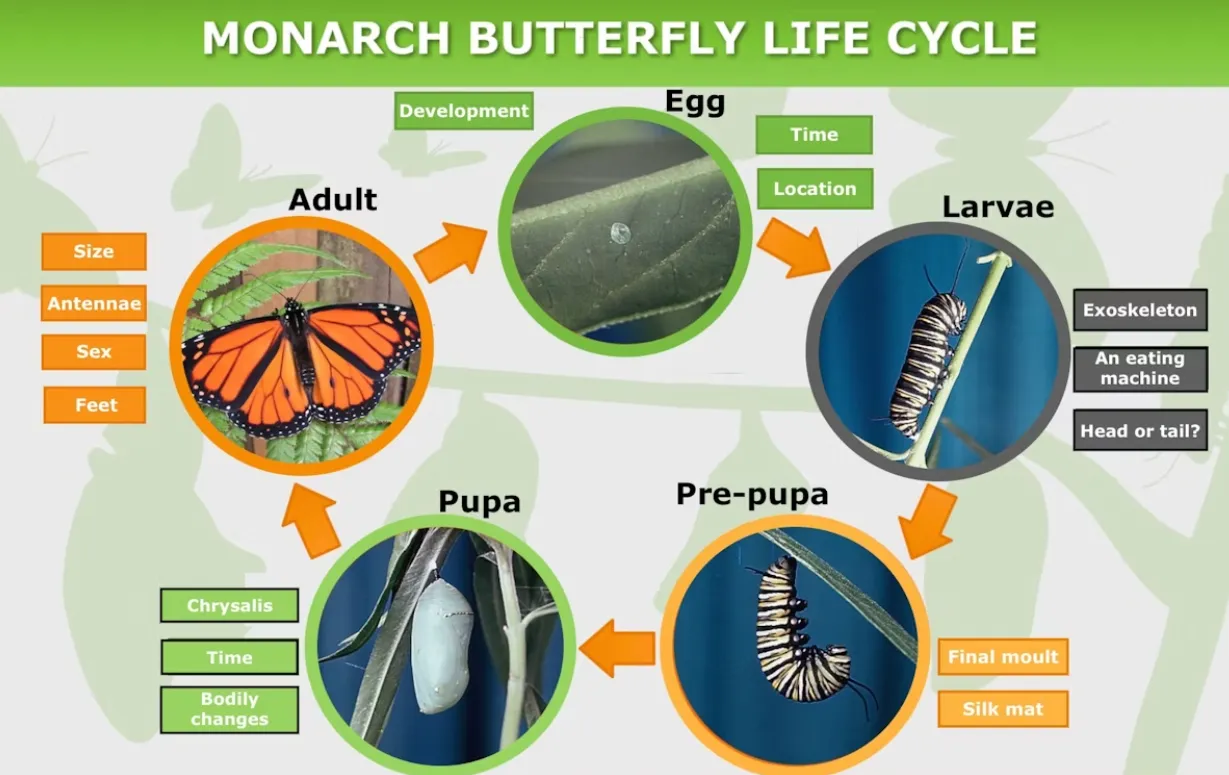
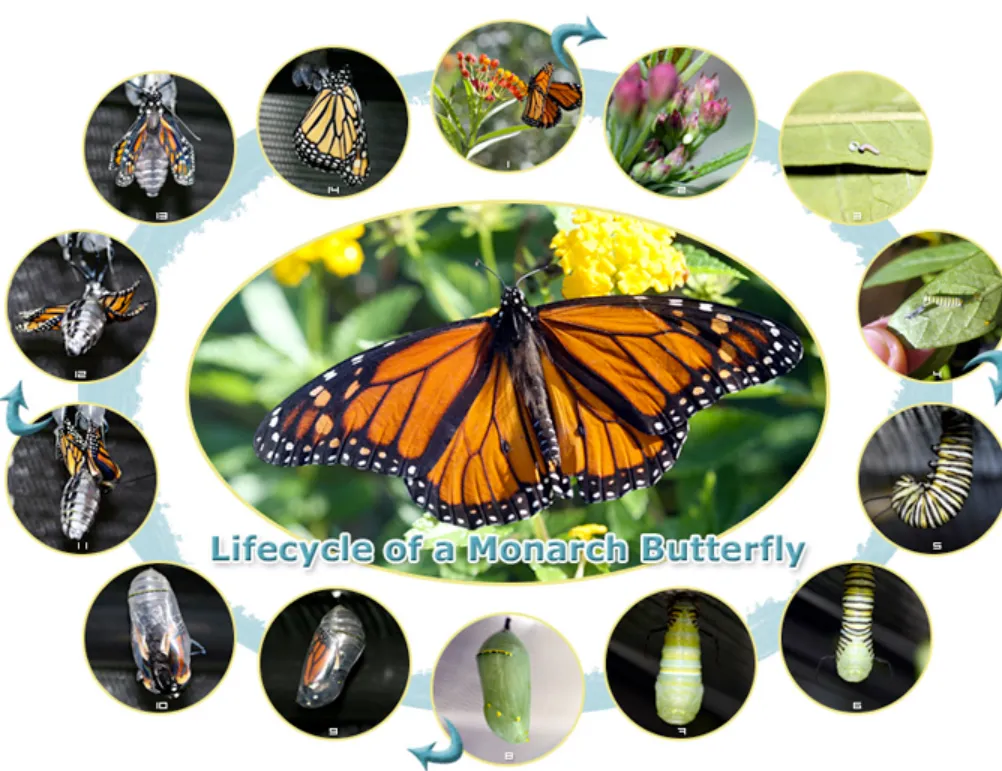
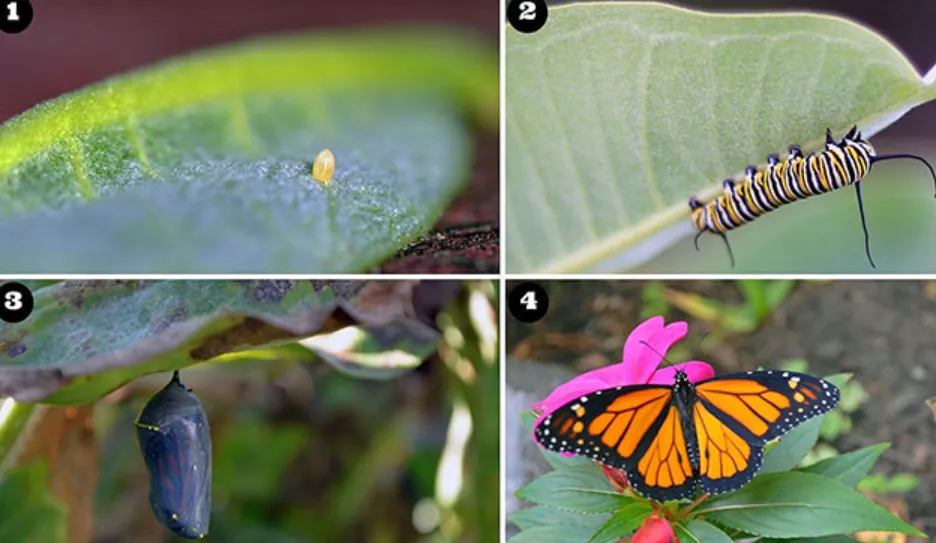
The life cycle of a monarch butterfly consists of four distinct stages. Each stage plays a critical role in their survival.
1. Egg Stage
- Female monarchs lay eggs on milkweed leaves.
- Eggs hatch within 3–5 days.
- Tiny caterpillars emerge and begin feeding immediately.
2. Larva (Caterpillar) Stage
- This stage lasts about 10–14 days.
- Caterpillars grow rapidly and shed their skin multiple times.
- They store toxins from milkweed, making them unpalatable to predators.
3. Pupa (Chrysalis) Stage
- The caterpillar forms a chrysalis.
- Inside, it undergoes metamorphosis.
- This stage lasts around 10 days.
4. Adult Butterfly Stage
- The butterfly emerges fully formed.
- It expands and dries its wings before flying.
- Adults live 2–6 weeks (longer for migratory generations).
Survival Abilities
- Toxicity deters predators
- Camouflage during the early stages
- Migration to avoid extreme climates
- Efficient energy use during long flights
These adaptations make monarch butterflies one of the most resilient insect species.
Their Reproductive Process and Raising Their Children
Monarch butterflies have a fascinating reproductive system that ensures the continuation of their species.
Mating Behavior
- Males attract females using pheromones.
- Mating usually occurs during migration or breeding seasons.
Egg Laying
- Females lay eggs exclusively on milkweed plants.
- Each female can lay hundreds of eggs in her lifetime.
Parental Investment
- Monarchs do not care for their young after laying eggs.
- Survival depends on selecting the right environment.
Larval Growth
- Caterpillars feed constantly to grow quickly.
- Rapid growth reduces vulnerability to predators.
Generation Cycle
- Monarchs produce multiple generations each year.
- The final generation migrates long distances.
Key Survival Strategies
- Choosing toxin-rich plants
- High reproduction rates
- Rapid development
Despite the lack of parental care, monarchs have evolved highly efficient reproductive strategies.
Importance of Them in Ecosystem
Monarch butterflies play a vital role in maintaining ecological balance.
Key Contributions
- Pollination
- Monarchs help pollinate flowers, supporting plant reproduction.
- Food Chain Role
- They serve as prey for birds and insects (despite toxicity).
- Biodiversity Indicator
- Their population reflects ecosystem health.
- Plant Growth Support
- Their interaction with milkweed promotes plant diversity.
- Educational Value
- Monarchs are widely used in scientific research and education.
- Cultural Importance
- In many cultures, they symbolize transformation and hope.
- Environmental Awareness (2026)
- Monarch conservation has become a global movement, raising awareness about biodiversity loss.
Their presence is essential to a healthy, balanced ecosystem.
Important Things That You Need To Know
Monarch and Related Terms Explained
The word monarch can refer to more than just butterflies. For example, monarch money is a financial tool used for budgeting and expense tracking. It helps individuals manage their finances effectively.
Another popular topic is the Monarch Legacy of Monsters, a fictional universe featured in movies and other forms of entertainment. It showcases giant creatures and has no direct relation to butterflies, but the term “monarch” symbolizes dominance and power.
The Monarch TV show is a drama series centered around family legacy and power struggles. Again, it highlights the word’s symbolic use.
When it comes to nature, the monarch caterpillar is the larval stage of the monarch butterfly. It is easily recognizable by its black, white, and yellow stripes.
Other uses include Monarch login (digital platforms), Monarch Mountain (a ski resort), and Nike Monarch or Nike Air Monarch, which are popular athletic shoes.
Why These Keywords Matter
Understanding these terms helps avoid confusion when searching online. It also improves SEO visibility for content related to monarch butterflies.
By distinguishing between these meanings, readers can focus on the biological and ecological significance of monarch butterflies while still being aware of other contexts.
What to do to protect them in nature and save the system for the future
Protecting monarch butterflies is essential for preserving biodiversity. Here are effective strategies:
- Plant Milkweed
- Grow native milkweed plants to provide habitat for egg-laying.
- Create Butterfly Gardens
- Include nectar-rich flowers to support adult butterflies.
- Avoid Pesticides
- Use organic gardening methods to prevent harm.
- Support Conservation Programs
- Donate to organizations working to protect monarchs.
- Educate Others
- Spread awareness about their importance.
- Protect Migration Routes
- Preserve forests and natural habitats.
- Participate in Citizen Science
- Help track monarch populations.
- Reduce Carbon Footprint
- Combat climate change to protect habitats.
- Encourage Sustainable Farming
- Promote eco-friendly agricultural practices.
- Advocate for Policy Changes
- Support laws that protect pollinators.
These steps can significantly impact monarch survival in 2026 and beyond.
Frequently Asked Questions (FAQs)
1. What are the stages of a monarch butterfly’s life cycle?
Egg, larva (caterpillar), pupa (chrysalis), and adult butterfly.
2. How long does the monarch’s life cycle take?
It typically takes about 30 days, depending on environmental conditions.
3. Why do monarch butterflies migrate?
They migrate to escape cold weather and find suitable breeding grounds.
4. What do monarch caterpillars eat?
They feed exclusively on milkweed plants.
5. Are monarch butterflies endangered in 2026?
They are not fully endangered but are considered at risk due to declining populations.
6. How far can monarch butterflies travel?
They can travel up to 3,000 miles during migration.
7. Why are monarch butterflies toxic?
They store toxins from milkweed, making them harmful to predators.
8. How can I help monarch butterflies?
Plant milkweed, avoid pesticides, and support conservation efforts.
Conclusion
The life cycle of a monarch butterfly is a remarkable journey of transformation, resilience, and survival. From a tiny egg to a migratory marvel, monarchs demonstrate the power of evolution and adaptation.
In 2026, these butterflies face increasing environmental challenges. Habitat destruction, climate change, and human activities threaten their existence. However, understanding their life cycle and ecological importance empowers us to take action.
Monarch butterflies are more than just beautiful insects—they are vital contributors to pollination, biodiversity, and environmental balance. Their presence signals a healthy ecosystem, making their conservation a global priority.
By planting milkweed, reducing pesticide use, and supporting conservation initiatives, individuals can play a significant role in protecting monarch populations. Small actions can create a ripple effect, ensuring that future generations continue to witness the incredible journey of these butterflies.
As we move forward, it is essential to recognize our responsibility in preserving nature. Protecting monarch butterflies is not just about saving a species—it is about sustaining the delicate balance of life on Earth.
Also Read About: life cycle of a frog