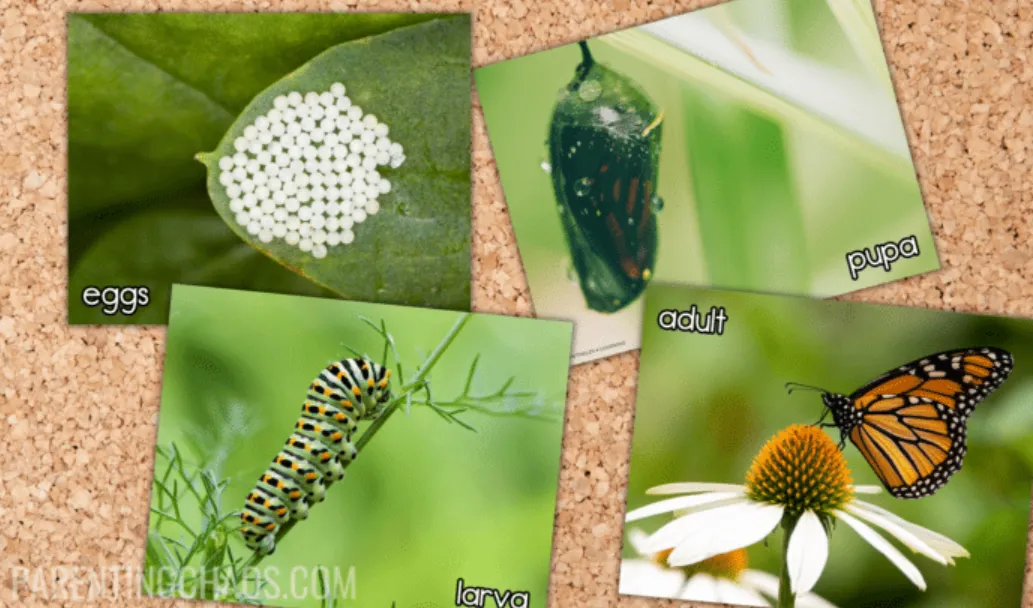
The life cycle of the monarch butterfly is one of nature’s most fascinating transformations, showcasing a remarkable journey from a tiny egg to a vibrant flying insect. Monarch butterflies (Danaus plexippus) are widely admired for their striking orange-and-black wings, long migrations, and delicate beauty. But beyond their appearance, their life cycle tells a deeper story of survival, adaptation, and ecological importance.
Understanding the Monarch butterfly’s life cycle helps us appreciate how each stage contributes to their survival in changing environments. From the moment a female lays eggs on milkweed leaves to the emergence of a fully grown butterfly, each phase is carefully designed by nature. This process not only supports their growth but also plays a vital role in pollination and biodiversity.
Quick Answers (Most Common Questions)
- How long is the life cycle of a monarch butterfly?
- It takes about 4–6 weeks to complete one full life cycle, though migrating generations live much longer.
- What are the stages of the monarch butterfly life cycle?
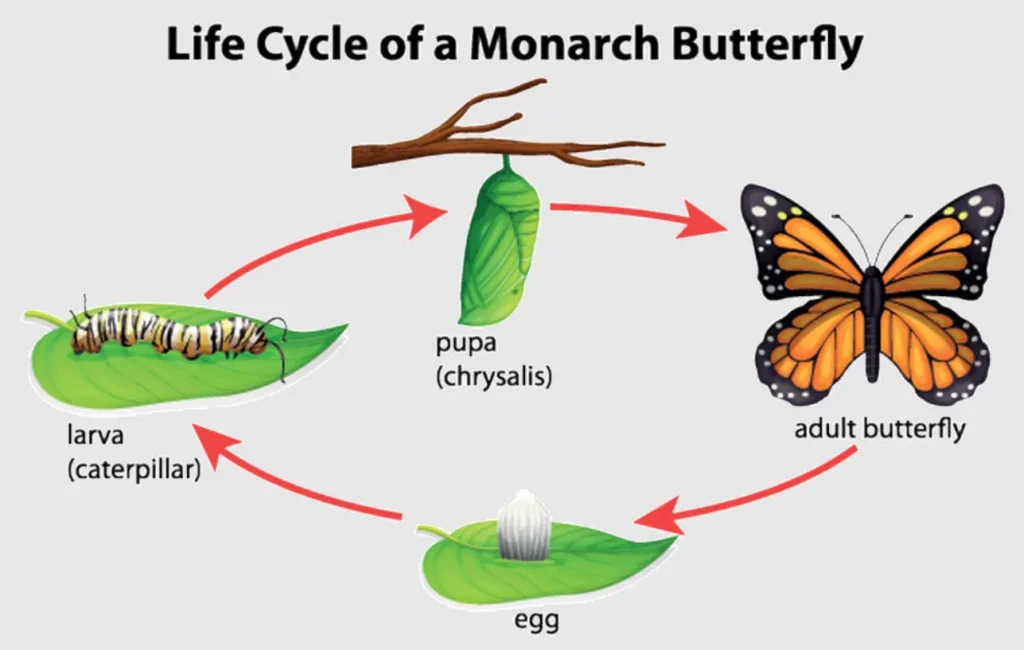
- Egg → Larva (caterpillar) → Pupa (chrysalis) → Adult butterfly.
- Why are monarch butterflies important?
- They are crucial pollinators and indicators of environmental health.
Quick Life Cycle Table
| Stage | Duration | Key Characteristics | Survival Strategy |
| Egg | 3–5 days | Tiny, oval eggs laid on milkweed | Hidden placement for protection |
| Larva (Caterpillar) | 10–14 days | Rapid growth, striped body | Eats toxic milkweed for defense |
| Pupa (Chrysalis) | 10–14 days | Green casing, transformation stage | Camouflage to avoid predators |
| Adult Butterfly | 2–8 weeks (or longer for migratory) | Bright wings, capable of flight | Migration and reproduction |
The History Of Their Scientific Naming
The monarch butterfly’s scientific name, Danaus plexippus, has an interesting origin rooted in classical history and taxonomy.
- The genus name “Danaus” comes from Greek mythology, referring to Danaus, a mythical king. This reflects the butterfly’s regal appearance, often associated with royalty.
- The species name “plexippus” is derived from Greek, meaning “one who drives horses,” symbolizing movement and strength, much like the butterfly’s long migration journeys.
- Swedish botanist Carl Linnaeus first described the monarch butterfly in 1758 in his groundbreaking work Systema Naturae.
- Over time, scientists classified monarchs as members of the family Nymphalidae, commonly known as brush-footed butterflies.
- Their classification highlights their unique biological features, including reduced forelegs and distinctive wing patterns.
This scientific naming not only provides a universal identity but also reflects the butterfly’s majestic, powerful nature in both its appearance and behavior.
Their Evolution And Their Origin
Monarch butterflies evolved millions of years ago, adapting to environmental changes and forming unique survival strategies. Their origin traces back to tropical regions of North and South America, where milkweed plants were abundant.
Initially, monarch ancestors developed a relationship with milkweed, which became central to their survival. Milkweed contains toxic compounds called cardenolides, which monarch caterpillars consume and store in their bodies. This makes them unpalatable to predators, giving them a significant evolutionary advantage.
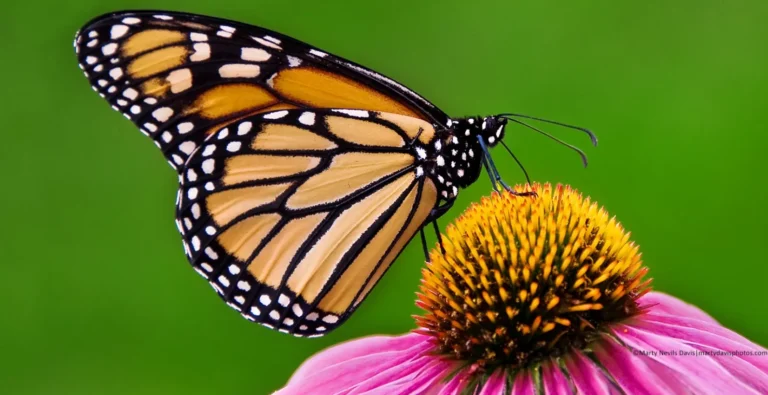
Over time, monarch butterflies evolved bright orange and black wing patterns. These colors serve as a warning signal to predators, a phenomenon known as aposematism. Birds quickly learn to avoid eating monarchs after a bad experience.
Another major evolutionary milestone is their migration behavior. Monarch butterflies are one of the few insects capable of long-distance migration, traveling thousands of kilometers between North America and Mexico. This adaptation helps them escape harsh winters and find suitable breeding grounds.
Genetic studies reveal that monarchs share ancestry with other milkweed butterflies but have developed unique traits, such as the ability to navigate using the sun and Earth’s magnetic field.
Their evolution demonstrates how environmental pressures, food sources, and predator interactions shaped one of the most iconic butterfly species in the world.
Their Main Food and Its Collection Process
Monarch butterflies have distinct feeding habits at different life stages, making their diet essential for survival.
Main Food Sources
- Milkweed plants (for caterpillars)
- The monarch butterfly caterpillar relies exclusively on milkweed leaves.
- Nectar (for adult butterflies)
- Adults feed on nectar from flowers such as sunflowers, goldenrod, and zinnias.
Food Collection Process
- Female butterflies carefully choose milkweed plants to lay eggs, ensuring food availability for larvae.
- Once hatched, caterpillars begin eating the milkweed leaves immediately.
- Caterpillars consume large quantities, grow rapidly, and store toxins.
- Adult butterflies use their long proboscis to suck nectar from flowers.
Unique Feeding Adaptations
- Milkweed toxins make monarchs poisonous to predators.
- Their feeding behavior supports pollination by transferring pollen between plants.
- They prefer brightly colored flowers, which signal high nectar availability.
This specialized diet highlights the strong connection between monarch butterflies and their environment.
Their Life Cycle and Ability to Survive in Nature
Egg Stage
Female monarch butterflies lay eggs on milkweed leaves. This ensures immediate access to food for emerging caterpillars.
Larva (Caterpillar) Stage
The caterpillar eats continuously, shedding its skin multiple times. It grows rapidly while storing toxins for defense.
Pupa (Chrysalis) Stage
Inside the chrysalis, the caterpillar undergoes a complete transformation. This stage is highly vulnerable but well-camouflaged.
Adult Butterfly Stage
The adult emerges with soft wings, which harden before flight. It then begins feeding, mating, and migrating.
Monarch butterflies survive through strategies like toxin storage, camouflage, and migration. These adaptations help them avoid predators and harsh environments.
Their Reproductive Process and Raising Their Children
Monarch butterflies have a fascinating reproductive cycle that ensures the continuity of the species.
- Male monarchs attract females through pheromones and flight displays.
- After mating, females store sperm and fertilize eggs over time.
- Females lay hundreds of eggs, but only a few survive to adulthood.
- Eggs are laid individually on milkweed leaves to reduce competition.
- Caterpillars hatch and begin feeding immediately, without parental care.
Parental Strategy
- Monarchs rely on quantity over care, producing many offspring.
- Strategic egg placement increases survival chances.
- Evolutionary adaptations compensate for the absence of direct parenting.
This reproductive approach ensures that at least some offspring survive despite natural threats.
Importance of Them in this Ecosystem
Pollination Role
Monarch butterflies help pollinate flowers while feeding on nectar, supporting plant reproduction.
Food Chain Contribution
They serve as food for certain predators, maintaining ecological balance.
Environmental Indicators
Environmental factors, such as climate change and habitat loss, influence their population health.
Biodiversity Support
Monarchs contribute to diverse ecosystems by interacting with multiple plant species.
Their presence indicates a healthy and functioning ecosystem.
Important Things That You Need To Know
The monarch butterfly is not just about its life cycle—it also holds cultural, artistic, and symbolic significance.
The monarch butterfly is widely recognized for its migration and beauty. Its transformation inspires artists and nature lovers alike.
The monarch butterfly caterpillar is known for its black, white, and yellow stripes, making it easily identifiable. It plays a crucial role in storing toxins from milkweed.
A monarch butterfly drawing is often used in educational materials to illustrate metamorphosis and biological processes.
The monarch butterfly’s meaning symbolizes transformation, hope, and resilience in many cultures.
Interestingly, while rare, the blue monarch butterfly concept appears in art and symbolism, though true monarchs are orange.

What to Do to Protect Them in Nature and Save the System for the Future
- Plant native milkweed in gardens to support caterpillars
- Grow nectar-rich flowers for adult butterflies
- Avoid using pesticides and harmful chemicals
- Support conservation programs and organizations
- Create butterfly-friendly habitats
- Educate others about monarch conservation
- Protect migration routes and natural habitats
- Participate in citizen science programs
These actions help ensure the survival of monarch butterflies for future generations.
Frequently Asked Questions (FAQs)
- What is the lifespan of a monarch butterfly?
- Most live 2–6 weeks, but migratory monarchs can live up to 8 months.
- Why do monarch butterflies migrate?
- To escape cold climates and find suitable breeding grounds.
- What do monarch caterpillars eat?
- Only milkweed leaves.
- How many eggs does a monarch lay?
- Around 300–500 eggs in its lifetime.
- Are monarch butterflies endangered?
- They are threatened due to habitat loss and climate change.
- What colors are monarch butterflies?
- Bright orange with black and white markings.
- How do monarchs defend themselves?
- Storing toxins from milkweed makes it poisonous.
- Can monarch butterflies be kept as pets?
- Yes, but they require proper care and access to milkweed.
Conclusion
The life cycle of the monarch butterfly is a powerful example of nature’s brilliance, combining transformation, survival, and ecological importance. From a tiny egg to a majestic flying insect, each stage plays a critical role in maintaining balance in ecosystems. Their unique adaptations—such as toxin storage, migration, and reproductive strategies—demonstrate how evolution shapes survival.
However, monarch butterflies face increasing threats from habitat loss, climate change, and pesticide use. Protecting them is not just about saving a species; it is about preserving biodiversity and environmental health. By planting milkweed, supporting conservation efforts, and spreading awareness, we can help sustain their populations.
Also Read About: life cycle of an apple