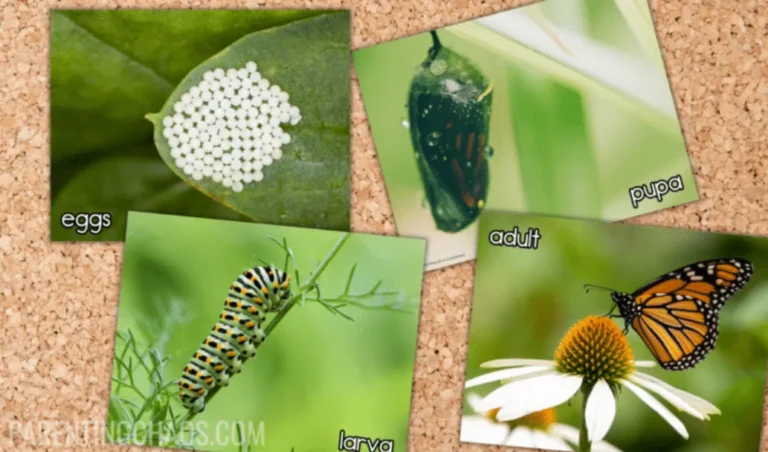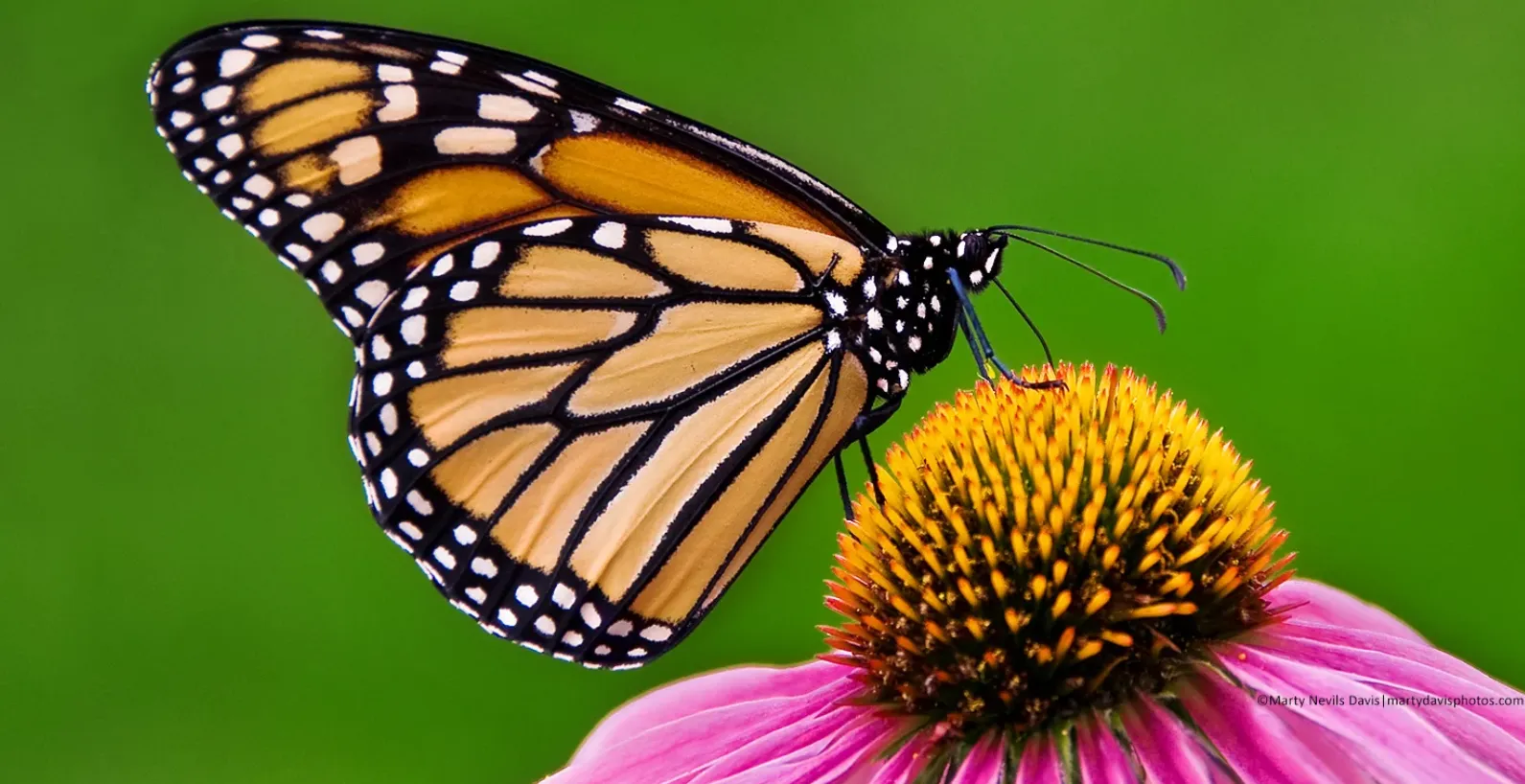
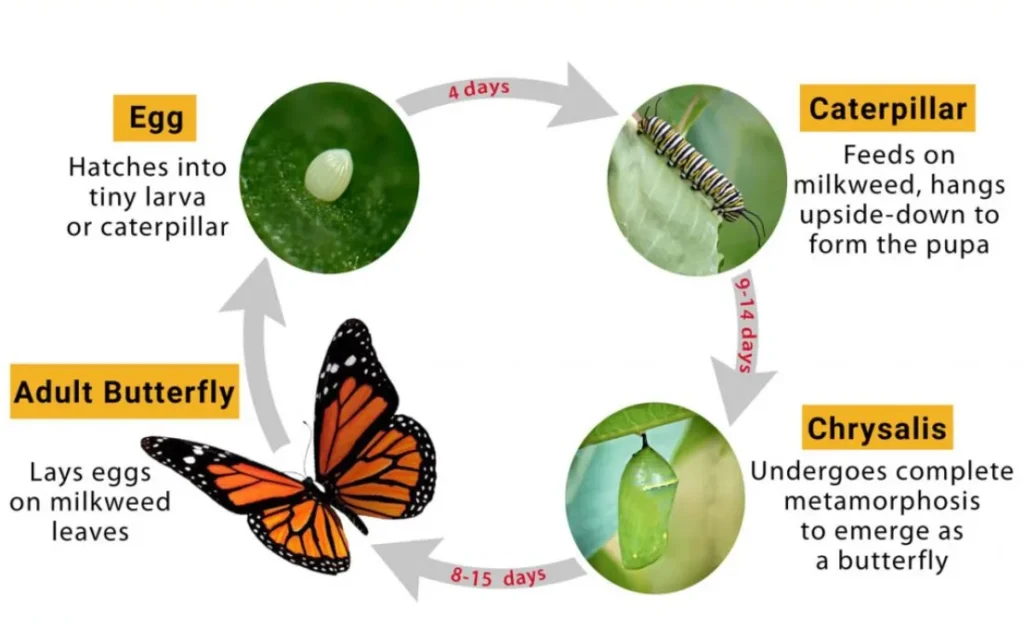
The monarch life cycle is one of the most fascinating transformations in the natural world. Known for their striking orange and black wings, monarch butterflies undergo a complete metamorphosis that includes four distinct stages: egg, larva (caterpillar), pupa (chrysalis), and adult butterfly. This process not only highlights nature’s brilliance but also plays a vital role in maintaining ecological balance.
Monarch butterflies are famous for their long-distance migration, travelling thousands of kilometres across North America. Their life cycle is closely tied to seasonal changes, environmental factors, and the availability of milkweed plants, which serve as their primary food source during the early stages.
Understanding the monarch life cycle helps us appreciate biodiversity and encourages conservation efforts. Sadly, monarch populations have declined due to habitat loss and climate change, making awareness more important than ever.
✅ Quick Answers (Most Common Questions)
1. How long is the monarch’s life cycle?
The complete monarch life cycle typically takes 25–30 days, though it can vary depending on temperature and environmental conditions.
2. What are the four stages of the monarch’s life cycle?
Egg → Caterpillar (Larva) → Chrysalis (Pupa) → Adult Butterfly.
3. Why are monarch butterflies important?
They are key pollinators and indicators of environmental health, helping maintain ecosystems.
Quick Life Cycle Table
| Stage | Duration | Description |
| Egg | 3–5 days | Laid on milkweed leaves |
| Caterpillar | 10–14 days | Eats and grows rapidly |
| Chrysalis | 10–14 days | Transformation phase |
| Adult Butterfly | 2–6 weeks (or up to 8 months for migratory generation) | Reproduction & migration |
The History Of Their Scientific Naming
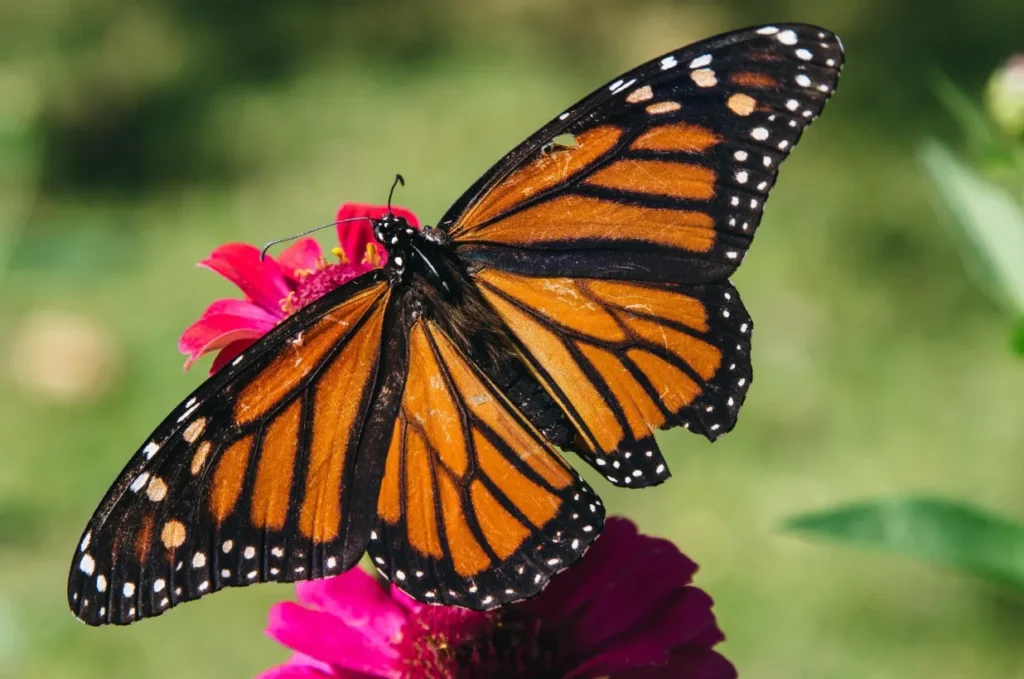
The monarch butterfly is scientifically known as Danaus plexippus. Its naming has an interesting historical and scientific background:
- The genus “Danaus” derives from Greek mythology, referring to Danaus, a legendary king symbolising elegance and lineage.
- The species name “plexippus” is also derived from Greek, possibly referring to a mythical figure associated with horses, symbolising movement and migration.
- The name reflects the butterfly’s royal appearance, which is why it is commonly called the “monarch.”
- Early European naturalists classified the monarch during the 18th century when taxonomy was being standardised.
- The monarch belongs to the Nymphalidae family, known as brush-footed butterflies.
- Scientific naming helped researchers track migration patterns and genetic variations globally.
This classification has enabled scientists to understand better their behaviour, life cycles, and ecological roles.
Their Evolution And Their Origin
The monarch butterfly’s evolutionary journey dates back millions of years. Scientists believe monarchs evolved in North and South America, adapting to various climates and environments.
Initially, their ancestors were likely non-migratory butterflies. Over time, environmental pressures such as seasonal changes and food scarcity led to the development of migration behaviour, which is now one of their defining traits.
One of the most remarkable evolutionary adaptations is their relationship with milkweed plants. Monarch caterpillars consume milkweed, which contains toxic compounds called cardenolides. Instead of being harmed, monarchs store these toxins in their bodies, making them poisonous to predators. This adaptation provides a powerful survival advantage.
Another evolutionary feature is their bright colouration, known as aposematism. The orange and black patterns serve as a warning to predators, signalling toxicity.
Genetic studies show that monarch butterflies have diversified into different populations, including migratory and non-migratory groups. The migratory monarchs, especially those in North America, have developed specialised navigation abilities that use the sun and Earth’s magnetic field.
Overall, the evolution of monarch butterflies showcases nature’s ability to adapt and thrive under changing conditions.
Their Main Food and Its Collection Process
Monarch butterflies have different dietary needs at each stage of their life cycle.
🥬 Caterpillar Stage
- The primary food is milkweed leaves.
- Caterpillars feed almost continuously, consuming large amounts.
- Milkweed provides essential nutrients and toxins for defence.
🌸 Adult Butterfly Stage
- Adults feed on nectar from flowers such as:
- Milkweed
- Goldenrod
- Zinnia
- Lantana
🧠 Collection Process
- Monarchs use their proboscis, a long, tube-like tongue, to suck nectar.
- They rely on colour and scent cues to locate flowers.
- Caterpillars instinctively remain on milkweed plants where eggs are laid.
- Adults migrate to areas rich in flowering plants for sustenance.
This feeding process ensures energy for growth, reproduction, and long-distance migration.
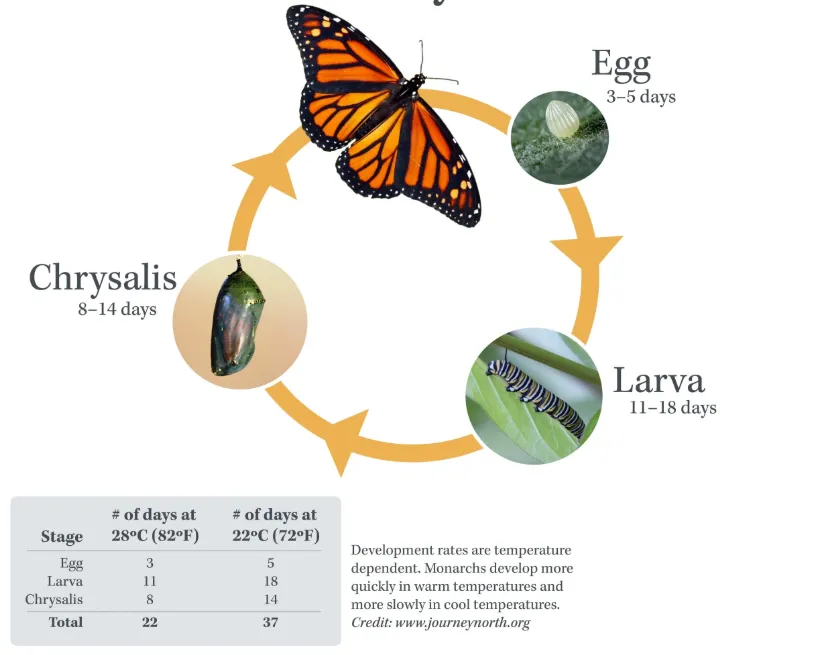
Their Life Cycle and Ability to Survive in Nature
🥚 Egg Stage
Female monarchs lay eggs on milkweed leaves to ensure immediate food availability after hatching.
🐛 Caterpillar Stage
The monarch caterpillar grows rapidly, shedding its skin multiple times. This stage is crucial for storing energy.
🟢 Chrysalis Stage
Inside the chrysalis, the caterpillar undergoes a complete transformation. Its body restructures into a butterfly.
🦋 Adult Stage
The adult emerges, dries its wings, and prepares for flight. Some generations migrate thousands of kilometres.
🌿 Survival Abilities
- Toxic body from milkweed consumption
- Bright warning colors
- Strong migratory instincts
- Ability to adapt to seasonal changes
These features make monarch butterflies highly resilient in the wild.
Their Reproductive Process and Raising Their Children
Monarch butterflies have a well-organised reproductive process:
- Mating occurs shortly after emergence from the chrysalis.
- Males locate females using pheromones.
- After mating, females store sperm for multiple egg-laying sessions.
- Each female can lay 300–500 eggs during her lifetime.
- Eggs are laid individually on milkweed leaves to reduce competition.
🐛 Raising Their Young
- Caterpillars are independent immediately after hatching.
- No parental care is required.
- Survival depends on food availability and avoiding predators.
- Rapid growth ensures a quicker transition to the chrysalis stage.
This strategy maximises survival despite environmental risks.
Importance of Them in this Ecosystem
🌼 Pollination Role
Monarch butterflies help pollinate flowering plants, supporting plant reproduction.
🌿 Biodiversity Indicator
Their presence indicates a healthy ecosystem.
🐦 Food Chain Contribution
They serve as prey for some animals (despite their toxicity, which deters many predators).
🌍 Environmental Awareness
Monarch migration inspires conservation efforts globally.
Overall, monarchs play a crucial role in maintaining ecological balance.
Important Things That You Need To Know
The term “monarch” appears in various contexts beyond butterflies. Here are some important insights related to LSI keywords:
🏔️ Monarch Mountain
A popular ski resort in Colorado, known for scenic beauty and outdoor adventures.
👟 Nike Monarch & Nike Air Monarch
The Nike Monarch and Nike Air Monarch are famous athletic shoes known for comfort and durability. They are widely popular among fitness enthusiasts.
🎬 Monarch Cast
Refers to actors in productions named “Monarch,” often linked to TV series or movies.
🏨 Waldorf Astoria Monarch Beach
A luxury resort offering premium hospitality and oceanfront views.
🐛 Monarch Caterpillar
The monarch caterpillar is a critical stage in the butterfly’s life cycle, during which it grows and stores toxins.
These diverse uses show how the word “monarch” symbolises excellence, transformation, and prestige across industries.
What to Do to Protect Them in Nature and Save the System for the Future
- 🌱 Plant milkweed in gardens and communities
- 🌼 Grow nectar-rich flowers
- 🚫 Avoid pesticides and harmful chemicals
- 🌍 Support conservation organisations
- 🏡 Create butterfly-friendly habitats
- 📚 Educate others about monarch importance
- 🌳 Protect natural habitats
- 🌡️ Take action against climate change
- 🐛 Encourage sustainable farming practices
- 📢 Participate in citizen science programs
These steps can significantly help protect monarch populations.
Frequently Asked Questions (FAQs)
1. What is the monarch’s life cycle?
It is a four-stage process: egg, caterpillar, chrysalis, and adult butterfly.
2. How long do monarch butterflies live?
Most live 2–6 weeks, but migratory ones can live up to 8 months.
3. What do monarch caterpillars eat?
They eat only milkweed leaves.
4. Why do monarchs migrate?
To escape cold climates and find food sources.
5. Are monarch butterflies endangered?
They are not fully endangered but are declining rapidly.
6. Where do monarch butterflies lay eggs?
On milkweed plants.
7. What is special about monarch butterflies?
Their long-distance migration and toxic defence system.
8. How can I attract monarch butterflies?
Plant milkweed and nectar-rich flowers.
Conclusion
The monarch life cycle is a remarkable example of transformation, resilience, and ecological importance. From a tiny egg to a migrating butterfly, each stage plays a vital role in survival and reproduction. Monarchs are not just beautiful insects—they are essential pollinators and indicators of environmental health.
However, their declining population is a serious concern. Habitat loss, climate change, and pesticide use threaten their survival. By understanding their life cycle and taking simple conservation steps, we can help preserve these incredible creatures for future generations.
Protecting monarch butterflies means protecting our ecosystems. Their journey reminds us of nature’s interconnectedness and the responsibility we share in safeguarding it.
Also Read: life cycle of head lice