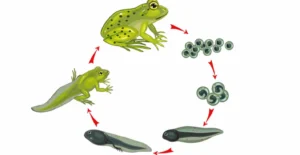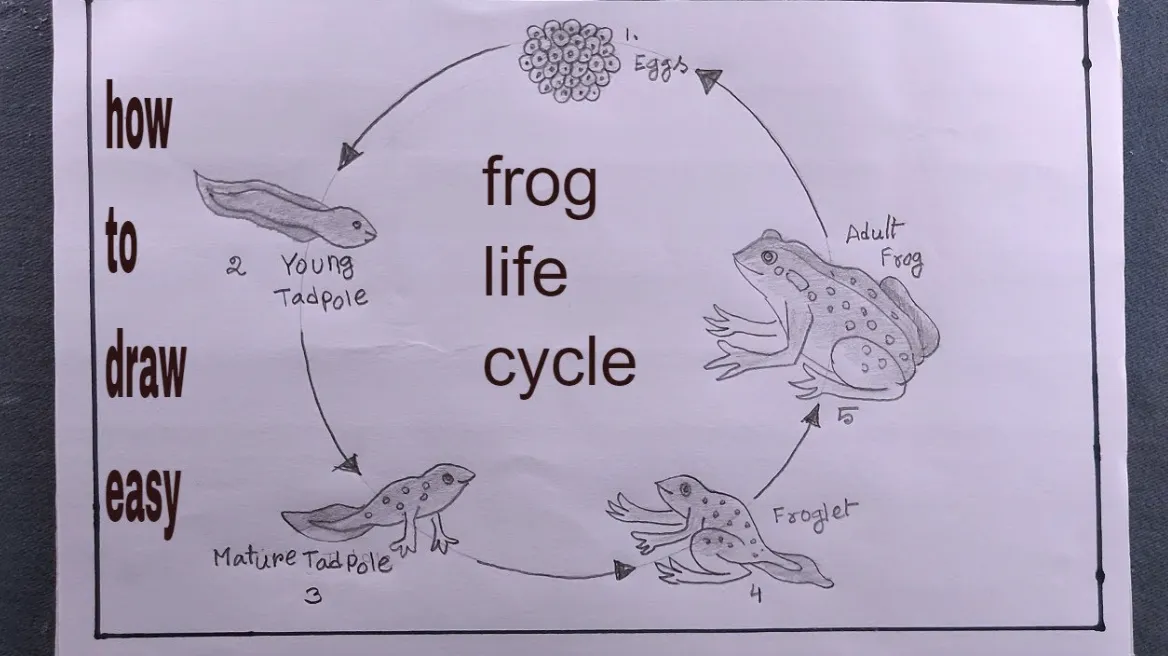
The life cycle of a frog is one of the best examples of metamorphosis in nature. A frog does not simply grow bigger, as many mammals do. Instead, it changes body form, habitat, diet, and breathing method as it develops from a soft jelly-like egg into a swimming tadpole, then into a young froglet, and finally into an adult frog.
Most frogs begin life in water because their eggs do not have hard protective shells. The eggs are usually laid in ponds, wetlands, marshes, slow streams, or temporary pools. After hatching, tadpoles breathe mainly through gills and swim using their tails. As they develop, they grow legs, absorb the tail, form lungs, and become able to live on land and in water.
This transformation makes frogs important animals for science, education, and ecosystem health. Frogs are also sensitive to pollution, habitat loss, drought, disease, and climate change because their moist, permeable skin makes them vulnerable. That is why frogs are often considered natural indicators of environmental quality.
Quick Answers: Most Common Questions
Q: What are the main stages in the life cycle of a frog?
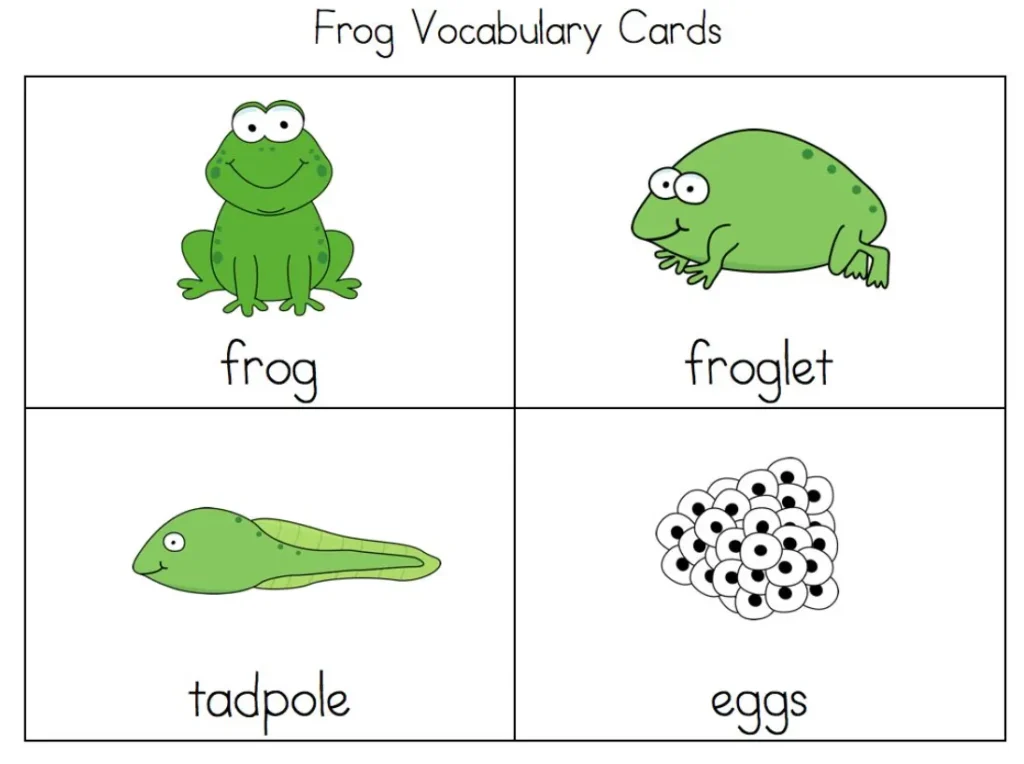
A: The four main stages are egg, tadpole, froglet, and adult frog.
Q: How long does it take for a tadpole to become a frog?
A: It often takes several weeks to a few months, depending on the frog species, water temperature, food availability, and habitat condition.
Q: Do all frogs have the same life cycle?
A: No. Most frogs follow the egg-to-tadpole-to-froglet-to-adult pattern, but some species lay eggs on land, carry eggs, guard tadpoles, or show unusual parental care.
Quick Life Cycle Table
| Stage | What Happens | Main Habitat | Key Feature |
| Egg | Females lay jelly-like eggs; males fertilize them in many species | Water, wet leaves, or moist places | An embryo develops inside an egg |
| Tadpole | The egg hatches into an aquatic larva | Pond, pool, stream, wetland | Tail, gills, no legs at first |
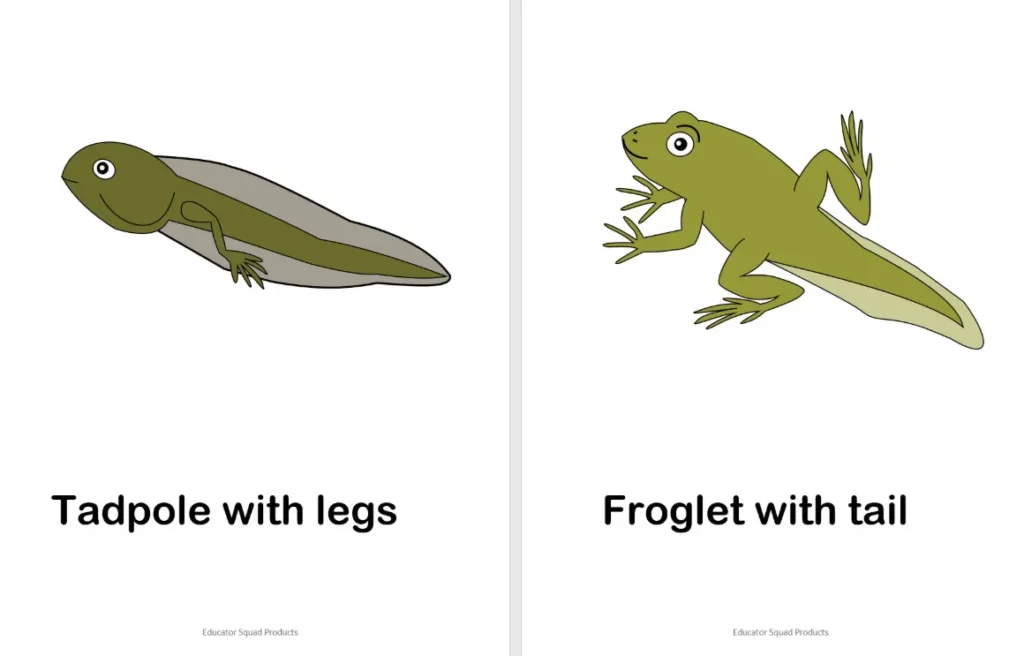
| Froglet | Legs develop; tail becomes shorter; lungs become active | Water edge and land | Looks like a tiny frog with a tail |
| Adult Frog | A fully formed frog can reproduce | Land and water, depending on the species | Strong legs, lungs, sticky tongue |
Important Things That You Need To Know
Many people search for frog-related terms for different reasons. Some want biology facts, others want pet care information, and others want references on art, culture, or entertainment. It is important to separate scientific information from casual internet searches.
The word frog usually refers to tailless amphibians in the order Anura. Frogs are found on every continent except Antarctica and are highly adapted to wet or moist environments. Their life cycle is especially useful for teaching children about growth, adaptation, and environmental balance.
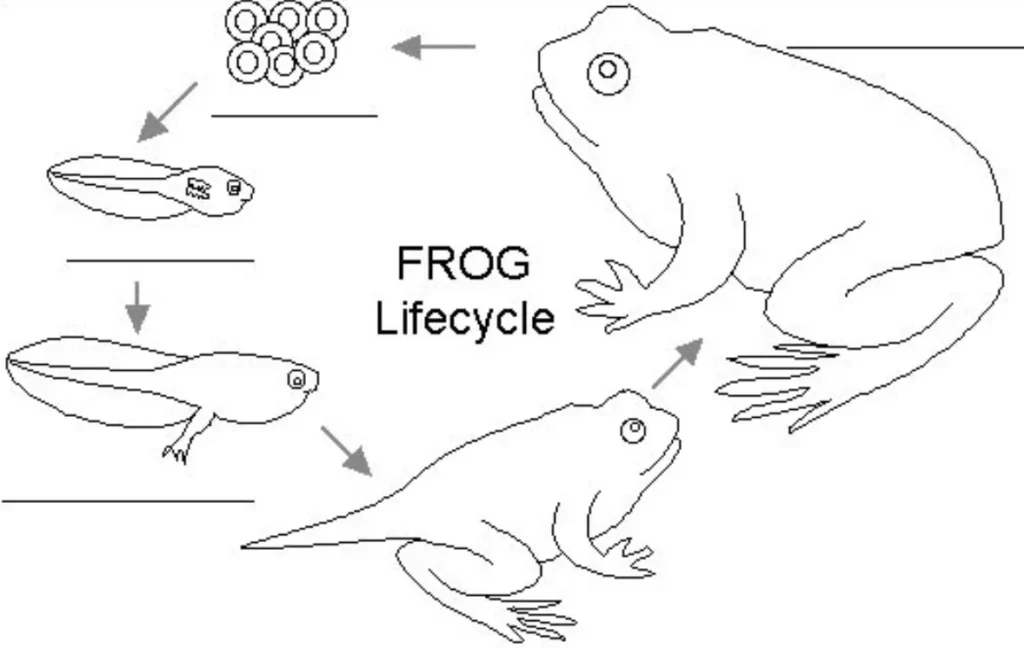
A frog drawing is often used in classrooms to explain the egg, tadpole, froglet, and adult stages. Simple diagrams make the process easier to remember because frogs undergo dramatic shape changes during development.
The Pacman frog is a popular pet frog known for its round body and large mouth, while the glass frog is famous for its transparent-looking body parts. The rain frog is another interesting group known for its rounded appearance and unusual calls.
Terms like Pepe the Frog and Princess and the Frog cast are mostly pop-culture searches, not scientific biology topics. The phrase “frog butt” is an informal term often used to refer to frog posture, anatomy, cartoons, or memes. These terms may attract traffic, but a high-quality article should focus primarily on the biology, conservation, and natural life cycle of real frogs.
The History Of Their Scientific Naming, Evolution, and Their Origin
Scientific Naming of Frogs
Frogs belong to the class Amphibia and the order Anura. The word Anura means “without tail,” which describes adult frogs because they lose their tails during metamorphosis. This scientific name helps separate frogs and toads from salamanders and caecilians.
Although people often use “frog” and “toad” casually, both belong to the same broad order. Toads are usually described as having drier, bumpier skin and shorter legs, but this distinction is not always strict in scientific classification.
Evolutionary Origin
Frogs evolved from early amphibian ancestors that lived millions of years ago. Their life cycle reflects a deep evolutionary connection between water and land. Eggs and tadpoles depend heavily on water, while adult frogs are adapted for jumping, breathing air, catching prey, and surviving in mixed habitats.
Why Their Life Cycle Matters
The life cycle of a frog shows how amphibians bridge aquatic and terrestrial ecosystems. Tadpoles often feed in water, while adult frogs hunt insects on land and near water. This dual lifestyle makes frogs important links in the connections between ponds, wetlands, forests, fields, and food chains.
Their Reproductive Process, Giving Birth, and Raising Their Children
Mating and Calling
Most male frogs attract females through calls. These calls are not random noise; they help females identify the correct species, judge male fitness, and locate breeding sites. Calling is often loudest during rainy seasons, warm nights, or after seasonal flooding.
Amplexus and Fertilization
In many frog species, the male climbs onto the female’s back in a position called amplexus. As the female releases eggs, the male releases sperm over them. This is called external fertilization, and it is common in many frogs.
Egg Laying
Female frogs may lay eggs in clusters, strings, foam nests, tree holes, leaf surfaces, or shallow water. Some species lay hundreds or thousands of eggs because many eggs and tadpoles are eaten by predators or lost due to drying, pollution, or poor water conditions.
Parental Care
Many frogs do not raise their young after laying eggs, but some species show impressive care. Certain frogs guard eggs, carry tadpoles on their backs, or place young in small water pools. Some unusual frogs have even evolved special reproductive methods, showing that frog reproduction is highly diverse.
Stages of the Life Cycle of a Frog
Stage 1: Egg
The first stage in the life cycle of a frog is the egg. Frog eggs are usually soft, round, and surrounded by jelly-like material. This jelly helps protect the embryo, keeps moisture around the egg, and may reduce damage from small disturbances.
Eggs are commonly laid in water because they can dry out quickly on land. Inside each fertilized egg, the embryo begins to develop. Depending on temperature and species, eggs may hatch in a few days or take longer.
Stage 2: Tadpole
After hatching, the young frog enters the tadpole stage. Tadpoles look more like tiny fish than adult frogs. They usually have a rounded head, a long tail, and gills for breathing underwater.
At first, many tadpoles feed on algae, plant matter, and tiny organic particles. As they grow, their internal body systems begin to change. This stage is important because the tadpole must eat enough to support the energy-demanding process of metamorphosis.
Stage 3: Froglet
The froglet is the transitional stage between a tadpole and an adult frog. During this stage, the back and front legs appear, the lungs become more useful, the mouth changes, and the tail gradually shrinks.
A froglet may still spend time near water because its body is small and vulnerable. It is learning to move, breathe, and feed more like an adult frog. This stage is also dangerous because predators can easily catch young froglets.
Stage 4: Adult Frog
The final stage is the adult frog. The frog now has strong legs, lungs, a shorter body, no tail, and the ability to hunt insects and other small prey. Adult frogs return to suitable breeding habitats when conditions are right.
Once mature, frogs reproduce and begin the life cycle again. This repeating cycle supports wetland biodiversity and helps maintain the balance between insects, aquatic life, birds, snakes, fish, and mammals.
Their Main Diet, Food Sources, and Collection Process Explained
Tadpole Diet
Tadpoles usually feed on soft algae, plant material, decaying organic matter, and microscopic organisms in water. Some species are more omnivorous and may eat tiny animal matter, dead material, or even other tadpoles when food is limited.
They collect food by scraping surfaces, filtering particles, or grazing on underwater plants and stones. Their mouthparts are adapted for aquatic feeding, which is very different from the adult frog’s hunting style.
Adult Frog Diet
Adult frogs are mostly carnivorous. They commonly eat insects, flies, mosquitoes, moths, beetles, ants, termites, grasshoppers, worms, spiders, and other small invertebrates. Larger frogs may eat small fish, smaller frogs, and tiny vertebrates if they can swallow them.
How Frogs Catch Food
Frogs are sit-and-wait hunters. They often stay still, watch for movement, and quickly strike when prey comes close. Many frogs use a sticky tongue to grab prey, while others lunge with the whole body.
Why Diet Changes Matter
This diet shift is one reason the life cycle of a frog is so fascinating. Tadpoles help process algae and organic matter in water, while adult frogs help control insects on land and near water. This makes frogs useful in both aquatic and terrestrial food webs.
How Long Does A Frog Live
The lifespan of a frog depends strongly on species, habitat, predators, disease, climate, and whether it lives in the wild or captivity. There is no single lifespan that applies to every frog.
Some small frogs may live only a few years, while larger species can live much longer. In captivity, where food, temperature, humidity, and predators are controlled, some frogs may survive for decades. PBS notes that frog lifespans in the wild are often difficult to measure, while captive frogs have been recorded living much longer in some cases.
Key lifespan points:
- Small wild frogs may live around 1–5 years, especially in predator-rich or unstable habitats.
- Medium-sized frogs may live around 4–10 years when conditions are favorable.
- Large frogs, such as some bullfrogs, may live longer than many smaller species.
- Captive frogs may live longer because they are protected from predators, drought, starvation, and sudden habitat changes.
- Pet frogs still need expert care. Poor humidity, dirty water, an unhealthy diet, stress, or an unsuitable temperature can shorten lifespan.
- Tadpoles have the highest mortality risk because fish, birds, insects, reptiles, and even other tadpoles may eat them.
- Froglets are also vulnerable because they are small, soft-bodied, and still adapting to land.
- Adult frogs survive best where there is clean water, cover, food supply, and a safe breeding habitat.
In simple terms, a frog may live from a few years to more than a decade, while some captive species can live much longer under proper care.
Frog Lifespan in the Wild vs. in Captivity
Lifespan in the Wild
In the wild, frogs face many risks. Eggs may dry out, fish or aquatic insects may eat tadpoles, and birds, snakes, mammals, or larger frogs may catch froglets. Pollution, pesticides, habitat destruction, road traffic, invasive species, and disease also reduce survival.
Because of these threats, many frogs die before reaching adulthood. This is why some species lay large numbers of eggs.
Lifespan in Captivity
In captivity, frogs may live longer if they receive proper care. A controlled environment can provide stable temperature, clean water, correct humidity, suitable food, and protection from predators.
However, captivity is not automatically better. Frogs are sensitive animals. Incorrect handling, poor tank hygiene, wrong lighting, contaminated water, and unsuitable diet can cause stress or illness. Conservation groups often warn that amphibians should not be collected from the wild without legal permission and proper expertise.
Main Difference
The main difference is control. Wild frogs live naturally but face danger. Captive frogs may live longer but depend completely on human care.
Importance of the Life Cycle of a Frog in this Ecosystem
Frogs Control Insect Populations
Adult frogs eat many insects, including flies, mosquitoes, beetles, moths, and agricultural pests. This natural pest control helps gardens, farms, forests, wetlands, and human communities. USGS notes that amphibians help control insect pests, including mosquitoes.
Frogs Support Food Chains
Frogs are both predators and prey. Tadpoles feed on aquatic predators such as fish and insects. Adult frogs become food for snakes, birds, mammals, fish, and larger amphibians. Without frogs, many food chains would become less balanced.
Tadpoles Help Aquatic Systems
Tadpoles graze on algae and organic material, helping recycle nutrients in ponds and wetlands. Their feeding activity can influence water clarity, plant growth, and the balance of microscopic life.
Frogs Indicate Environmental Health
Because frogs absorb water and chemicals through their skin, they are highly sensitive to pollution and habitat damage. A sudden decline in frog numbers can warn scientists that a local ecosystem is under stress.
What to Do to Protect Them in Nature and Save the System for the Future
Protect Wetlands and Ponds
- Preserve natural ponds, marshes, streams, and seasonal pools.
- Avoid draining small wetlands because many frogs breed there.
- Keep vegetation around water bodies for shelter and egg-laying sites.
Reduce Pesticides and Chemical Pollution
- Limit pesticide and herbicide use near gardens, farms, and wetlands.
- Do not dump oil, detergent, paint, or chemicals into drains or water bodies.
- Choose eco-friendly pest control methods when possible.
Keep Water Clean
- Remove plastic waste and harmful trash from frog habitats.
- Support clean-water projects in local communities.
- Prevent sewage, industrial waste, and fertilizer runoff from entering ponds and streams.
Avoid Capturing Wild Frogs
- Do not collect frog eggs, tadpoles, or adult frogs from nature unless local law allows it.
- Wild collection can damage local populations.
- Releasing pet frogs into the wild can spread disease or introduce non-native species.
Support Native Plants and Safe Gardens
- Plant native vegetation near ponds.
- Create shaded, moist hiding places.
- Avoid bright lights near frog habitats, as artificial light can affect insect and frog behavior.
Fun & Interesting Facts About the Life Cycle of a Frog
- Frogs are amphibians, meaning many species live both in water and on land during different life stages.
- Tadpoles breathe underwater, but adult frogs usually breathe with lungs and through their skin.
- Metamorphosis is the process that changes a tadpole into a froglet and then an adult frog.
- Some frogs can lay hundreds or thousands of eggs, but only a small number may survive to adulthood.
- A frog’s tail is absorbed during metamorphosis instead of simply falling off.
- Adult frogs often use a sticky tongue to catch prey quickly.
- Some frogs are excellent jumpers, while others are better climbers, swimmers, or burrowers.
- Glass frogs are famous for having some species with translucent undersides.
- Pacman frogs are known for their wide mouth and ambush-hunting behavior.
- Frogs are important in classrooms because the life cycle of a frog is easy to observe, draw, and explain.
Frequently Asked Questions (FAQs)
Q: What is the life cycle of a frog?
A: The life cycle of a frog is the development process from egg to tadpole, froglet, and adult frog. It includes metamorphosis, during which the frog changes its body shape and function.
Q: What are the 4 stages of a frog’s life cycle?
A: The four main stages are egg, tadpole, froglet, and adult frog.
Q: How long does the life cycle of a frog take?
A: It often takes weeks to months, depending on species, water temperature, food, and environment. Some frogs develop quickly in temporary pools, while others take longer.
Q: What do tadpoles eat?
A: Tadpoles usually eat algae, plant matter, soft organic material, and microscopic organisms. Some species may also eat animal matter.
Q: Do frogs care for their babies?
A: Many frogs do not care for their young after laying eggs, but some species guard eggs, carry tadpoles, or use special nursery sites.
Q: Why are frogs important to the ecosystem?
A: Frogs control insects, provide food for many animals, help nutrient cycling, and act as indicators of environmental health.
Q: Can frogs live in captivity longer than in the wild?
A: Yes, some frogs live longer in captivity because they are protected from predators and harsh conditions. However, they need proper care, clean water, correct humidity, and suitable food.
Conclusion
The life cycle of a frog is a powerful example of transformation in nature. From a small jelly-like egg to a swimming tadpole, then a developing froglet, and finally an adult frog, each stage has a special role in survival and ecosystem balance.
Frogs are not only interesting animals for students, pet lovers, and nature observers; they are also important signs of environmental health. They help control insects, support food chains, and connect water-based and land-based ecosystems.
Protecting frogs means protecting clean water, wetlands, native plants, and healthy habitats. If people reduce pollution, avoid unnecessary chemical use, and respect natural breeding sites, frogs will have a better chance of surviving. Understanding the life cycle of a frog is therefore more than a biology lesson; it is a reminder.
Also Read: frog life cycle