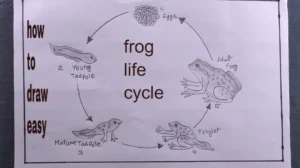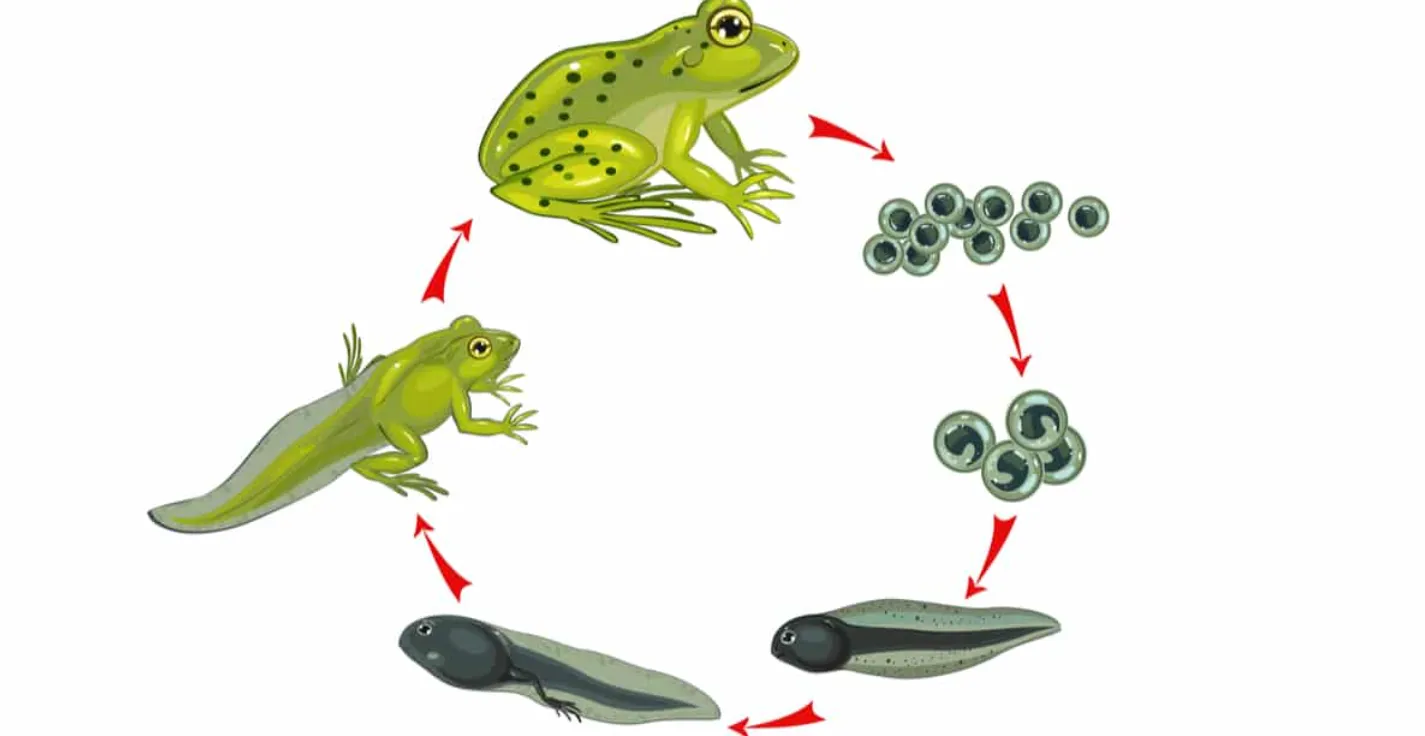
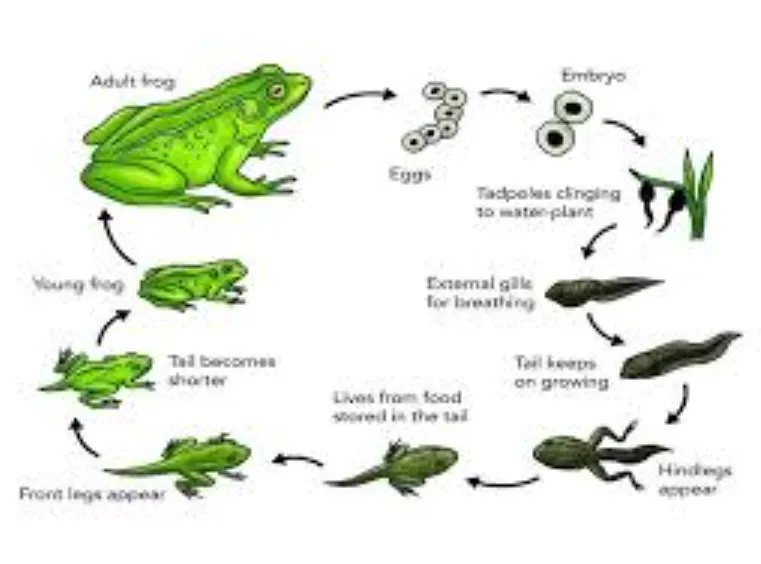
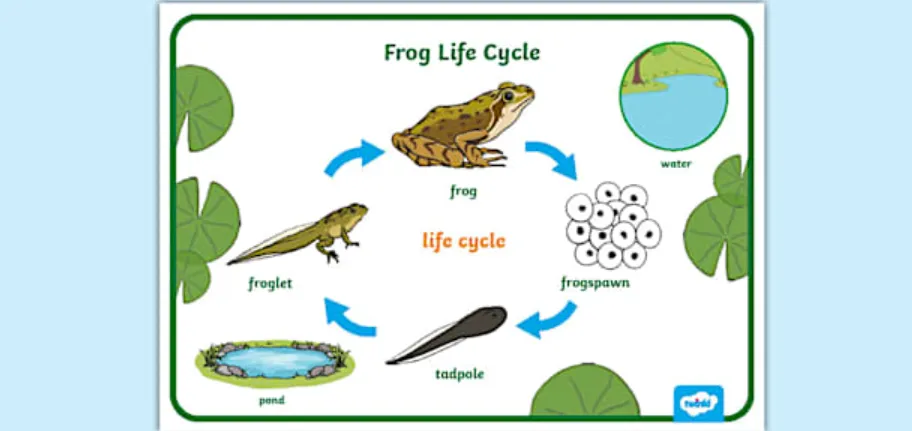
The frog life cycle is one of the most fascinating examples of metamorphosis in nature. A frog begins life as a soft, jelly-covered egg, hatches into a water-living tadpole, grows legs as a froglet, and finally becomes an adult frog capable of living on land and in water.
Frogs belong to the amphibian order Anura, which means “without tail.” Modern databases list nearly 8,000 species of frogs and toads, making them the largest amphibian group in the world.
Most frogs need freshwater, moist skin, clean habitat, and seasonal breeding sites to survive. Their life cycle is closely connected to ponds, wetlands, forests, grasslands, rice fields, streams, and garden water bodies. Because frogs absorb water and oxygen through their sensitive skin, they are strongly affected by pollution, drought, climate change, and habitat loss.
Quick Answers: Most Common Questions
Q: What are the 4 stages of the frog life cycle?
A: The 4 main stages are egg, tadpole, froglet, and adult frog.
Q: How long does it take for a frog egg to become an adult frog?
A: It depends on the species, temperature, water quality, and food supply. Many common frogs hatch within 2–4 weeks, and tadpoles may become froglets within several weeks to a few months.
Q: Do all frogs follow the same life cycle?
A: No. Most frogs lay eggs in water, but some species lay eggs on land, guard eggs, carry tadpoles, or even skip the free-swimming tadpole stage.
Quick Life Cycle Table
| Stage | Where It Lives | Main Features | Food Source | Approx. Time |
| Egg | Water or a moist place | Jelly-like eggs in clusters or foam | Uses the yolk inside the egg | Days to weeks |
| Tadpole | Water | Tail, gills, fish-like body | Algae, plants, and tiny organic matter | Weeks to months |
| Froglet | Water edge and land | Legs develop, tail shrinks, lungs work | Small insects and tiny animals | Several days to weeks |
| Adult Frog | Land and water | No tail, strong back legs, mature body | Insects, worms, spiders, small prey | Years |
The History Of Their Scientific Naming, Evolution, and Their Origin
Scientific Naming: Why Frogs Are Called Anura
The scientific order name Anura comes from the Ancient Greek and means “without tail.” This name fits adult frogs because most adults lose the tails they had as tadpoles.
There is no strict scientific separation between a frog and a toad. Both belong to Anura. In everyday language, “frogs” often means smooth-skinned, jumping amphibians near water, while “toads” often means drier, warty-looking species. Scientifically, they are all anurans.
Evolutionary Origin of Frogs
Frogs have an ancient evolutionary history. Fossil and molecular evidence suggest that early frog relatives appeared during the Triassic Period, more than 200 million years ago. New fossil studies continue to improve the understanding of how modern frogs evolved from early amphibian ancestors.
How Their Body Changed Over Time
The frog’s body is built for jumping, swimming, and catching prey. Over time, frogs evolved long hind legs, short bodies, wide mouths, sticky tongues, and moist skin. Their life cycle also became highly flexible, allowing different frog species to survive in forests, wetlands, deserts, mountains, and tropical regions.
Their Reproductive Process, Giving Birth And Rising Their Children
Courtship and Calling
During the breeding season, male frogs usually call to attract females. These calls help females identify the right species and choose strong mates. Different species have different sounds, which is why a pond at night may sound like a living orchestra.
Egg Laying and Fertilization
Most frogs reproduce through external fertilization. The male holds the female in a mating position called amplexus, and as the female lays eggs, the male releases sperm over them. Many common frogs lay eggs in ponds as jelly-like clusters called frogspawn. Some females can lay hundreds or even thousands of eggs because predators eat many eggs and tadpoles, or because some eggs and tadpoles fail to survive.
Giving Birth: Do Frogs Give Live Birth?
Most frogs do not give birth like mammals. They usually lay eggs. However, frog reproduction is surprisingly diverse. Some species carry eggs on their backs, guard eggs in foam nests, keep tadpoles in small water pockets, or exhibit direct development, in which tiny froglets hatch without a free tadpole stage.
Raising Their Children
Most frogs provide little parental care after laying eggs. However, some species are excellent parents. Certain poison dart frogs carry tadpoles on their backs to tiny water pools, while some male frogs guard eggs from predators and from drying out. These unusual strategies improve survival in difficult habitats.
Stages of the Frog Life Cycle
Stage 1: Egg
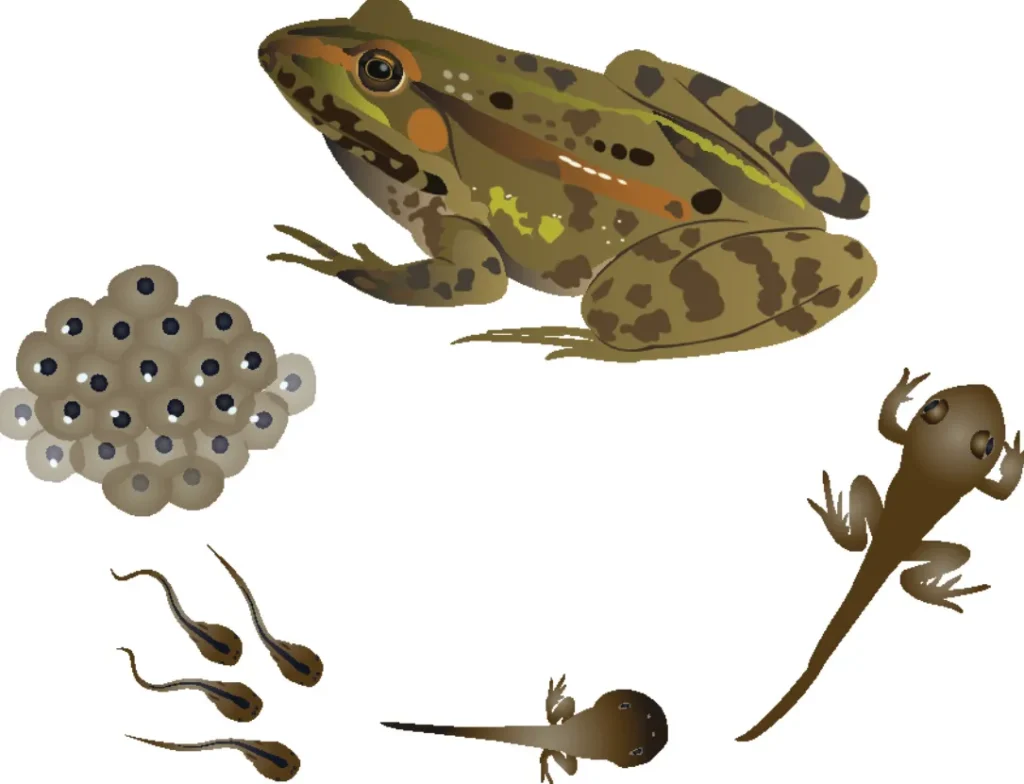
The egg stage begins when a female frog lays eggs in water, wet vegetation, foam nests, or damp ground, depending on the species. Frog eggs are soft and jelly-like because they do not have hard shells like bird eggs.
The jelly protects the developing embryo, keeps moisture around it, and helps the eggs float or stick to plants. Inside each egg, the embryo develops using stored yolk. Warm water usually speeds development, while cold water slows it down.
Stage 2: Tadpole
After hatching, the frog becomes a tadpole. At this stage, it looks more like a tiny fish than a frog. Tadpoles have a tail, live in water, and often breathe through gills.
Many tadpoles eat algae, soft plant matter, biofilm, and tiny organic particles. Some species are omnivorous and may feed on dead insects, small aquatic organisms, or even other tadpoles if food is limited.
Stage 3: Froglet
The froglet stage is the transition between the tadpole and the adult frog. The back legs appear first, followed by the front legs. The tail gradually shrinks as the body absorbs it for energy.
At this stage, the froglet begins using lungs more actively and spends more time near the water’s edge. Its diet also changes from mostly plant-based food to small live prey.
Stage 4: Adult Frog
The adult frog has no tail, strong legs, developed lungs, and a body adapted for jumping, swimming, hiding, and hunting. Adult frogs are mostly carnivorous.
Once mature, adult frogs return to breeding sites and repeat the life cycle. Many species reach breeding age around 2–3 years, though timing varies widely across species and environments.
Important Things That You Need To Know
The keyword “frog life cycle” is closely associated with many popular search terms, but not all of them mean the same thing. For example, “frog” and “toad” are often searched together because people want to know the difference between them. In simple terms, toads are a type of frog-like amphibian, but, scientifically, both belong to the order Anura.
The term poison dart frog is also important because these colorful tropical frogs show unusual parental behavior. Some adults carry tadpoles to small pools, which alters their life cycle from that of common pond frogs.
A tree frog usually lives on plants, branches, and leaves. Many tree frogs lay eggs near water or on vegetation, and their sticky toe pads help them climb. A pacman frog, on the other hand, is a large-mouthed ground-dwelling frog known for ambush hunting.
Search terms like frog drawing, Kermit the Frog, and The Princess and the Frog are more related to education, art, cartoons, and culture than biology. Still, they help show why frogs are familiar to children and adults. Even strange searches like ‘frog butt‘ usually stem from curiosity about frog anatomy, sitting posture, or humorous frog images.
Understanding these related terms helps readers distinguish real frog biology from entertainment, pet care, and pop culture.
Their Main Diet, Food Sources, and Collection Process Explained
Tadpole Diet
Tadpoles usually begin life by feeding on soft plant material, algae, biofilm, and tiny particles in the water. Their mouthparts are adapted for scraping surfaces and grazing on aquatic vegetation.
In ponds, tadpoles may feed on:
- Algae growing on stones and plants
- Soft aquatic plants
- Decaying leaves
- Tiny microorganisms
- Organic debris
This diet helps tadpoles grow quickly before ponds dry, freeze, or become crowded.
Froglet Diet
As tadpoles become froglets, their digestive systems change. They gradually shift from a plant-heavy diet to a more animal-based diet. Young froglets eat tiny insects, springtails, mosquito larvae, small flies, and other soft-bodied prey.
Adult Frog Diet
Adult frogs are mostly carnivorous hunters. They eat live prey such as insects, worms, spiders, slugs, snails, moths, mosquitoes, beetles, grasshoppers, and small aquatic animals.
Larger frogs may eat small fish, other frogs, small reptiles, or even small mammals if they can swallow them. Frogs do not chew like humans. They catch prey with a fast tongue or quick mouth strike, then swallow it whole.
Food Collection Process
Frogs usually hunt by waiting quietly and striking suddenly. Their large eyes help detect movement. Many frogs are active at night, when insects are abundant, and the air is moist.
How Long Does A Frog Live
The lifespan of a frog depends strongly on species, habitat, predators, disease, temperature, water quality, and whether it lives in the wild or captivity. A small wild frog may survive only a few years, while some larger or well-protected captive frogs may live much longer.
- Common frogs live about 5–10 years on average, though many wild individuals die much earlier due to predators, drought, road traffic, disease, and harsh weather.
- Pet frogs commonly live around 4–15 years, but some species can live longer when properly cared for with clean water, correct humidity, safe food, and suitable temperature.
- Large frogs, such as some bullfrogs, can live longer than small species, especially in captivity where food is regular and predators are absent.
- Poison dart frogs may live only a few years in the wild, but some individuals can live much longer in protected captive conditions.
- Tree frogs often have shorter lifespans in the wild because they face predation by birds and snakes, drying habitats, and seasonal changes.
- Egg and tadpole survival is very low in nature. Many eggs are eaten by fish, insects, birds, newts, and other aquatic predators before they ever become froglets.
- A clean habitat increases lifespan. Frogs need safe breeding ponds, insect-rich surroundings, shelter from heat, and chemical-free water.
- Captivity is not always better unless care is correct. Poor water quality, wrong temperature, stress, and unsuitable food can shorten a frog’s life quickly.
- Species matters most. There is no single lifespan for all frogs because the frog group includes thousands of species with very different biology.
Frog Lifespan in the Wild vs. in Captivity
Frog Lifespan in the Wild
In the wild, frogs face constant risk. Eggs may dry out, fish may eat tadpoles, and snakes, birds, mammals, and larger frogs may hunt adult frogs. Weather also matters. Drought can destroy breeding ponds, while pollution can damage eggs and tadpoles.
Many wild frogs never reach adulthood. Those that survive may live several years, especially if they find clean water, dense vegetation, and safe hiding places.
Frog Lifespan in Captivity
In captivity, frogs may live longer because they are protected from predators and extreme weather. However, long life depends on proper care. Frogs need correct humidity, clean dechlorinated water, suitable live food, hiding places, and minimal handling.
Captive frogs should never be taken from the wild. Wild collection can harm local populations and spread diseases.
Key Difference
The wild offers natural behavior but great danger. Captivity offers protection but requires expert care. A frog lives best when its biological needs are fully respected.
Importance of the Frog Life Cycle in this Ecosystem
Frogs Control Insects Naturally
Frogs are natural pest controllers. Adult frogs eat mosquitoes, flies, beetles, moths, slugs, and other small animals. This helps balance insect populations and can benefit gardens, farms, forests, and wetlands.
Frogs Are Food for Other Animals
Frogs are also prey. Birds, snakes, fish, mammals, turtles, and larger amphibians eat frog eggs, tadpoles, froglets, and adults. This makes frogs an important link in the food chain.
Tadpoles Help Aquatic Systems
Tadpoles graze on algae and organic matter. Their feeding helps recycle nutrients in ponds and wetlands. When tadpoles are abundant, they influence water clarity, plant growth, and food availability for other aquatic animals.
Frogs Are Environmental Indicators
Because frogs have moist, permeable skin, they are sensitive to pollution, drought, chemical runoff, and disease. A healthy frog population often suggests a healthier wetland or freshwater ecosystem.
Frog Decline Warns Us About Nature
Global amphibian decline is a serious warning. A major global assessment found that about 40.7% of amphibian species are threatened, underscoring the urgency of habitat protection.
What to Do to Protect Them in Nature and Save the System for the Future
1. Protect Clean Water Sources
- Keep ponds, wetlands, streams, and ditches free from chemicals.
- Avoid dumping oil, plastic, pesticides, or household waste near water.
- Support wetland restoration projects.
2. Reduce Pesticide and Herbicide Use
- Frogs absorb chemicals through their skin.
- Use natural gardening methods when possible.
- Plant native vegetation to support insects and shelter.
3. Save Breeding Habitats
- Do not remove frogspawn from natural ponds.
- Protect shallow pond edges where eggs and tadpoles develop.
- Keep some wild plants around water bodies.
4. Prevent Disease Spread
- Do not move frogs, tadpoles, or pond water between places.
- Clean boots, nets, and equipment after visiting wetlands.
- Never release pet frogs into the wild.
5. Create Frog-Friendly Spaces
- Build a small wildlife pond with gentle edges.
- Add logs, stones, leaf litter, and native plants.
- Avoid fish in frog breeding ponds, because many fish eat eggs and tadpoles.
Fun & Interesting Facts About Frog Life Cycle
- Frogs start life in water, but many adults spend much of their time on land.
- Tadpoles breathe with gills, while adult frogs mostly breathe with lungs and through their skin.
- A frog’s tail disappears during metamorphosis because the body absorbs it.
- Some frogs skip the tadpole stage and hatch as tiny froglets.
- Poison dart frogs are famous for their bright warning colors and unusual parenting behavior.
- Tree frogs have sticky toe pads that help them climb leaves, branches, and windows.
- Pacman frogs are named after the video game character because of their large mouths and round bodies.
- Frogs do not drink like humans. Many absorb water through their skin.
- Kermit the Frog and The Princess and the Frog made frogs popular in entertainment, but real frogs are even more biologically amazing.
- Frog calls are species-specific, meaning each species has its own sound pattern.
Frequently Asked Questions (FAQs)
Q: What is the frog life cycle in simple words?
A: The frog life cycle is the growth process from egg to tadpole, then froglet, and finally adult frog.
Q: What do tadpoles eat?
A: Tadpoles usually eat algae, soft plants, biofilm, and tiny organic matter. Some species also eat small animals or dead material.
Q: How is a frog different from a toad?
A: In everyday language, frogs are often smooth and moist, while toads are usually drier and bumpier. Scientifically, both are part of Anura, so toads are included within the broader frog group.
Q: How long can frogs live?
A: Many frogs live several years. Common frogs may average 5–10 years, while some captive frogs can live longer with proper care.
Q: Why are frogs important to humans?
A: Frogs help control insects, support food chains, recycle nutrients, and warn us about environmental problems because they are sensitive to pollution and habitat change.
Conclusion
The frog life cycle is a powerful example of transformation, survival, and ecological balance. From delicate frogspawn to swimming tadpoles, growing froglets, and mature adult frogs, every stage plays a meaningful role in nature.
Frogs are not only interesting animals; they are also important environmental indicators, insect controllers, and members of the food chain. Their presence supports healthy wetlands, forests, gardens, farms, and freshwater systems.
However, frogs are facing serious threats from pollution, habitat loss, climate change, disease, and careless human activity. Protecting frogs means protecting clean water, natural habitats, and the wider ecosystem that humans depend on.
By understanding the frog life cycle, we learn more than biology. We learn how connected life is and why even small amphibians deserve serious attention, protection, and respect.
Also Read: a life cycle of a chick