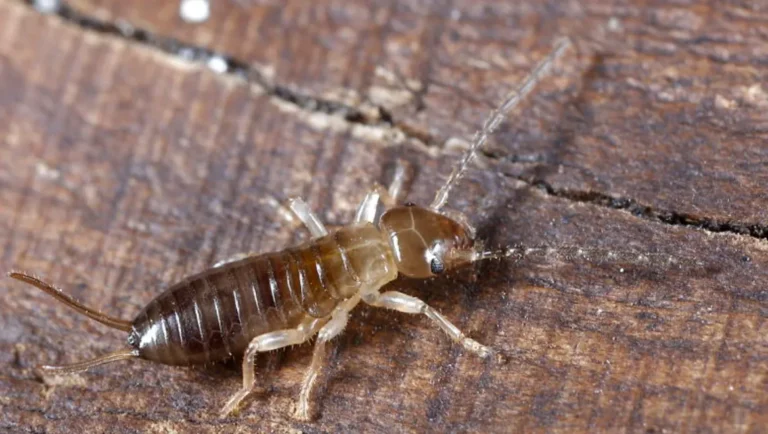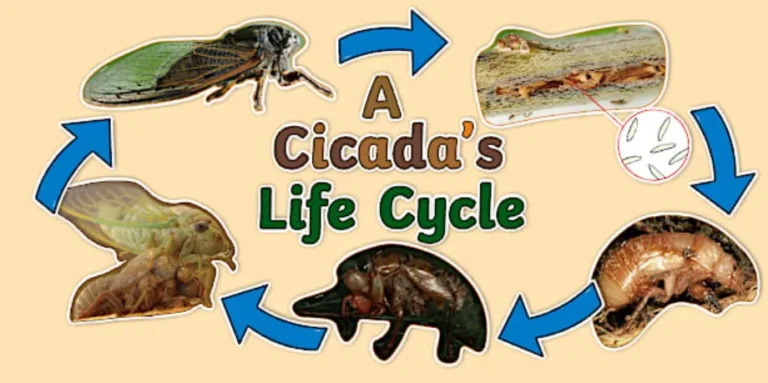
Head lice are tiny parasitic insects that live on the human scalp and feed on blood. Although they do not spread diseases, they can cause itching, discomfort, and social concern—especially among children. Understanding the life cycle of head lice is crucial for effective treatment and prevention.
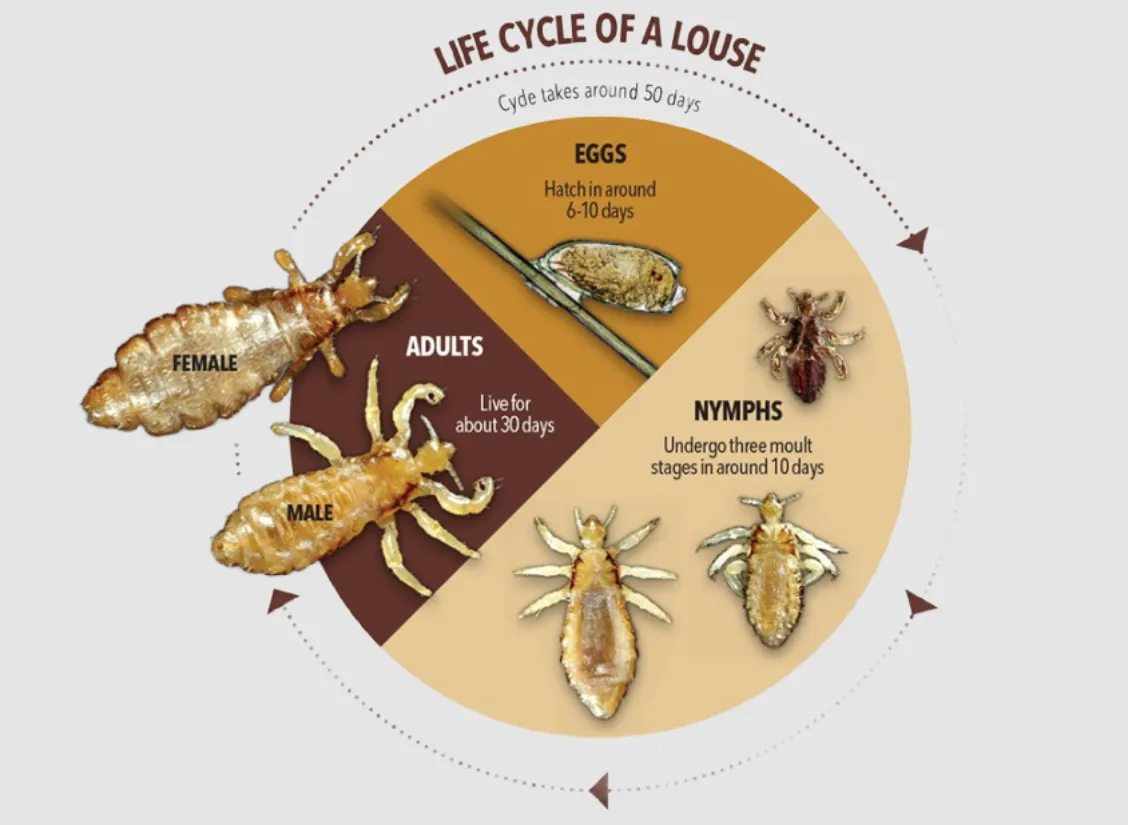
These parasites go through a simple yet fascinating life cycle consisting of three main stages: egg (nit), nymph, and adult. Each stage plays a vital role in their survival and rapid spread.
Despite common myths, head lice are not a sign of poor hygiene. They spread mainly through close contact, making schools and households common environments for infestations. Learning how they grow, reproduce, and survive helps you break their cycle effectively.
Quick Answers (Most Common Questions)
1. How long does the life cycle of head lice take?
The full life cycle typically takes about 3–4 weeks, from egg to adult.
2. Can head lice survive off the human head?
No, head lice can only survive 1–2 days without a human host.
3. What is the most effective way to treat head lice?
Using head lice shampoo combined with fine-tooth combing is the most effective method.
Quick Life Cycle Table
| Stage | Duration | Description |
| Egg (Nit) | 6–10 days | Tiny eggs attached to hair shafts near the scalp |
| Nymph | 7–10 days | Immature lice that grow and molt |
| Adult | Up to 30 days | Fully grown lice that reproduce and lay eggs |
| Total Cycle | 21–30 days | Complete life cycle from egg to adult |
The History Of Their Scientific Naming
Head lice have been studied for centuries, and their scientific classification reflects their unique biological traits.
- The scientific name for head lice is Pediculus humanus capitis.
- The term Pediculus comes from Latin and means “louse.”
- Humanus indicates their exclusive relationship with humans.
- Capitis refers to the head, distinguishing them from body lice.
Key Historical Points:
- Early documentation of lice dates back to ancient Egyptian mummies, showing their long association with humans.
- In the 18th century, scientists began classifying lice based on morphology and behavior.
- Modern taxonomy separates head lice from body lice due to differences in habitat and genetics.
- DNA studies reveal that lice evolved alongside humans, offering insights into human migration patterns.
Understanding their scientific naming helps researchers track their evolution and develop targeted treatments.
Their Evolution And Their Origin
Head lice have evolved over millions of years alongside humans, making them highly specialized parasites. Unlike many insects, they depend entirely on human hosts for survival.
Scientists believe that lice originated from a common ancestor shared with other parasitic insects. As humans evolved, lice adapted specifically to scalp environments, developing claws that grip hair strands tightly.
Genetic studies show that head lice diverged from body lice thousands of years ago. This separation likely occurred when humans began regularly wearing clothing. Body lice adapted to live in clothing, while head lice remained on the scalp.
Interestingly, lice’s evolution provides clues about human history. Researchers have used lice DNA to trace ancient human migrations, as lice populations traveled with their hosts across continents.
Head lice have also developed resistance to certain treatments over time. This evolution is driven by repeated exposure to chemical shampoos, making modern infestations more challenging to manage.
Despite their adaptability, head lice remain highly dependent on humans. They cannot survive in other environments or on animals, which limits their ecological range.
Their Main Food And Its Collection Process
Head lice are obligate parasites, meaning they rely entirely on human blood for nutrition.
What They Eat
- Human blood is their only food source.
- They feed multiple times a day to survive.
- Without blood, they quickly weaken and die.
How They Collect Food
- Lice use specialized mouthparts to pierce the scalp.
- They inject saliva to prevent blood clotting.
- Blood is sucked through a tube-like structure.
Feeding Behavior
- Feeding occurs every 3–6 hours.
- Bites can cause itching due to allergic reactions.
- They prefer warm areas behind the ears and near the neck.
Adaptations
- Claws help them stay attached during feeding.
- Their flat bodies allow them to move easily through hair.
- They remain close to the scalp for constant access to blood.
This feeding process is essential for their growth, reproduction, and survival.
Their Life Cycle And Ability To Survive In Nature
Egg Stage (Nits)
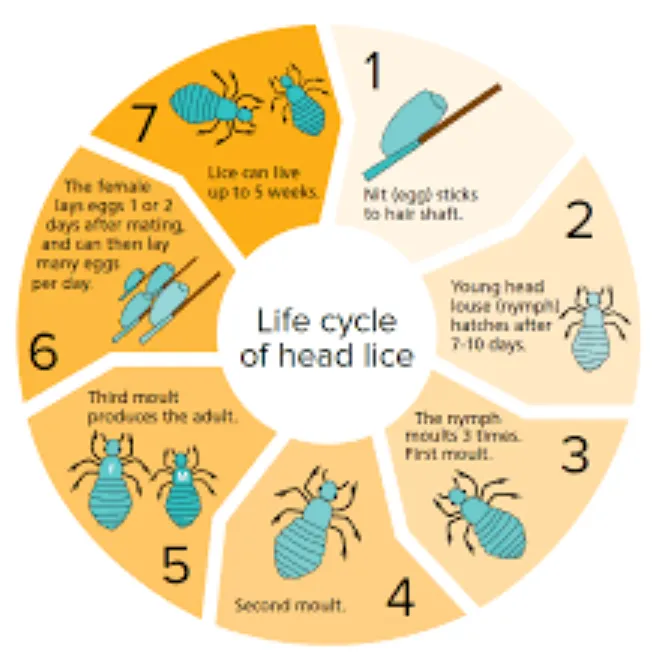
Nits are laid close to the scalp, where warmth helps them hatch. They are glued firmly to hair strands, making them difficult to remove.
Nymph Stage
After hatching, nymphs resemble smaller adults. They molt three times before reaching maturity.
Adult Stage
Adult lice can live up to 30 days and reproduce rapidly, laying several eggs daily.
Survival Abilities
- Cannot survive long without a human host.
- Sensitive to temperature changes.
- Thrive in crowded environments like schools.
Their survival depends on continuous access to human blood and close contact between hosts.
Their Reproductive Process And Raising Their Children
Head lice reproduce quickly, making infestations difficult to control.
Reproduction Process
- Female lice lay 6–10 eggs per day.
- Eggs are attached near the scalp for warmth.
- Fertilization occurs internally.
Growth of Offspring
- Eggs hatch within 7–10 days.
- Nymphs mature in about 10 days.
- Adults begin reproducing immediately after maturity.
Parental Behavior
- No parental care after laying eggs.
- Survival depends on proper egg placement.
Rapid Population Growth
- One female can produce hundreds of lice in her lifetime.
- Infestations can grow quickly without treatment.
This rapid reproduction is why early detection is crucial.
Importance Of Them In This Ecosystem
Role in Nature
Although often considered pests, head lice play a role in ecological balance.
Scientific Importance
- Help researchers study parasite-host relationships.
- Provide insights into human evolution.
Biological Indicators
- Reflect human social behavior and interaction patterns.
Food Chain Contribution
- Serve as food for microscopic organisms.
Despite their nuisance, they contribute to scientific understanding and biodiversity.
Important Things That You Need To Know
Understanding related aspects of head lice can help you manage them effectively.
Head Lice
These parasites are tiny, wingless insects that live on the scalp. They spread through direct contact and are common in children.
Head Lice Pictures
Visual identification is crucial. Head lice pictures show small, grayish insects and tiny oval eggs attached to hair shafts.
Head Lice Shampoo
Using medicated head lice shampoo is one of the most effective treatments. It kills live lice but may require repeated use.
Early Stage Head Lice
The early stage of head lice infestation includes nits and a few nymphs. Early detection prevents severe outbreaks.
Can Dogs Get Head Lice
A common myth is that pets spread lice. In reality, the claim that dogs can get head lice is false—lice are species-specific.
Do Black People Get Head Lice
Another misconception is racial immunity. Do black people get head lice? Yes, but hair texture may reduce infestation rates.
Treating Head Lice
Effective treatment for head lice involves shampooing, combing, and cleaning personal items to prevent reinfestation.
What To Do To Protect Them In Nature And Save The System For The Future
While lice are pests, maintaining ecological balance is important.
- Avoid excessive chemical use that harms ecosystems.
- Use targeted treatments instead of widespread pesticides.
- Promote awareness of the roles of parasites in nature.
- Support research on sustainable pest control.
- Maintain hygiene without harming beneficial organisms.
- Educate communities about safe treatment methods.
- Encourage eco-friendly healthcare practices.
- Reduce stigma associated with lice infestations.
Balancing control and ecological respect ensures a healthier environment.
Frequently Asked Questions (FAQs)
1. How do head lice spread?
Through direct head-to-head contact.
2. Can head lice jump or fly?
No, they can only crawl.
3. How long do lice eggs survive?
They hatch within 6–10 days.
4. Are head lice dangerous?
They are not dangerous but cause itching.
5. Can adults get head lice?
Yes, anyone can get them.
6. Do lice prefer dirty hair?
No, they prefer clean hair for easier attachment.
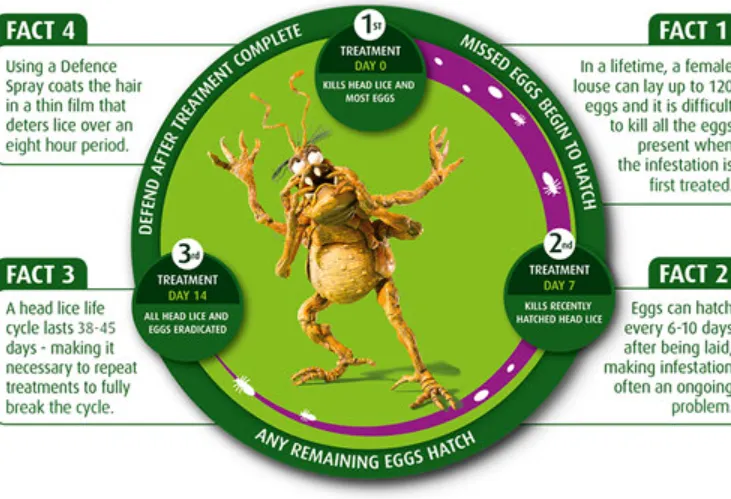
7. How often should treatment be repeated?
Usually after 7–10 days.
8. Can lice survive on pillows?
Only for 1–2 days without a host.
Conclusion
The life cycle of head lice is simple yet highly efficient, allowing these tiny parasites to survive and spread quickly. From eggs to adults, each stage is adapted for survival on the human scalp.
Understanding their biology helps in early detection and effective treatment. While lice are often seen as a nuisance, they also offer valuable insights into human evolution and ecological interactions.
Proper hygiene, timely treatment, and awareness are key to controlling infestations. By learning about their life cycle, feeding habits, and reproduction, you can break the chain and prevent future outbreaks.
Also Read About: life cycle of fungi