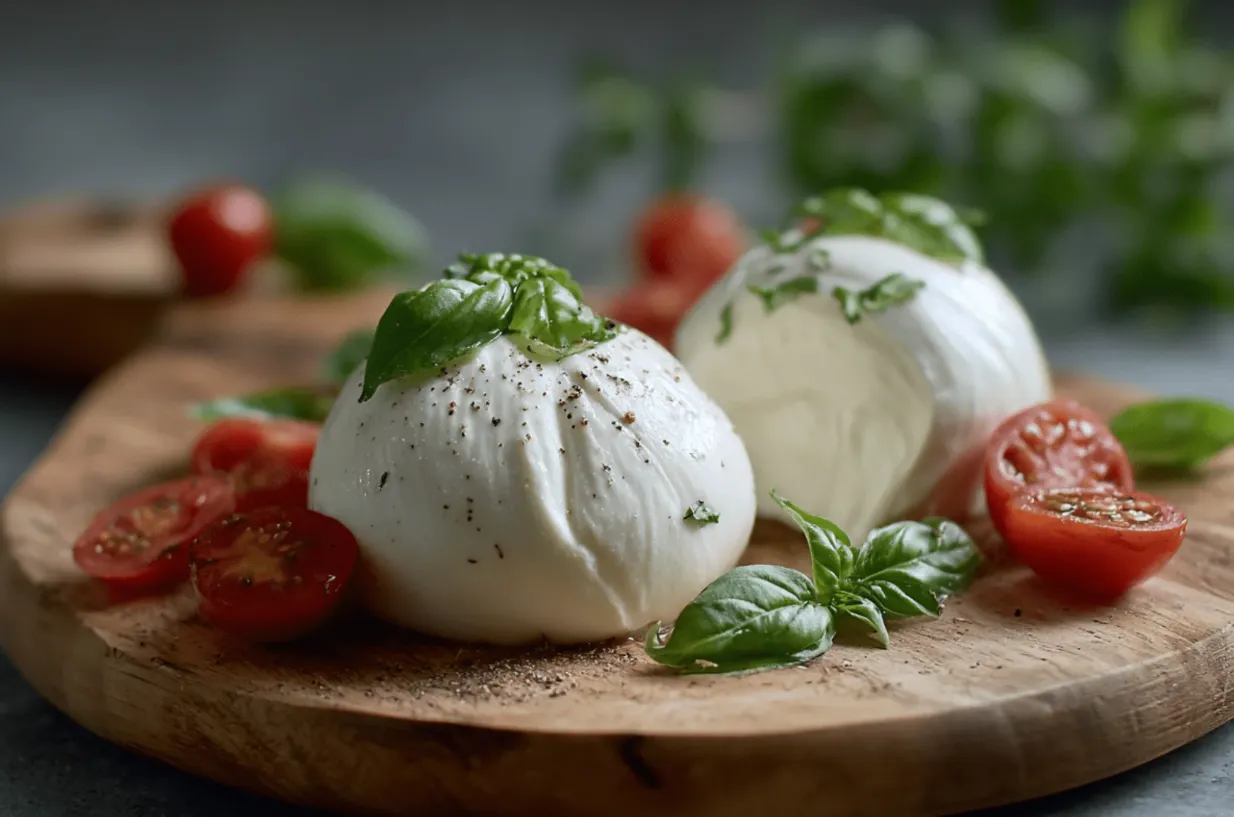
Mozzarella is a soft, mild, white cheese known for its elastic texture, clean, milky flavor, and excellent melting properties. Unlike animals or plants, mozzarella does not have a biological life cycle. Its “life cycle” encompasses the complete journey from milk production through curd formation, stretching, shaping, storage, cooking, and finally consumption or disposal.
Traditional mozzarella cheese is part of the pasta filata family, meaning “stretched curd.” This is the process that gives mozzarella its signature pull, especially on pizza, lasagna, sandwiches, and mozzarella sticks. Authentic Mozzarella di Bufala Campana PDO is made from fresh water buffalo milk in specific Italian regions, while most global mozzarella is made from cow’s milk. The European Commission states that PDO buffalo mozzarella must be made within 60 hours of milking, underscoring the importance of freshness to its quality.
In real life, mozzarella’s full life cycle depends on milk quality, acidity, rennet, temperature, curd stretching, moisture, brining, packaging, refrigeration, and food handling. Fresh mozzarella is moist and delicate, while low-moisture mozzarella lasts longer and melts better for pizza and commercial cooking.
Quick Answers: Most Common Questions
Q: What is the full life cycle of mozzarella?
A: The full life cycle of mozzarella starts with milk from cows or buffalo, then moves through acidification, rennet coagulation, curd cutting, whey drainage, hot-water stretching, shaping, brining, packaging, refrigeration, cooking, eating, and waste management.
Q: Is mozzarella a living thing?
A: No. Mozzarella cheese is not alive. However, its production may involve living starter cultures that help acidify milk and develop flavor.
Q: How long does mozzarella last?
A: Fresh mozzarella usually has a short refrigerated life after opening, while low-moisture block or shredded mozzarella can last much longer under proper cold storage. USDA commodity standards list minimum shelf lives of 120 days for block/loaf mozzarella and 90 days for shredded mozzarella when stored at 0–5.5°C.
Quick Life Cycle Table
| Stage | What Happens | Key Detail |
| 1. Milk Source | Milk comes from a cow or a water buffalo | Buffalo milk gives richer traditional mozzarella |
| 2. Milk Preparation | Milk is filtered, cooled, and often pasteurized | Clean milk improves safety and flavor |
| 3. Acidification | Starter culture, whey culture, or citric acid lowers pH | Acidity prepares curd for stretching |
| 4. Coagulation | Rennet turns milk into curd | Casein proteins form a gel-like structure |
| 5. Curd Cutting | Curd is cut into small pieces | Helps whey separate |
| 6. Whey Drainage | Liquid whey is removed | Curd becomes firmer |
| 7. Stretching | Hot water makes curd elastic | This creates mozzarella’s famous pull |
| 8. Shaping | Cheese is formed into balls, blocks, pearls, or sticks | Includes mozzarella balls and string cheese |
| 9. Brining & Cooling | Cheese is salted and cooled | Improves taste, texture, and storage |
| 10. Packaging | Fresh mozzarella is packed in liquid; low-moisture is wrapped/shredded | Packaging controls moisture |
| 11. Storage & Use | Kept refrigerated and used in recipes | Best quality depends on the cold chain |
| 12. End of Life | Eaten, spoiled, composted where suitable, or discarded | Reducing waste improves sustainability |
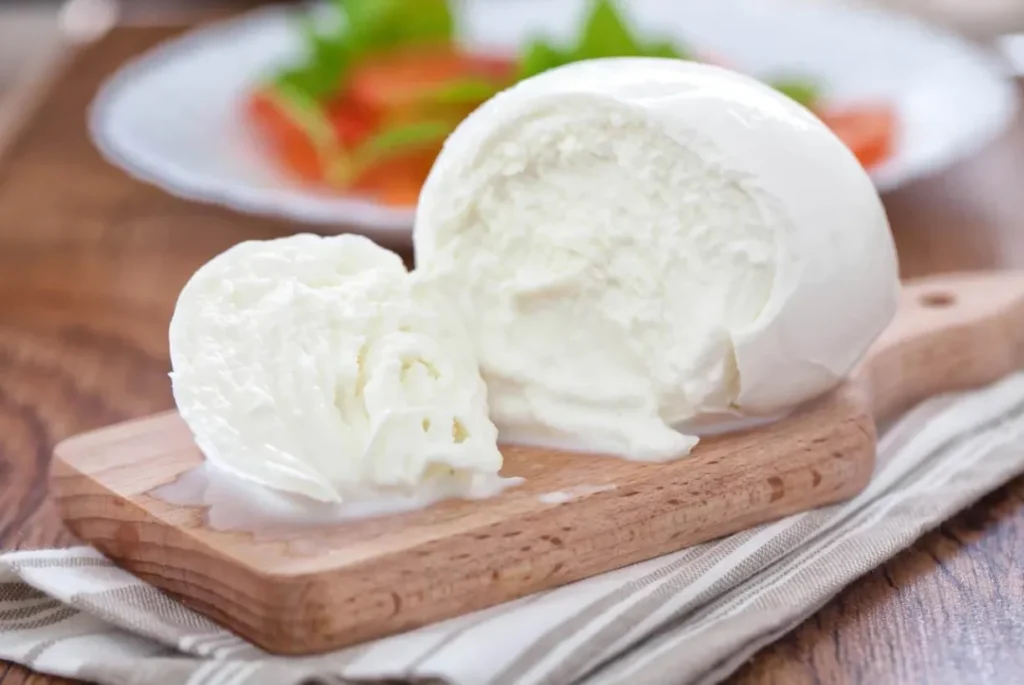
The History Of Their Scientific Naming, Evolution, and Their Origin
Origin in Southern Italy
Mozzarella originated in southern Italy, especially the Campania region. Traditional buffalo mozzarella was developed in areas where water buffalo were raised, where milk was quickly transformed into fresh cheese.
The European Commission describes Mozzarella di Bufala Campana PDO as a cheese linked to the marshy and volcanic plains of South-Central Italy, where the buffalo’s diet and the local environment influence its flavor.
Meaning of the Name “Mozzarella”
The word mozzarella is linked to the Italian verb mozzare, meaning “to cut off.” This refers to the traditional hand-shaping method where cheesemakers stretch the curd and cut portions into balls.
So, mozzarella’s “naming history” isn’t scientific like that of an animal species. It is a culinary term based on how the cheese is made.
Evolution from Local Cheese to Global Food
At first, fresh mozzarella had a short life because it was moist and delicate. With refrigeration, pasteurization, packaging, and global dairy technology, mozzarella cheese became one of the world’s most used cheeses.
Its evolution continued into many forms: fresh mozzarella, low-moisture mozzarella, mozzarella balls, string cheese, pizza cheese, and breaded mozzarella sticks.
Their Reproductive Process, Giving Birth, And Rising Their Children
Mozzarella Does Not Reproduce
Mozzarella is not an animal, so it does not reproduce, give birth, or raise young. Instead, this section explains the living sources behind mozzarella: dairy cows, water buffalo, and starter cultures.
The cheese depends on a dairy cycle where female animals produce milk after giving birth. That milk becomes the raw material for mozzarella.
Milk Production from Dairy Animals
The first biological part of mozzarella’s life cycle is the dairy animal. Cows or buffalo are bred, give birth to calves, and produce milk during lactation.
Milk quality depends on animal health, feed, hygiene, milking practices, and fast cooling. For PDO buffalo mozzarella, the milk must move into cheesemaking quickly; official EU regulations require production to begin within 60 hours of milking.
Starter Cultures as Microbial “Life”
Some mozzarella is made with starter cultures or natural whey cultures. These microorganisms do not “raise children” in the animal sense, but they multiply and convert lactose into lactic acid.
That acidification is essential because it helps the curd stretch properly. Without the right acidity, mozzarella can become too crumbly, too pasty, too rubbery, or unable to stretch.
Rennet and Curd Formation
Rennet is added to coagulate milk. University of California materials explain that rennet helps milk separate into curds and whey, while acidification helps prepare the milk proteins for cheese formation.
Stages of What Is the Full Life Cycle of Mozzarella
Stage 1: Milk Collection and Preparation
The life cycle begins with fresh milk. Most mozzarella around the world is made from cow’s milk, while traditional buffalo mozzarella uses water buffalo milk.
After milking, the milk is filtered, cooled, tested, and sent to the dairy. Good mozzarella begins with clean milk because milk easily absorbs unwanted flavors and can support bacteria if mishandled.
Pasteurization is common in modern cheesemaking. USDA standards define pasteurization as heating every particle of dairy product to a required temperature for a required time to destroy harmful microorganisms.
Stage 2: Acidification, Rennet, and Curd Formation
Next, the milk is acidified using starter cultures, whey culture, or food-grade acid such as citric acid. This step lowers pH and prepares milk proteins for stretching.
Then, rennet is added. Rennet causes milk proteins, especially casein, to form a soft gel. The gel is cut into curds so that whey can drain out.
This step controls texture. If the acidity is wrong, the finished cheese may not stretch well.
Stage 3: Stretching, Shaping, and Brining
This is the signature mozzarella stage. The curds are heated in hot water, kneaded, pulled, and stretched until they become smooth and elastic.
A scientific review describes mozzarella stretching as a thermomechanical treatment influenced by pH, acidity, stretching time, and temperature.
After stretching, the cheese is shaped into balls, braids, blocks, pearls, or logs. It may be cooled in water and salted in brine.
Stage 4: Packaging, Storage, Cooking, and End Use
Fresh mozzarella is often packed in whey or brine to keep it moist. Low-moisture mozzarella is packed as blocks, slices, sticks, or shredded cheese.
In the kitchen, mozzarella becomes part of pizza, pasta, salads, sandwiches, baked dishes, and fried snacks. Its end stage is eating, spoilage, or disposal.
Safe storage matters because mozzarella is a dairy product. The FDA advises keeping refrigerated foods at safe temperatures and discarding perishable foods that remain above 40°F for too long during power loss or unsafe storage.
Important Things That You Need To Know
The most important thing about mozzarella is that different types behave differently. Fresh mozzarella is soft, moist, delicate, and best for Caprese salad, fresh pasta, sandwiches, and light cooking. It is usually packed in liquid and has a short eating window after opening.
Low-moisture mozzarella cheese is firmer, less watery, and better for pizza because it melts smoothly without releasing too much liquid. This is the type most people use for home pizza, frozen pizza, lasagna, and baked pasta.
Buffalo mozzarella is richer and creamier because buffalo milk naturally has more solids than typical cow’s milk. It is prized for its soft center, white color, and delicate tang.
Mozzarella balls come in different sizes: large balls, bocconcini, ciliegine, and pearls. They are easy to use in salads, skewers, lunch boxes, pasta bowls, and party platters.
Mozzarella sticks are a processed food format where mozzarella is cut into sticks, breaded, and fried or baked. Restaurant searches like “mozzarella sticks near me” or branded menu items like Chili’s mozzarella sticks are popular because mozzarella melts into a stretchy center while the coating stays crisp.
The key difference is moisture. More moisture means fresher texture but shorter storage life. Less moisture means better melting, easier shredding, and longer refrigerated shelf life.
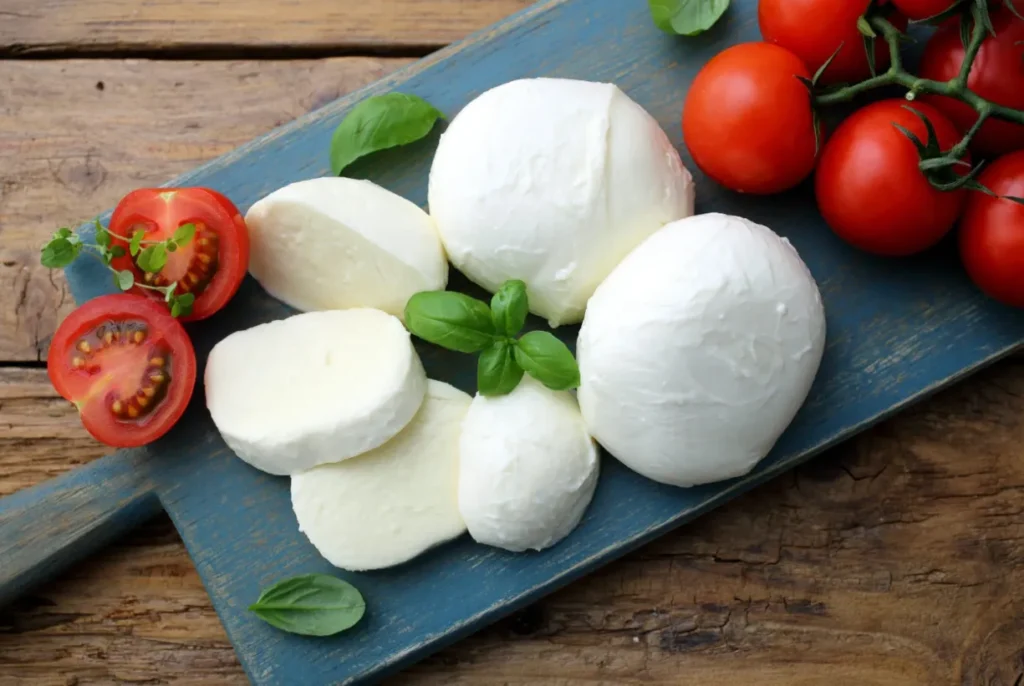
Their main diet, food sources, and collection process are explained
Main Diet Behind Mozzarella
Mozzarella’s “diet” refers to the feed the animals that produce the milk eat. Dairy cows and water buffalo may consume grass, hay, silage, grains, minerals, and clean water.
For Mozzarella di Bufala Campana PDO, the animal feed is closely tied to the local region. The European Commission notes that the buffalo’s diet influences the flavor of authentic PDO buffalo mozzarella.
Food Source: Milk
The direct food source for mozzarella is milk. Milk contains water, fat, lactose, minerals, and proteins. The most important protein for cheesemaking is casein.
During cheesemaking, casein forms curd. Whey proteins mostly remain in the liquid whey. That is why curd is the main body of mozzarella.
Collection Process
The collection process begins with hygienic milking. Milk is then quickly cooled to protect its quality.
At the dairy, milk is checked, standardized if needed, warmed, acidified, and coagulated. For fresh mozzarella, the process is fast because the cheese is not aged like cheddar or Parmesan.
Whey and By-Products
The leftover whey can be used in animal feed, ricotta production, protein products, or other food applications, depending on local processing systems.
A responsible mozzarella life cycle does not end at cheese. It includes useful handling of whey, water, packaging, and food waste.
How Long Does A Mozzarella Last
The “life” of mozzarella means how long it remains safe, fresh, and pleasant to eat. Its life depends on type, moisture, packaging, and refrigeration.
- Fresh mozzarella has the shortest shelf life. It contains high moisture and is usually packed in brine or whey. Once opened, it should be eaten quickly for the best texture and flavor.
- Low-moisture mozzarella lasts longer. Because it has less water, it is more stable than fresh mozzarella and is widely used for pizza, restaurants, and food manufacturing.
- Block mozzarella can have a long commercial shelf life. USDA commodity standards require block or loaf mozzarella to have at least 120 days of shelf life after manufacture when stored at 0–5.5°C.
- Shredded mozzarella has a shorter life than block mozzarella. USDA standards list at least 90 days for shredded mozzarella under controlled storage. Shredding increases surface area, so the cheese can dry, clump, or spoil faster after opening.
- String mozzarella can last even longer in controlled packaging. USDA standards list at least 150 days for string mozzarella under specified cold storage.
- Temperature is critical. The FDA explains that perishable refrigerated foods should be handled carefully when temperatures rise above 40°F.
- Mold is a serious warning for fresh mozzarella. Because fresh mozzarella is soft and moist, visible mold usually means the cheese should be discarded rather than trimmed.
- Smell and texture matter. A sour odor, a slimy surface, gas-swollen packaging, a bitter flavor, or an unusual color can indicate spoilage.
- Best practice: keep mozzarella sealed, cold, clean, and away from raw meat, dirty utensils, and repeated temperature changes.
What is the Full Life Cycle of mozzarella’s lifespan in the Wild vs. in Captivity?
“Wild” Mozzarella: Uncontrolled Conditions
Mozzarella does not live in the Wild. But if “wild” means uncontrolled conditions, such as room temperature, broken refrigeration, exposure to the air, or poor handling, its usable life becomes much shorter.
Fresh mozzarella can quickly lose quality when left at room temperature. It may become sour, slimy, watery, or unsafe to consume.
Because mozzarella is a moist dairy product, it should not be treated like dry-aged cheese. Leaving it exposed increases the risk of contamination and spoilage.
“Captivity” Mozzarella: Controlled Storage
In controlled storage, mozzarella lasts much longer. This means sealed packaging, clean handling, refrigeration, stable temperature, and proper brine or wrapping.
Commercial low-moisture mozzarella is designed for controlled storage and cooking performance. That is why pizza shops and food manufacturers often prefer low-moisture blocks or shreds.
USDA standards for some commercial mozzarella products specify cold storage at 0–5.5°C to help preserve quality and shelf life.
Main Difference
The difference is simple: moisture and warmth shorten life, while clean packaging and cold storage extend it.
Fresh mozzarella is best enjoyed quickly. Low-moisture mozzarella is better for longer storage and high-heat cooking.
Importance of What Is the Full Life Cycle of Mozzarella in this Ecosystem
Role in the Dairy Ecosystem
Mozzarella is important in the dairy ecosystem because it turns milk into a high-value food. It supports farmers, dairy processors, transporters, retailers, restaurants, and food-service workers.
The life cycle also creates by-products such as whey, which can be reused in food or feed systems.
Role in Food Culture
Mozzarella cheese is central to Italian food culture and global cuisine. It appears in pizza, pasta, salads, sandwiches, baked dishes, snacks, and street food.
Fresh mozzarella connects consumers with traditional cheesemaking, while low-moisture mozzarella supports modern food production.
Role in Nutrition
Mozzarella provides protein, fat, calcium, phosphorus, and other nutrients. USDA FoodData Central is the official U.S. source for food-composition data and is regularly updated across different food data types.
Because mozzarella is energy-dense and contains saturated fat and sodium, it is best eaten in balanced portions.
Role in Sustainability
Understanding mozzarella’s life cycle helps reduce waste. Better storage, proper portioning, and responsible packaging choices can reduce unnecessary food waste.
A sustainable mozzarella system protects animals, milk quality, farmers, consumers, and the environment.
What to do to protect them in nature and save the system for the future
1. Protect Dairy Animal Welfare
- Support farms that treat cows and water buffalo humanely.
- Healthy animals produce better milk.
- Good housing, clean water, veterinary care, and stress reduction improve the whole mozzarella chain.
2. Improve Milk Hygiene and Safety
- Milk should be collected with clean equipment.
- Fast cooling is important.
- Cheesemaking areas must be sanitized to prevent milk from easily picking up unwanted bacteria and flavors.
3. Reduce Food Waste
- Buy the amount of mozzarella you can use.
- Store fresh mozzarella in its liquid when possible.
- Use leftover low-moisture mozzarella in omelets, pasta, toast, soups, and casseroles.
4. Choose the Right Type for the Right Use
- Use fresh mozzarella for salads and delicate dishes.
- Use low-moisture mozzarella for pizza and baking.
- This reduces soggy food, poor texture, and waste.
5. Support Sustainable Dairy and Packaging
- Choose responsible producers when available.
- Recycle packaging where local systems allow.
- Avoid leaving cheese unrefrigerated, because spoiled food wastes milk, energy, water, labor, and transport.
Fun & Interesting Facts About the Full Life Cycle of Mozzarella
- Mozzarella gets its stretch from heated curd and aligned milk proteins.
- The word mozzarella is associated with the Italian practice of cutting or separating pieces by hand.
- Buffalo mozzarella is traditionally richer and creamier than cow’s milk mozzarella.
- Fresh mozzarella is usually stored in brine or whey to protect moisture and texture.
- Low-moisture mozzarella is the pizza industry’s favorite because it melts well without releasing too much water.
- Mozzarella balls come in several sizes, including large balls, bocconcini, ciliegine, and tiny pearls.
- Mozzarella sticks work because the breaded coating heats faster than the cheese can leak out, creating a crispy outside and a stretchy inside.
- Good mozzarella should smell clean, milky, and slightly tangy, not rotten or sharply sour.
- Fresh mozzarella is not aged like Parmesan. It is meant to be eaten young.
- The best mozzarella life cycle is short, clean, cold, and well-managed from milk to plate.
Frequently Asked Questions (FAQs)
Q: What is the full life cycle of mozzarella from start to finish?
A: The full life cycle of mozzarella begins with milk production, then milk collection, acidification, rennet coagulation, curd cutting, whey drainage, stretching, shaping, brining, packaging, refrigeration, cooking, eating, and final waste handling.
Q: Is mozzarella made from cow milk or buffalo milk?
A: Both. Traditional buffalo mozzarella is made from water buffalo milk, especially in Italy. Most everyday mozzarella cheese worldwide is made from cow’s milk.
Q: Why does mozzarella stretch?
A: Mozzarella stretches because it is a pasta filata cheese. The curd is heated, kneaded, and pulled, allowing milk proteins to align into elastic strands.
Q: What is the difference between fresh mozzarella and low-moisture mozzarella?
A: Fresh mozzarella is soft, moist, and delicate. It is best for salads and fresh dishes. Low-moisture mozzarella is firmer, lasts longer, and melts better for pizza, lasagna, and baked foods.
Q: Can I eat mozzarella if it has mold?
A: For fresh or soft mozzarella, it is safest to discard it if mold appears. Soft, high-moisture cheese can facilitate the spread of contamination more easily than hard cheese.
Conclusion
The full life cycle of mozzarella is the journey from milk to one of the world’s most loved cheeses. It begins with healthy cows or water buffalo, clean milk collection, careful acidification, rennet coagulation, curd cutting, hot stretching, shaping, brining, and cold storage. From there, mozzarella becomes fresh mozzarella, buffalo mozzarella, mozzarella balls, shredded pizza cheese, or crispy mozzarella sticks.
Although mozzarella is not a living organism, its life cycle depends on living animals, microorganisms, skilled cheesemakers, safe refrigeration, and responsible consumers. Understanding this cycle helps people choose the right type, store it safely, reduce waste, and enjoy better flavor. Whether served fresh with tomatoes or melted on pizza, mozzarella cheese remains a perfect example of how simple milk can become a globally loved food through science, tradition, and careful handling.
Also Read: life cycle of honey bee