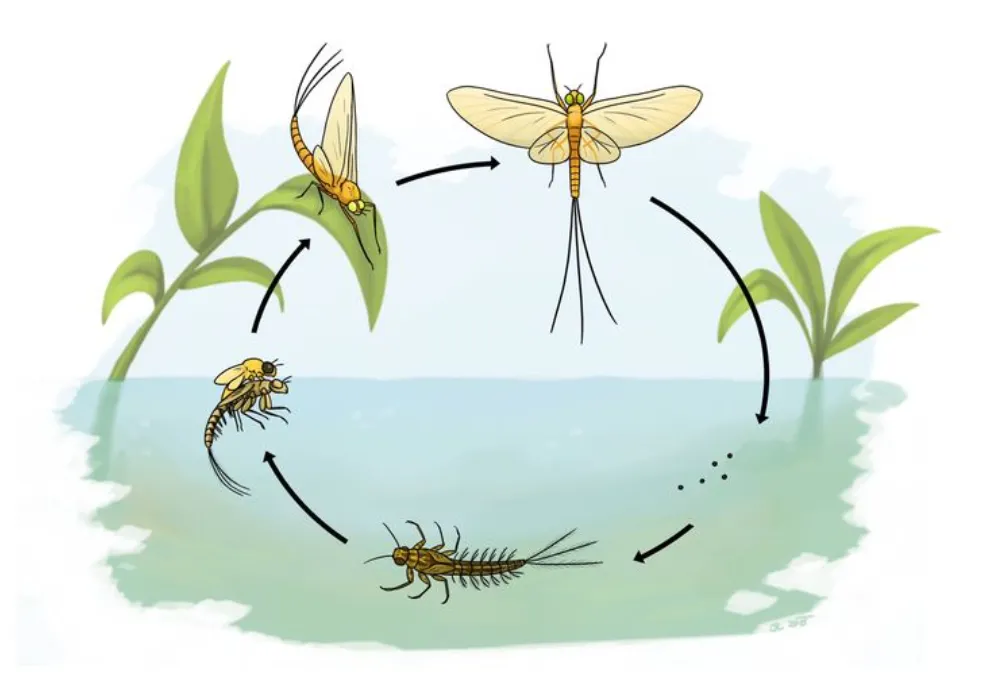
The Mayfly life cycle is one of the most fascinating and unique processes in the insect world. Known for their incredibly short adult lifespan, mayflies are ancient insects that play a crucial role in freshwater ecosystems. These delicate creatures spend most of their lives underwater before emerging in massive swarms, often seen near rivers and lakes.
Mayflies belong to the order Ephemeroptera, which literally means “short-lived wings.” While their adult stage may last only a few hours or days, their earlier stages—especially the mayfly nymph phase—can last months or even years. This dramatic contrast makes them a subject of scientific curiosity and ecological importance.
Quick Answers (Most Common Questions)
1. What is a mayfly?
A mayfly is an aquatic insect that spends most of its life underwater as a nymph and emerges briefly as a flying adult to reproduce.
2. How long is a mayfly’s lifespan?
The total lifespan can be up to 1–2 years, but the adult stage lasts only 24 hours to a few days.
3. Why do mayflies swarm?
Mayflies swarm to mate in large groups, increasing the chances of successful reproduction.
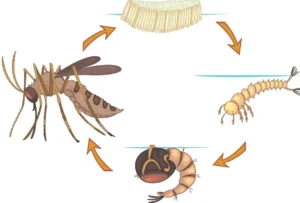
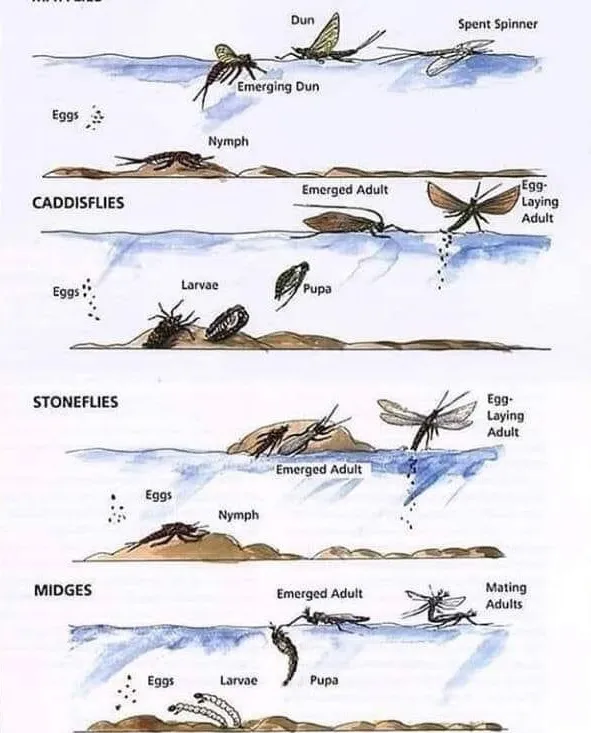
Quick Life Cycle Table
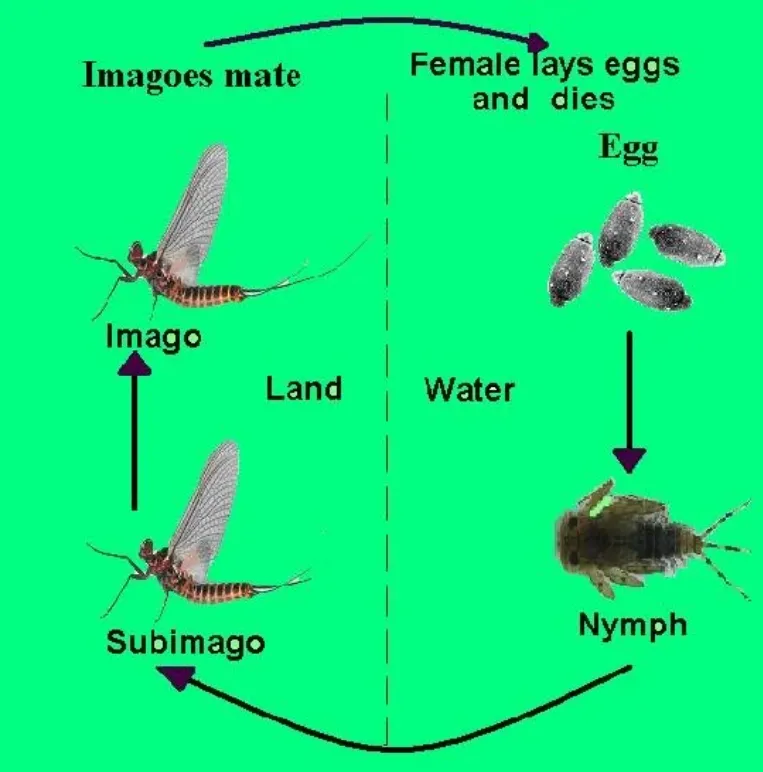
| Stage | Description | Duration |
| Egg | Laid on the water surface or submerged | A few days to weeks |
| Nymph (Larvae) | Aquatic stage: feeds and grows underwater | Months to 2 years |
| Subimago | Transitional winged stage (unique to mayflies) | A few hours to 1 day |
| Adult (Imago) | Final stage; mates and dies | A few hours to 2 days |
The History Of Their Scientific Naming
- Mayflies belong to the order Ephemeroptera, derived from Greek words:
- Ephemeros = “lasting a day”
- Ptera = “wings”
- The name reflects their short-lived adult stage, which fascinated early naturalists.
- Swedish taxonomist Carl Linnaeus first classified mayflies in the 18th century, recognising their unique life cycle.
- Scientists later discovered their subimago stage, a rare intermediate form not found in most insects.
- Over 3,000 species of mayflies have been identified worldwide.
- Their classification has evolved with modern genetics, helping researchers better understand their diversity.
Their Evolution And Their Origin
Mayflies are among the oldest winged insects on Earth. Fossil evidence shows that they existed over 300 million years ago, during the Carboniferous period. This makes them older than dinosaurs.
Their early ancestors were larger, with wingspans reaching up to 45 cm. Over time, evolution shaped them into smaller, more specialised insects adapted to freshwater environments.
One of the most unique evolutionary traits of mayflies is their subimago stage, a transitional phase between the immature and adult forms. This adaptation likely helped them survive environmental changes.
Mayflies have remained relatively unchanged over millions of years, making them a “living fossil.” Their persistence highlights their ecological importance and adaptability.
They evolved alongside freshwater ecosystems and became essential indicators of water quality. Because they are sensitive to pollution, their presence often signals a healthy aquatic environment.
Their main food and its collection process
Mayflies primarily feed during their nymph stage, as adults do not eat at all.
🔍 Main Food Sources:
- Algae and microscopic plants
- Organic debris (detritus)
- Bacteria and fungi
- Small aquatic organisms
🪶 Food Collection Process:
- Scraping: Nymphs use specialised mouthparts to scrape algae from rocks.
- Filtering: Some species filter tiny particles from flowing water.
- Gathering: Others collect organic matter from riverbeds.
🧠 Key Facts:
- Feeding habits vary among species and habitats.
- They play a role in breaking down organic matter.
- Their feeding supports nutrient cycling in aquatic systems.
Their life cycle and ability to survive in nature
🥚 Egg Stage
Female mayflies lay eggs directly in water. These eggs attach to surfaces or sink to the bottom.
🐛 Nymph Stage (Mayfly Larvae)
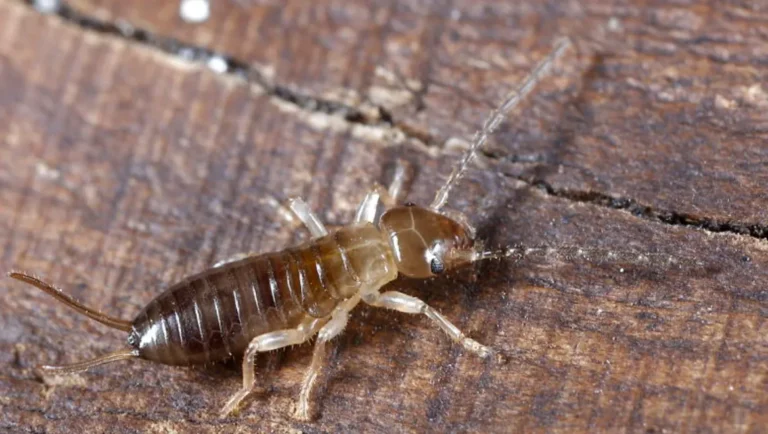
This is the longest stage. Nymphs live underwater and breathe through gills.
They are highly adapted to survive:
- Strong currents
- Predators like fish
- Changing temperatures
🪶 Subimago Stage
This unique stage allows mayflies to transition safely from water to air.
🪶 Adult Stage
Adults emerge, mate, and die quickly.
Despite their short adult life, their survival strategy works because:
- Large numbers hatch at once
- Swarming reduces predator impact
Their Reproductive Process and raising their children
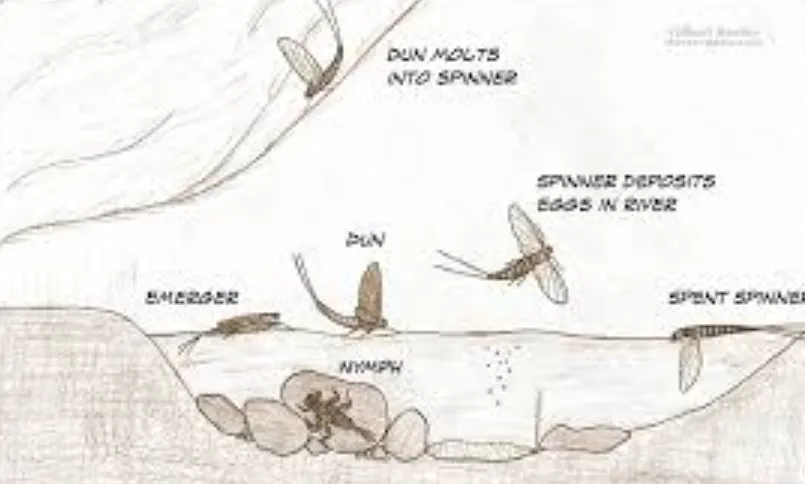
Mayflies follow a simple but highly effective reproductive strategy.
🔁 Reproduction Process:
- Males form swarms above water.
- Females enter swarms to mate.
- Fertilisation occurs in mid-air.
🥚 Egg Laying:
- Females lay hundreds to thousands of eggs.
- Eggs are dropped onto water surfaces.
👶 Raising Offspring:
- There is no parental care.
- Survival depends on numbers and the environment.
📊 Key Points:
- A high reproduction rate ensures species survival.
- Eggs hatch into nymphs quickly in favourable conditions.
- Natural selection plays a major role.
The importance of them in this Ecosystem
🌊 Indicator of Water Quality
Mayflies are highly sensitive to pollution. Their presence indicates clean water.
🐟 Food Source for Wildlife
They are a vital food source for:
- Fish
- Birds
- Amphibians
🔄 Nutrient Cycling
They help break down organic matter, enriching ecosystems.
🧬 Biodiversity Support
Their existence supports a balanced aquatic food web.
Important Things That You Need To Know
The world of mayflies includes several fascinating aspects beyond their lifecycle.
The mayfly is known for its brief adult stage but long aquatic life. Understanding the mayfly’s lifespan reveals that most of its life is spent underwater.
The mayfly nymph stage is crucial for growth and feeding. During this time, they act as both consumers and prey, balancing ecosystems.
Many people confuse mayfly larvae with other aquatic insects, but they are distinct due to their gills and body structure.
One of the most striking natural events is the mayfly swarm, where thousands emerge simultaneously. This phenomenon is both a survival tactic and a spectacle.
Understanding what a mayfly is helps us appreciate their ecological importance and evolutionary uniqueness.
These insects are not just short-lived creatures—they are essential indicators of environmental health and biodiversity.
What to do to protect them in nature and save the system for the future
- Reduce water pollution from chemicals and waste
- Protect rivers and freshwater habitats
- Avoid overuse of pesticides
- Support environmental conservation programs
- Maintain natural vegetation near water bodies
- Promote awareness about aquatic ecosystems
- Encourage sustainable agriculture practices
- Monitor water quality regularly
- Reduce plastic pollution in waterways
- Support wildlife protection laws
Frequently Asked Questions (FAQs)
1. How long does a mayfly live?
Most of its life is spent as a nymph (months to years), while adults live only hours to days.
2. Why are mayflies important?
They indicate clean water and serve as food for many animals.
3. Do mayflies bite humans?
No, mayflies are harmless and do not bite.
4. What is the purpose of mayfly swarms?
Swarming helps them find mates and reproduce efficiently.
5. Where do mayflies live?
They live near freshwater bodies like rivers, lakes, and streams.
6. What do mayflies eat?
Nymphs eat algae and organic matter; adults do not eat.
7. Why do mayflies die so quickly?
Their adult stage is focused only on reproduction.
8. Are mayflies endangered?
Some species are threatened due to pollution and habitat loss.
Conclusion
The mayfly life cycle is a remarkable example of nature’s efficiency and balance. Despite their short adult lifespan, mayflies contribute significantly to ecosystems. Their long aquatic phase supports nutrient cycles, while their emergence feeds countless species.
Understanding their lifecycle—from egg to nymph, subimago, and adult—reveals how well-adapted they are to survive in changing environments. Their sensitivity to pollution makes them vital indicators of environmental health.
Protecting mayflies means protecting freshwater ecosystems as a whole. By reducing pollution and conserving natural habitats, we ensure their survival and maintain ecological balance.
In essence, mayflies may live briefly in the air, but their impact on the planet is long-lasting and invaluable.
Also Read: life cycle of monarch butterfly