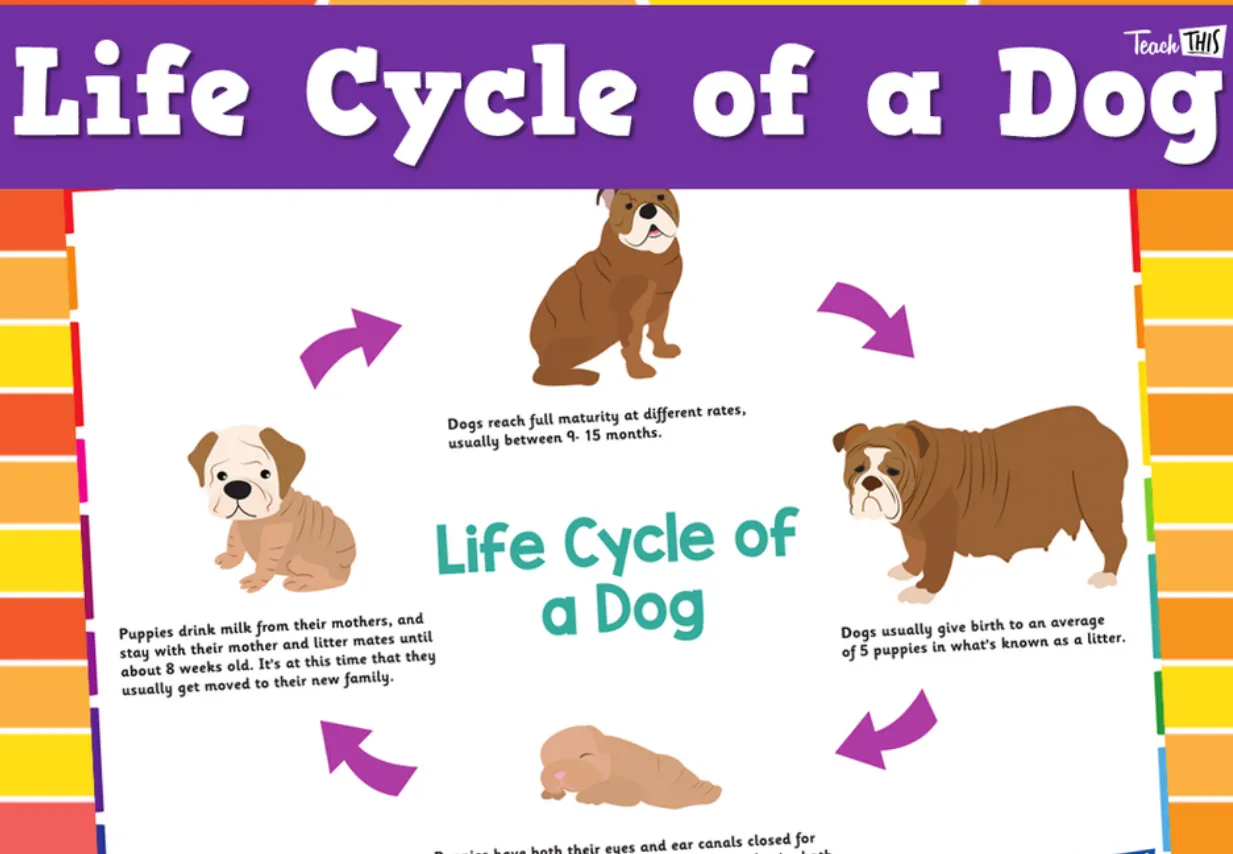
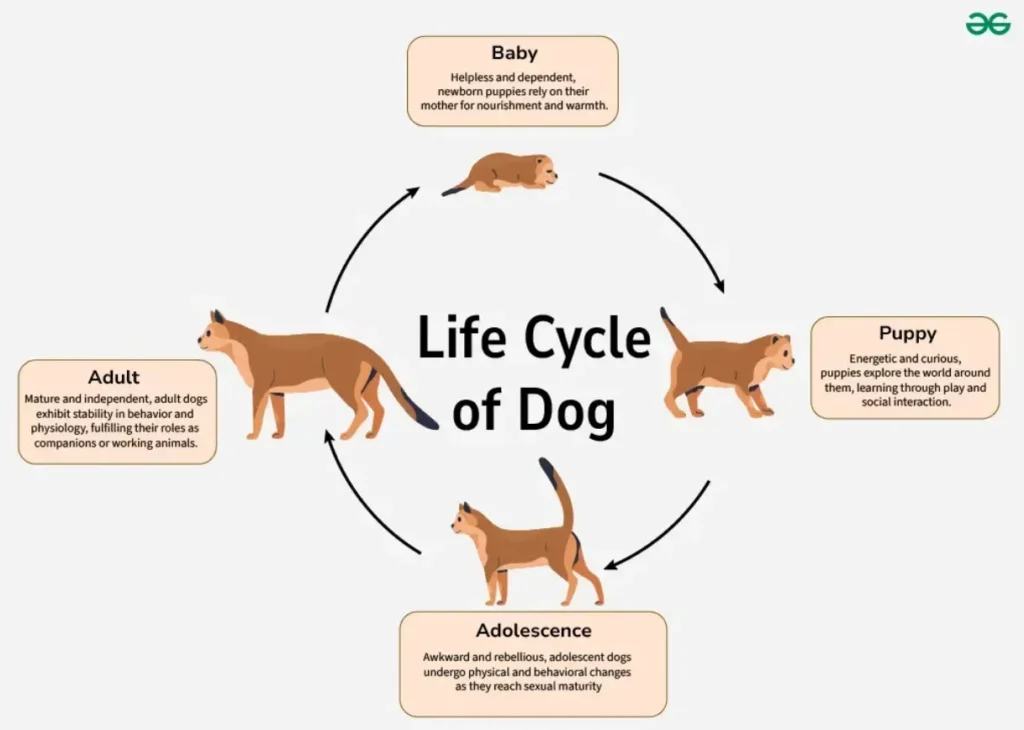
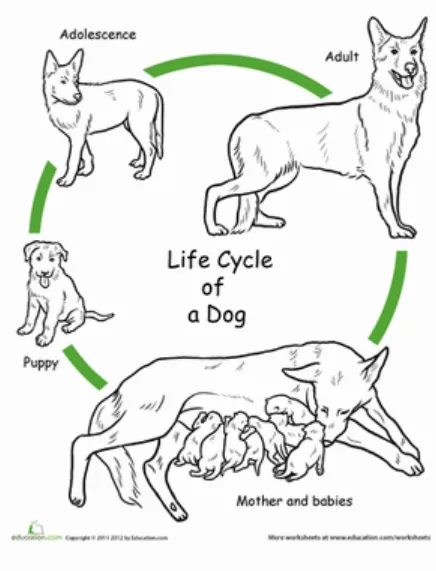
The life cycle of dogs explains how a dog grows from a newborn puppy into a young adult, mature adult, senior dog, and finally reaches the end-of-life stage. Dogs are among the most familiar animals in human society, but their development is much deeper than simply “puppy to adult.” Their growth depends on breed size, nutrition, health care, genetics, environment, and human support.
Scientifically, the domestic dog is commonly known as Canis lupus familiaris and is a domesticated member of the Canidae family. Dogs are closely related to wolves and have lived beside humans for thousands of years as companions, protectors, hunters, and working animals.
Understanding the life cycle of dogs helps owners provide better food, training, health care, socialization, and emotional support at every stage. A puppy needs warmth, milk, protection, and training. An adult dog needs balanced food, exercise, companionship, and preventive care. A senior dog needs softer routines, regular veterinary checks, and gentle support.
Q: How many stages are in the life cycle of dogs?
A: Dogs commonly pass through puppy, young adult, mature adult, senior, and end-of-life stages.
Q: How long is a dog pregnant?
A: Dog pregnancy usually lasts about 62–64 days from ovulation, though timing from breeding can vary.
Q: When does a puppy become an adult dog?
A: Many dogs reach emotional maturity between 12 and 18 months, but large and giant breeds may take longer.
Quick Life Cycle Table
| Life Stage | Approximate Age | Main Development | Main Care Needs |
| Newborn Puppy | Birth to 2 weeks | Eyes and ears closed, it depends fully on the mother | Warmth, milk, hygiene, protection |
| Transitional Puppy | 2 to 4 weeks | Eyes open, first steps, early senses develop | Gentle handling, clean bedding, mother’s milk |
| Social Puppy | 4 to 12 weeks | Play, learning, social behavior, weaning | Socialization, first training, and safe food |
| Adolescent Dog | 3 to 18 months | Fast growth, curiosity, and sexual maturity begin | Training, exercise, boundaries, vet care |
| Young Adult Dog | 1 to 3 years | Strong body, active mind, stable habits | Exercise, a balanced diet, and mental stimulation |
| Mature Adult Dog | 3 to 7 years | Full strength, steady behavior, working ability | Routine health checks, weight control |
| Senior Dog | Around 7+ years, varies by size | Slower movement, aging organs, lower energy | Gentle activity, joint care, regular vet visits |
| End-of-Life Stage | Final stage | Frailty, chronic illness, reduced comfort | Pain control, comfort, dignity, compassion |
The History of Their Scientific Naming
The scientific naming of dogs is closely connected to their relationship with wolves. The domestic dog is usually classified as Canis lupus familiaris, meaning it is treated as a domesticated subspecies of the gray wolf. Some classifications also use Canis familiaris, especially when describing the domestic dog as a separate species.
The genus name Canis refers to dog-like animals, including wolves, coyotes, jackals, and domestic dogs. The species name lupus means “wolf,” while familiaris reflects the dog’s domesticated, familiar relationship with humans.
Important points about dog naming:
- Canis identifies the broader dog-like group.
- Lupus connects dogs to the gray wolf lineage.
- Familiaris highlights domestication and close human association.
- Dogs belong to the family Canidae and the order Carnivora.
- The scientific name reflects both wild ancestry and domestic adaptation.
This naming history matters because it shows that dogs are not isolated animals. Their biology, behavior, hunting instincts, pack awareness, and communication patterns still carry traces of their wolf ancestry, even after thousands of years of domestication.
Their Evolution And Their Origin
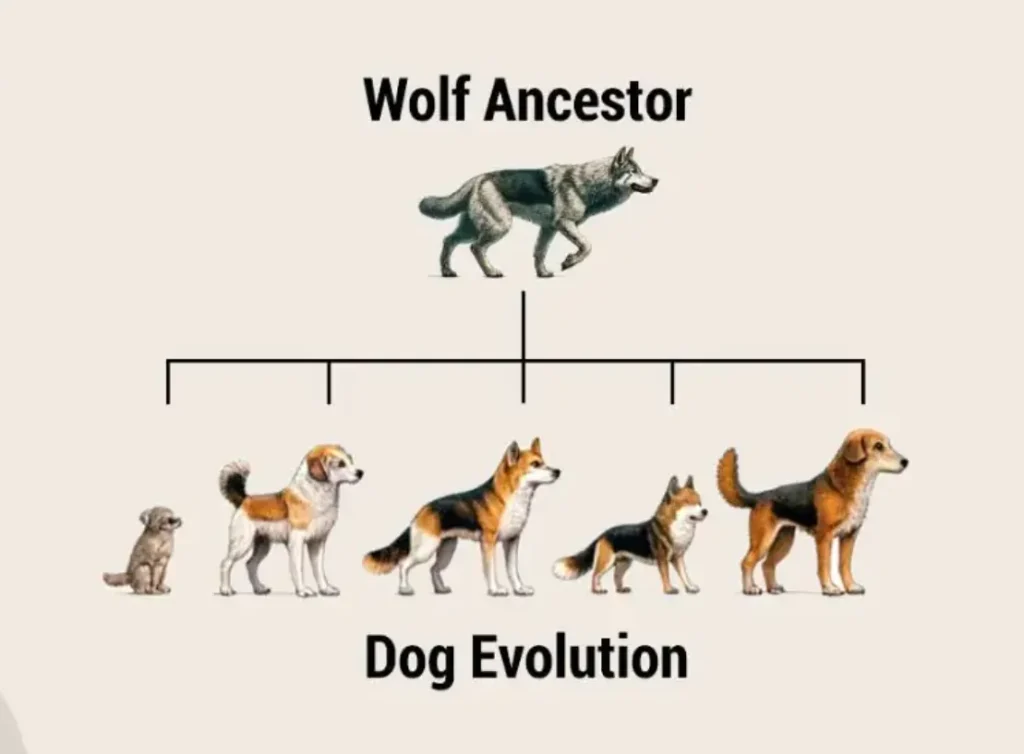
The origin of dogs is one of the most fascinating stories in animal evolution. Dogs evolved from ancient wolf-like ancestors and became the first major animal partners of humans. Unlike cattle, sheep, or horses, dogs formed a close relationship with hunter-gatherer societies before agriculture became common.
Modern research shows that dog domestication was not a simple one-time event. Scientists still debate exactly where and when dogs first became domesticated. However, ancient DNA evidence suggests that dogs were living with humans thousands of years ago and gradually became part of human society.
Dogs likely became useful to early humans because they could help with hunting, guarding camps, detecting danger, and cleaning leftover food. In return, humans gave them food, shelter, and protection. Over time, friendlier wolves or wolf-like animals may have stayed closer to human groups, and this relationship gradually shaped the earliest dogs.
From that long history came the huge variety of dogs seen today. Small companion dogs, large guardian dogs, herding dogs, scent hounds, sled dogs, and service dogs all belong to the same broad domestic species. Still, their bodies and behaviors were shaped by selective breeding and environment.
This evolution also explains why dogs are so adaptable. They can live in homes, farms, forests, mountains, cities, cold climates, and warm regions when given proper care. Their success is strongly connected to their intelligence, social nature, flexible diet, and ability to communicate with humans.
Their main food and its collection process
Dogs are biologically related to carnivores, but domestic dogs are not strict meat-eaters. They are best described as opportunistic omnivores. This means they can eat animal-based foods and certain plant-based foods when properly prepared.
In nature or semi-wild conditions, dogs may search for meat scraps, small animals, eggs, insects, fruits, and human food waste. Domestic dogs, however, depend mostly on humans for balanced nutrition. Good dog food should provide protein, fat, carbohydrates, vitamins, minerals, and clean water.
Main food sources for dogs include:
- Animal protein: chicken, beef, fish, lamb, eggs, or properly formulated dog food.
- Healthy fats: needed for skin, coat, energy, and brain function.
- Safe carbohydrates: rice, oats, sweet potato, or other digestible grains and vegetables.
- Fruits in moderation: apples, blueberries, bananas, and strawberries can be safe when prepared correctly.
- Fresh water: essential for digestion, body temperature, and organ health.
Many dog owners ask, “Can dogs eat strawberries?” or” Can dogs eat bananas?” Yes, both can be safe in small amounts. Strawberries should be washed and cut into small pieces. Bananas should be peeled and given only as a small treat.
In the wild, food collection depends on smell, movement, memory, and social behavior. Dogs have a strong sense of smell, allowing them to locate food from a distance. They may scavenge alone or in small groups. Domestic dogs do not need to hunt if properly cared for, but their natural searching instinct remains visible when they sniff, dig, chew, or explore.
Food safety is very important. Dogs should not be given chocolate, grapes, raisins, alcohol, onions, garlic, cooked bones, or xylitol-containing products. Even safe fruits should be consumed in moderation, as too much sugar or fiber can upset digestion.
Important Things That You Need To Know
When people search for dogs, they often ask questions beyond the basics of the dog’s life cycle. Some common topics include food safety, allergy-friendly breeds, medication, and even unrelated pop culture phrases.
First, can dogs eat strawberries? Yes, fresh strawberries can be given in small pieces and in moderation. They should be washed, served without stems, and treated as an occasional snack rather than a main meal.
Similarly, many owners ask whether dogs can eat bananas or “Can have bananas. Bananas are usually safe in small amounts, but they are naturally sweet, so overfeeding is not a good idea. They should be peeled and cut into small pieces before feeding.
Another common phrase is hypoallergenic dogs. This does not mean allergy-free dogs. No dog breed is completely hypoallergenic, although some breeds may shed less or produce less dander than others. People with allergies should spend time with a breed before adopting.
People also search for gabapentin for dogs. Veterinarians may prescribe gabapentin for pain, seizures, or anxiety-related cases, but it should never be given without veterinary guidance. Human medicines can contain ingredients that are harmful to dogs.
Finally, Reservoir Dogs is a film title and not related to dog biology, reproduction, puppy growth, or animal care. For this article, the focus remains on real dogs, their life stages, survival ability, food, reproduction, and ecological importance.
Their life cycle and ability to survive in nature
Puppy Stage
The puppy stage begins at birth. Newborn puppies are blind, deaf, weak, and fully dependent on their mother. They need milk, warmth, cleaning, and protection. During the first weeks, their main activities are sleeping, feeding, and growing.
As their eyes open and movement improves, puppies begin to explore. This stage is important for social learning. Puppies learn bite control, body language, confidence, and early communication from their mother, littermates, and humans.
Adolescent and Young Adult Stage
Adolescence is a high-energy stage. Dogs become curious, playful, and sometimes stubborn. Their bones, muscles, teeth, and reproductive systems continue to develop. This is the stage when training, socialization, exercise, and boundaries are most important.
Young adult dogs are usually active and physically strong. They can learn tasks, protect territory, form strong bonds, and adapt to family routines. Many dogs reach emotional maturity between 12 and 18 months, though breed size affects timing.
Mature, Senior, and Survival Stage
Mature adult dogs are often steady, confident, and physically capable. Senior dogs tend to slow down and may need softer food, easier exercise, and more frequent health monitoring. Their joints, teeth, heart, and organs may need extra care.
In nature, dogs survive through smell, social behavior, flexible feeding, alert hearing, speed, and learned experience. However, domestic dogs survive best with human care, vaccination, shelter, safe food, and protection from disease.
Their Reproductive Process and raising their children
Dog reproduction begins when male and female dogs reach sexual maturity. The exact age depends on breed and body size. Small breeds often mature earlier, while large and giant breeds may take longer. Responsible breeding should never be based only on physical maturity; health, genetics, temperament, and age must also be considered.
The female dog’s reproductive cycle includes several phases: anestrus, proestrus, estrus, and diestrus. Many female dogs show heat every 6 months, though this may vary depending on breed, health, and individual factors.
Main points in the reproductive process:
- Heat cycle: The female becomes fertile during the estrus phase.
- Mating: Fertilization can occur during the fertile period.
- Pregnancy: A dog’s pregnancy usually lasts around 62–64 days from ovulation.
- Birth: The mother gives birth to a litter of puppies.
- Nursing: Puppies depend on their mother’s milk during their earliest stage.
- Weaning: Puppies gradually begin eating soft food as they grow.
- Social learning: Puppies learn play behavior, confidence, and communication.
Raising puppies requires warmth, hygiene, nutrition, and safety. The mother usually licks the puppies to clean them and stimulate their bodies. She nurses them, protects them, and responds to their cries.
Human caregivers should provide a quiet nesting area, clean bedding, veterinary support, and proper food for the mother. Puppies should not be separated from their mother too early, as early socialization affects behavior later in life.
Responsible reproduction also means avoiding careless breeding. Dogs with serious genetic diseases, poor temperament, or weak health should not be bred. Spaying and neutering can help reduce unwanted litters and improve population control.
The importance of them in this Ecosystem
Natural Role of Dogs
Dogs are not just household pets. In many environments, they influence food chains, human safety, animal movement, and waste cleanup. Free-ranging dogs may scavenge leftover food, alert humans to danger, and sometimes help control small animal populations.
However, unmanaged dog populations can also create ecological pressure. They may disturb wildlife, spread disease, or compete with native predators. This is why responsible ownership and population control are essential.
Human Support and Working Roles
Dogs have served humans as hunters, guards, herders, rescuers, guides, police dogs, therapy animals, and companions. Their strong sense of smell allows them to detect missing people, explosives, drugs, diseases, and disaster survivors.
In farming systems, herding dogs help move livestock safely. Guard dogs protect animals from predators. Service dogs support people with disabilities and improve independence.
Emotional and Social Value
Dogs also play an important emotional role in human life. They reduce loneliness, encourage exercise, and create companionship. For children, dogs can teach responsibility, empathy, and a sense of routine.
Their ecological importance is therefore both natural and social. Dogs connect human communities with animal life, outdoor activity, protection, and emotional well-being. But this positive role depends on responsible care. Vaccinated, trained, and well-fed dogs are safer for people, wildlife, and the environment.
What to do to protect them in nature and save the system for the future
Protecting dogs and the natural system requires responsible human action. Dogs are highly adaptable, but they still need care, safety, and ethical management.
- Provide proper vaccination: Vaccines protect dogs from serious diseases and reduce the risk of spreading infections to other animals.
- Support spaying and neutering: Population control helps reduce stray dog suffering, road accidents, hunger, and disease transmission.
- Feed dogs responsibly: Balanced food keeps dogs healthy and reduces their need to scavenge waste or hunt wildlife.
- Avoid abandoning dogs: Abandonment increases stray populations and creates risks for both dogs and ecosystems.
- Train and socialize dogs early: Well-trained dogs are safer around people, livestock, wildlife, and other pets.
- Keep dogs under control outdoors: Leashes, fences, and supervision help prevent attacks on birds, small mammals, and farm animals.
- Protect wildlife habitats: Dogs should not be allowed to chase wild animals, disturb nests, or enter sensitive conservation areas.
- Use veterinary medicine safely: Medicines such as gabapentin for dogs should be used only under veterinary supervision.
- Adopt instead of buying carelessly: Adoption can reduce shelter pressure and give homeless dogs a second chance.
- Educate communities: People should understand dog behavior, safe feeding, disease prevention, and humane treatment.
A sustainable future for dogs means balancing love, responsibility, and ecological awareness. Dogs can live peacefully with humans and nature when properly cared for.
Frequently Asked Questions (FAQs)
Q1: What is the complete life cycle of dogs?
A: The complete life cycle of dogs includes a newborn puppy, a growing puppy, an adolescent, a young adult, a mature adult, a senior dog, and the end-of-life stage. Each stage has different needs for food, training, health, and care.
Q2: How long do dogs live?
A: Many dogs live around 10 to 15 years, but lifespan depends on breed, size, genetics, health care, diet, and lifestyle. Small dogs often live longer than giant breeds.
Q3: When do puppies open their eyes?
A: Puppies usually open their eyes during the early weeks of life. At birth, they are blind and deaf, so they depend completely on their mother for warmth, food, and protection.
Q4: Can dogs eat strawberries?
A: Yes, dogs can eat strawberries in moderation. They should be fresh, washed, cut into small pieces, and given as an occasional treat.
Q5: Can dogs eat bananas?
A: Yes, dogs can eat bananas in small amounts. Bananas are soft and sweet, so they should not replace a balanced dog food diet.
Q6: Are hypoallergenic dogs completely allergy-free?
A: No. Hypoallergenic dogs are not completely allergy-free. Some breeds may shed less or produce less dander, but sensitive people may still react.
Q7: Is gabapentin safe for dogs?
A: Gabapentin for dogs may be used by veterinarians for certain conditions, but it should never be given without professional advice.
Q8: How long is a dog pregnant before giving birth?
A: A dog is usually pregnant for about 62–64 days from ovulation, although the timing from breeding may vary.
Conclusion
The life cycle of dogs is a powerful journey of growth, learning, survival, reproduction, aging, and companionship. From helpless newborn puppies to loyal adult dogs and gentle seniors, every stage requires proper care, nutrition, training, and love.
Dogs are scientifically connected to wolves, but thousands of years of domestication have made them one of humanity’s closest animal partners. Their evolution, intelligence, emotional sensitivity, and adaptability make them valuable in homes, on farms, in rescue work, in therapy, and for protection.
To protect dogs and the Ecosystem, people must practice responsible ownership. This includes vaccination, safe feeding, training, population control, veterinary care, and respect for wildlife.
A dog’s life is not only about biology; it is also about trust, responsibility, and the bond between humans and animals. Understanding the life cycle of dogs helps us raise healthier dogs and build a safer future for both animals and people.
Also Read: strawberry life cycle