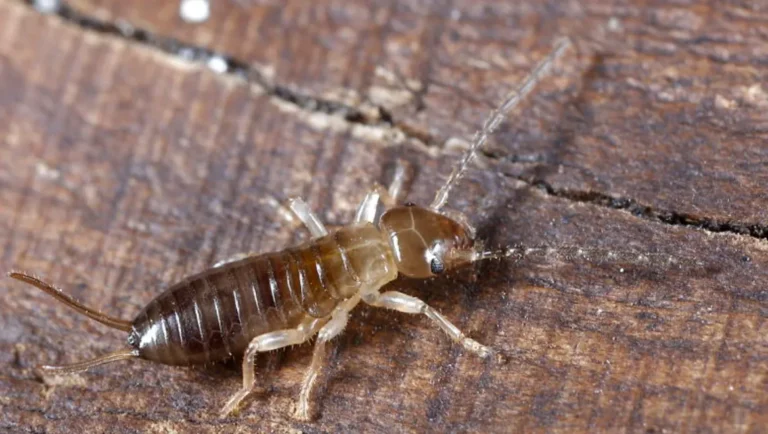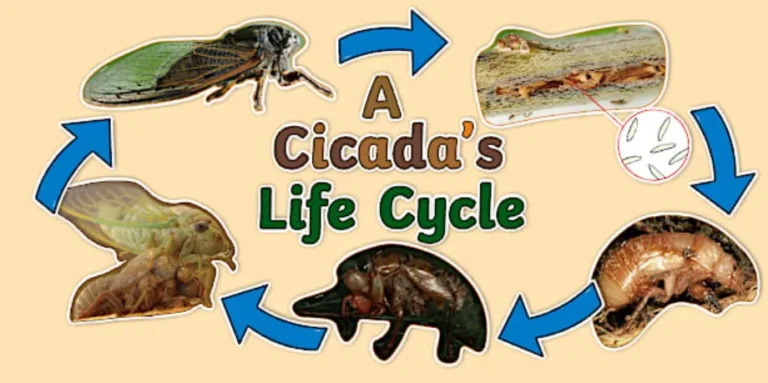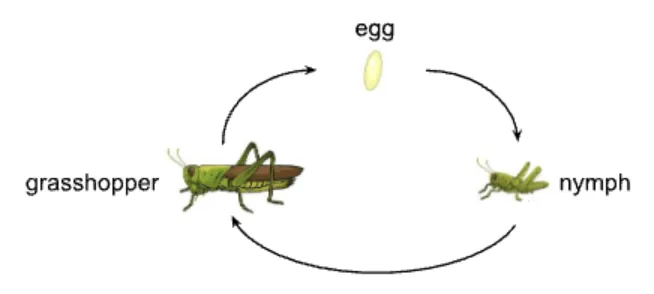
The grasshopper’s life cycle is one of the clearest examples of nature’s simplest and most powerful design. A grasshopper does not pass through a hidden pupal stage like a butterfly. Instead, it undergoes incomplete metamorphosis, progressing from egg to nymph to adult. Young grasshoppers look like smaller versions of adults, but they lack fully developed wings and reproductive ability at first. This three-stage pattern is widely documented in insect biology and in grasshopper field research.
Grasshoppers belong to the order Orthoptera and the suborder Caelifera. Many common short-horned grasshoppers belong to the family Acrididae, a large and diverse group found in grasslands, fields, forests, farms, and other dry habitats worldwide.
For people searching for the grasshopper insect, an image of the grasshopper insect, or a grasshopper insect close-up, the life cycle is the best starting point. It explains why these insects appear suddenly in warm seasons, why young ones look wingless, and why adults become strong jumpers, flyers, feeders, and breeders.
Q: How many stages are in the grasshopper insect life cycle?
A: There are three main stages: egg, nymph, and adult.
Q: Do grasshoppers have a pupal stage?
A: No. Grasshoppers grow through incomplete metamorphosis, so there is no pupal stage.
Q: Where do grasshoppers lay their eggs?
A: Most female grasshoppers lay eggs in the soil, often in protected egg pods.
Quick Life Cycle Table
| Life cycle stage | What happens | Main features | Survival focus |
| Egg | Females lay eggs in soil, often in pods | Protected underground, it may remain inactive during cold or dry periods | Avoids harsh weather and predators |
| Nymph | Young grasshopper hatches and begins feeding | Looks like a small adult but has no full wings | Eats, hides, molts, grows fast |
| Molting phase | A nymph sheds its outer skin several times | The body becomes larger after each molt | Allows growth and wing development |
| Adult | A fully grown grasshopper can mate and lay eggs | Strong legs, wings in many species, and a mature body | Feeding, escaping predators, and reproduction |
| Next generation | Adults mate, and females lay eggs again | Life cycle starts over | Species survival continues |
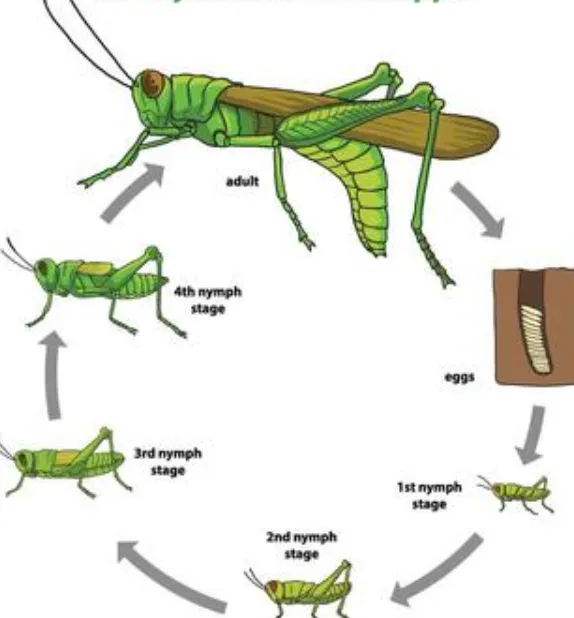
The most common pattern is egg, nymph, adult, egg. In many temperate areas, grasshoppers spend the colder part of the year as developing embryos inside eggs, while hatching and growth usually happen in warmer seasons.
Important Things That You Need To Know
When people search for the grasshopper insect life cycle, they often also search for related visual and identification terms. These LSI terms help connect the topic with what readers really want to understand.
A grasshopper insect is not just a common jumping bug in grass. It is a highly adapted plant-eating insect with strong hind legs, chewing mouthparts, compound eyes, antennae, and a body built for fast escape. Many species blend into green, brown, or dry grass colors, making them hard for predators to spot.
A grasshopper image is useful because it clearly shows the body parts. Readers can see the head, thorax, abdomen, folded wings, antennae, and powerful back legs. This helps explain why adults jump so well and why nymphs look similar but smaller.
A grasshopper insect, in close-up, can reveal details that are easy to miss in the field: the compound eyes, mouthparts, leg spines, and textured body covering, all of which support survival.
A photo of a grasshopper insect also helps people compare nymphs and adults. Nymphs are usually smaller and wingless or have small wing pads, while adults have a more complete body form.
The phrase “grasshopper, grasshopper, insect” may seem repeated, but it reflects how many users search online when they are trying to identify an insect quickly. For SEO, the best way to use these terms is naturally, inside helpful content, not by forcing them into every line.
The History of Their Scientific Naming
The scientific naming of grasshoppers comes from centuries of insect classification. Early naturalists grouped insects by body shape, wings, legs, mouthparts, and behavior. Grasshoppers are strongly associated with the order Orthoptera, a name derived from Greek roots meaning “straight wings.” This refers to the way many members of the order hold their wings along the body.
Key naming points include:
- Orthoptera includes grasshoppers, crickets, katydids, and related insects.
- Caelifera is the suborder that includes grasshoppers and grasshopper-like insects.
- Acrididae is one of the best-known grasshopper families, especially for short-horned grasshoppers.
- The family name Acrididae was first described by MacLeay, 1821, according to taxonomic references.
- Not every grasshopper is a locust, but locusts are grasshoppers that can form swarms under certain conditions.
Scientific names help researchers avoid confusion. Local names vary from country to country, but taxonomy provides each group with a more stable identity. That is why biology uses names like Orthoptera, Caelifera, and Acrididae when discussing the grasshopper insect life cycle, evolution, feeding, reproduction, and ecological role.
Their Evolution And Their Origin
The origin of grasshoppers is linked to the long history of winged insects. Grasshoppers belong to Orthoptera, an ancient insect order that includes jumping insects with chewing mouthparts and strong hind legs. Their body plan became successful because it combined simple feeding, fast movement, camouflage, and flexible reproduction.
Modern grasshoppers are especially associated with open habitats such as grasslands, rangelands, dry fields, farms, and shrublands. Over time, different species adapted to different climates and plant communities. Some became strong flyers. Some became ground dwellers. Some developed colors that match dry soil, green grass, bark, or leaf litter.
The family Acrididae is one of the most diverse grasshopper lineages. A major scientific review describes Acrididae as a highly diverse group within Orthoptera, with thousands of valid species and a wide distribution across grassland, desert, alpine, tropical, and semi-aquatic habitats.
Their evolution also explains their feeding success. Grasshoppers use strong mandibles to chew plant material directly. This simple feeding system allows them to eat grasses, leaves, forbs, weeds, and sometimes crop plants. Their digestive system and behavior help them survive in places where plant quality changes season by season.
Another important evolutionary advantage is incomplete metamorphosis. Because nymphs resemble adults, they can begin feeding almost immediately after hatching. They do not need a pupal stage. This saves time and allows fast population growth when weather, food, and habitat conditions are favorable.
Grasshoppers also evolved strong survival defenses. Their jumping legs help them escape quickly. Their colors help them hide. Some species use sound, movement, or wing flash colors to confuse predators. These features helped grasshoppers remain successful across millions of years of environmental change.
Their main food and its collection process
Grasshoppers are mostly herbivorous insects, meaning they feed mainly on plants. Their diet depends on species, habitat, season, and available vegetation. Some prefer grasses, some prefer broadleaf plants, and many are mixed feeders. North Dakota State University material notes that grasshoppers may be graminivorous, forbivorous, mixed feeders, or polyphagous, depending on what they eat.
Their food collection process is simple but effective.
- Finding food by movement
- Grasshoppers move through grass, crops, weeds, and wild plants. They use sight, touch, and chemical cues to locate suitable leaves and stems.
- Testing the plant surface
- Before feeding deeply, a grasshopper may touch or taste plant tissue with its mouthparts. This helps it choose softer, safer, and more nutritious parts.
- Chewing with mandibles
- Grasshoppers have strong chewing mouthparts called mandibles. These cut and grind plant tissue into smaller pieces.
- Feeding on soft plant parts first
- They often choose tender leaves, young shoots, and soft green parts because these are easier to chew and digest.
- Changing food when needed
- When preferred plants become scarce or dry, some grasshoppers shift to other vegetation, including weeds and crops.
- Feeding during warm active periods
- Grasshoppers are usually more active in warm daylight. Heat helps their body movement, digestion, and escape ability.
In nature, this feeding behavior supports both survival and ecosystem function. At normal population levels, grasshoppers help move plant energy into the food web. At very high population levels, especially in farms or dry rangelands, they may damage crops and grazing plants.
Their life cycle and ability to survive in nature
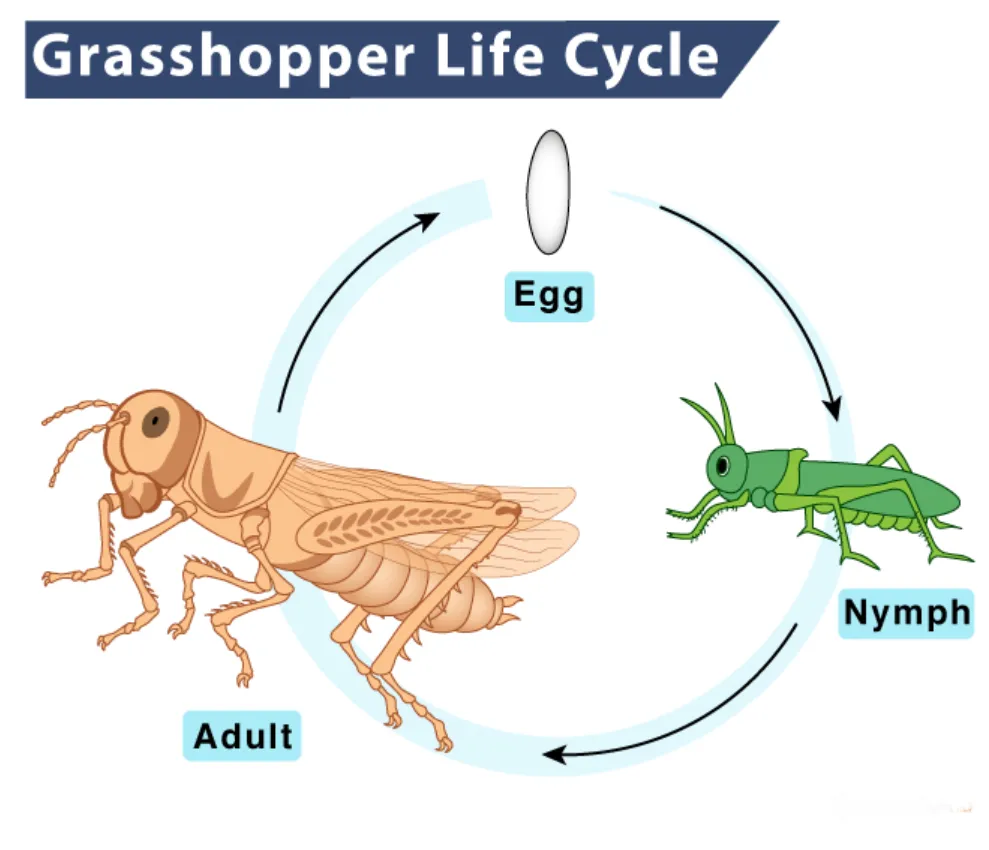
Egg stage
The egg stage marks the beginning of the grasshopper’s life cycle. Female grasshoppers usually place eggs in the soil, where they are safer from many surface predators and weather changes. Eggs are often laid in clusters or pods. In many species, this stage can survive cold months or dry periods until conditions improve.
This is one reason grasshoppers can return each season even when adults disappear. The adults may die after breeding, but eggs remain hidden underground.
Nymph stage
The nymph hatches from the egg as a small grasshopper-like form. It lacks fully developed wings and cannot reproduce. Still, it can walk, jump, hide, and feed soon after hatching.
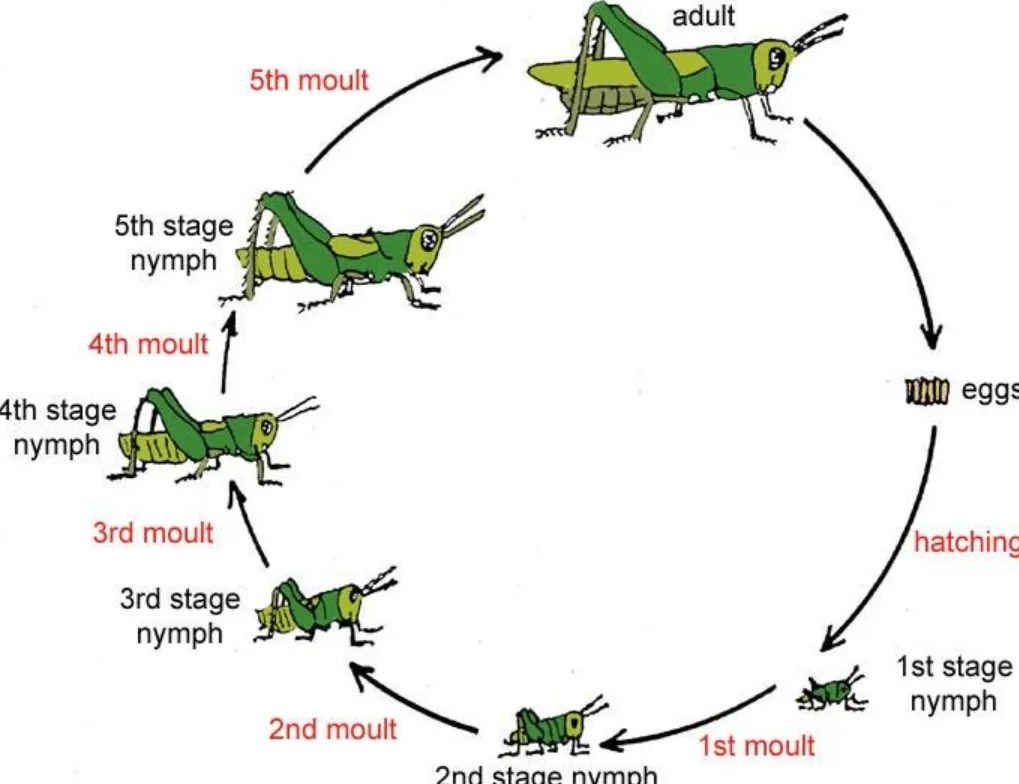
Nymphs pass through several growth steps called instars. Between these steps, they molt. Molting means they shed the outer body covering so a larger body can form.
Adult stage
The adult grasshopper has a mature body. In many species, adults have developed wings, stronger jumping legs, and reproductive organs. Adults search for food, avoid predators, find mates, and continue the next generation by laying eggs.
Survival ability
Grasshoppers survive through a mix of speed, camouflage, timing, and reproduction. Their body color often matches the color of grass, soil, or dry leaves. Their hind legs allow sudden jumps. Some adults fly when threatened. Eggs survive underground, while nymphs grow quickly when plants are available.
The simple life cycle gives grasshoppers a strong advantage. They do not waste time in the pupal stage. They hatch, feed, grow, molt, mature, mate, and restart the cycle.
Their Reproductive Process and raising their children
Grasshopper reproduction is direct and practical. Adults mate during the active season when temperature, food, and habitat conditions support survival. The male usually transfers sperm to the female, and the female later places fertilized eggs into the soil.
Important parts of the reproductive process include:
- Mate finding
- Many grasshoppers use movement, body signals, color, or sound to attract mates. Some males produce sound by rubbing body parts together.
- Mating
- After pairing, sperm is transferred from the male to the female. The female stores or uses it to fertilize eggs.
- Egg laying
- The female uses her ovipositor to lay eggs in the soil. Some species lay eggs at a particular depth and cover the opening afterward. USDA field material describes female grasshoppers depositing eggs in soil and covering the exit hole after oviposition in the studied species.
- Egg pods
- Many grasshoppers lay eggs in pods. These pods protect eggs from drying, temperature stress, and some predators.
- No parental care after laying
- Grasshoppers do not raise children the way birds or mammals do. Once eggs are laid, the female usually leaves them.
- Young survive independently
- Nymphs hatch ready to move and feed. They must avoid spiders, birds, reptiles, frogs, beetles, wasps, and other predators.
The phrase “raising their children” must be understood in the sense of “raising their children.” Grasshoppers do not feed or guard their young after hatching. Their parenting strategy is to lay eggs in a protected place and produce enough offspring so that some survive.
The importance of them in this Ecosystem
Food source for wildlife
Grasshoppers are important food for many animals. Birds, frogs, lizards, spiders, small mammals, predatory insects, and reptiles all eat them. In grasslands, they help transfer plant energy into animal life. Without insects like grasshoppers, many predators would lose a key seasonal food source.
Plant population balance
Grasshoppers feed on plants, which can shape vegetation. At moderate levels, their grazing may reduce plant crowding and influence which plants grow strongly. At high levels, they can damage crops or wild vegetation. Their role depends on population density, plant type, rainfall, and habitat health.
Nutrient cycling
When grasshoppers eat plants, digest them, and excrete waste, nutrients are returned to the soil system. Dead grasshoppers also become food for decomposers. Research on grasslands has shown that grasshoppers can affect ecosystem functioning, including nutrient cycling and plant production.
Biodiversity support
Grasshoppers are part of insect diversity. They differ in size, color, habitat, sound, feeding preference, and seasonal timing. Their presence supports a richer food web.
Environmental indicators
Because grasshoppers respond to plant cover, climate, land use, and habitat quality, their numbers can reflect changes in the environment. A healthy grasshopper community can indicate a functioning open habitat, while a sudden loss of diversity may suggest habitat stress.
Grasshoppers are not only pests. They are also prey, grazers, nutrient movers, and living signals of ecosystem condition.
What to do to protect them in nature and save the system for the future
Protecting grasshoppers does not mean allowing harmful outbreaks in farms. It means keeping balanced habitats where native insects, plants, predators, and soil life can work together. Many grasshopper species are harmless or beneficial at normal population levels.
- Protect native grasslands
- Save natural grasslands, meadows, field edges, and wild plant areas. These places support grasshopper diversity and many other insects.
- Reduce unnecessary pesticide use.
- Use chemicals only when truly needed. Broad-spectrum pesticide use can kill grasshoppers, pollinators, predators, and soil insects.
- Keep mixed vegetation
- A mix of grasses, forbs, weeds, and native plants supports more balanced insect communities than a single plant type.
- Support natural predators
- Birds, spiders, frogs, reptiles, and predatory insects help keep grasshopper numbers balanced naturally.
- Avoid destroying all field edges.
- Wild edges around farms and gardens provide shelter for insects, but they also support predators that help control pest outbreaks.
- Use integrated pest management.
- When grasshoppers become agricultural pests, monitor first, identify the species, and choose the least damaging control method.
- Protect soil health
- Because many grasshoppers lay eggs in the soil, healthy soil structure is important for their life cycles and the wider Ecosystem.
- Educate children and gardeners.
- Teach people that not every grasshopper is a problem. Many are part of a healthy food web.
- Support insect conservation research.
- Groups focused on invertebrate conservation study grasshopper diversity, habitat loss, and changing environments. The IUCN has a Grasshopper Specialist Group focused on these insects and their conservation.
The future of grasshoppers depends on balanced land use. Healthy ecosystems need insects, plants, predators, soil, water, and careful human choices working together.
Frequently Asked Questions (FAQs)
Q: What is the grasshopper insect’s life cycle?
A: The grasshopper insect life cycle has three main stages: egg, nymph, and adult. This is called incomplete metamorphosis.
Q: Why is there no pupal stage in grasshoppers?
A: Grasshoppers do not go through complete metamorphosis. Their young hatch as nymphs that already look somewhat like adults, so there is no pupa.
Q: Where can I see a grasshopper insect image for identification?
A: A clear grasshopper insect image should show the long hind legs, antennae, compound eyes, wings or wing pads, and segmented body.
Q: What does a grasshopper insect close up show?
A: A grasshopper insect close up shows details like chewing mouthparts, compound eyes, body texture, leg spines, antennae, and wing patterns.
Q: What do grasshopper nymphs eat?
A: Nymphs usually eat soft plant material such as grasses, leaves, weeds, and young shoots. Their diet often matches the adult diet, but in smaller amounts.
Q: How long does a grasshopper live?
A: Lifespan depends on species and climate. Many grasshoppers live for a season as active nymphs and adults, while the egg stage may survive through colder or dry months.
Q: Are grasshoppers harmful or helpful?
A: They can be both. At normal levels, grasshoppers are helpful as prey and nutrient cyclers. At outbreak levels, some species can damage crops and rangelands.
Q: What is the difference between a grasshopper and a locust?
A: A locust is a type of grasshopper that can change behavior and form swarms under certain environmental conditions. Not all grasshoppers are locusts.
Conclusion
The grasshopper insect’s life cycle is simple, efficient, and deeply connected to nature. From hidden eggs in the soil to active nymphs and strong jumping adults, every stage has a clear purpose. Eggs protect the next generation, nymphs grow quickly through molting, and adults feed, escape predators, mate, and lay eggs.
Grasshoppers are more than just insects seen in fields or gardens. They are part of the food chain, plant community balance, nutrient cycling, and grassland biodiversity. Their scientific names, evolution, feeding style, reproduction, and survival skills all show how well adapted they are.
Understanding the grasshopper insect helps people see nature with more care. A simple photo of a grasshopper can open the door to learning about insect life, ecosystem health, and the need to protect balanced habitats for the future.
Also Read: life cycle for dogs