The lady beetle’s life cycle is among the most useful and interesting in the insect world. Many people call this insect a ladybug, but scientifically, it is a beetle, not a true bug. Entomologists often use the names lady beetle or ladybird beetle because these names are more accurate.
Lady beetles are small, rounded insects from the family Coccinellidae. They are famous for their bright red, orange, yellow, or black bodies, often spotted. But their beauty is not the main reason they matter. Their real value lies in the garden, the farm, the forest, and the natural food web. Both lady beetle larvae and adults feed on soft-bodied pests such as aphids, scale insects, mites, thrips, and whiteflies. This makes them a natural helper for plants and farmers.
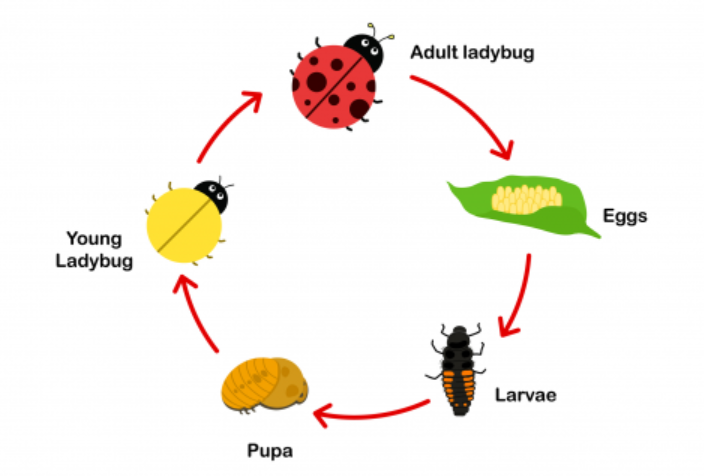
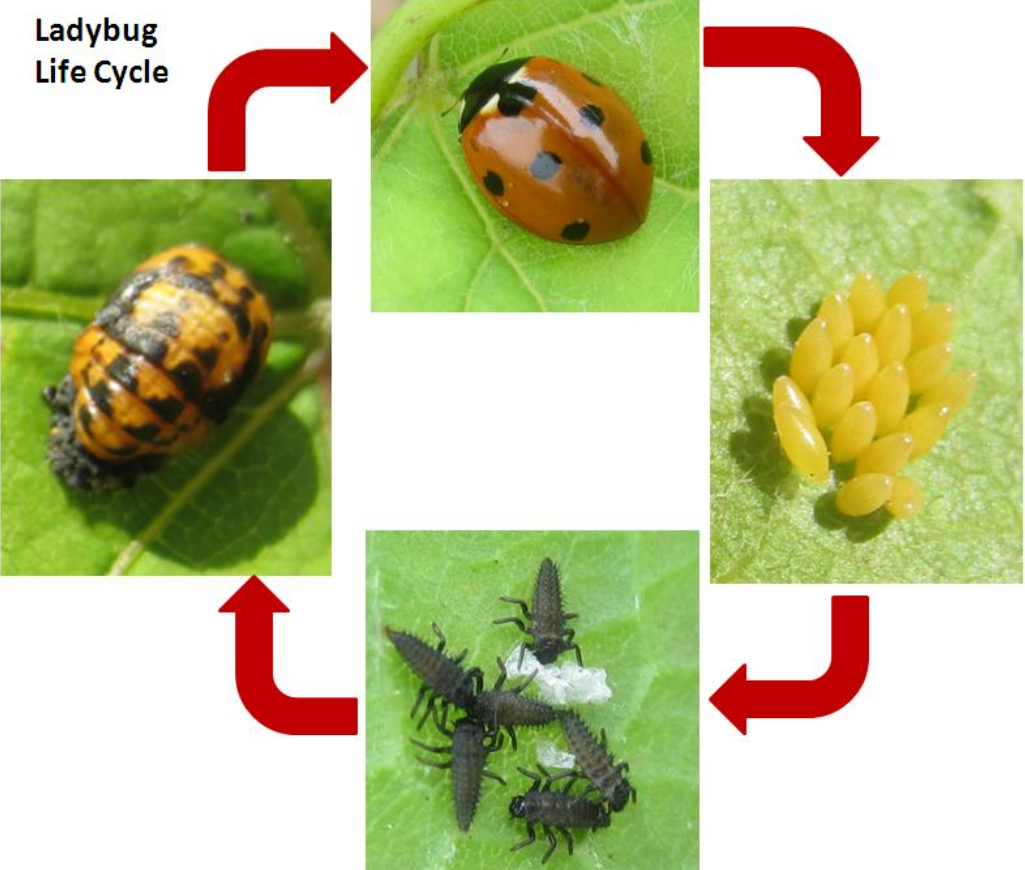
Like other beetles, lady beetles pass through complete metamorphosis. That means they grow through four clear stages: egg, larva, pupa, and adult. Each stage has its own shape, behavior, and purpose. The larva does not look like the adult at all. It looks more like a tiny dark alligator, which is why many people mistakenly think it is a harmful insect.
Q: What are the four stages of the lady beetle life cycle?
A: The four stages are egg, larva, pupa, and adult.
Q: How long does the lady beetle’s life cycle take?
A: It depends on species, food, and weather, but many lady beetles complete development in a few weeks under warm conditions.
Q: Are lady beetles good for gardens?
A: Yes. Both adults and larvae eat plant pests, especially aphids, making them very helpful in gardens and on farms.
Quick Life Cycle Table
| Stage | What It Looks Like | Main Activity | Why It Matters |
| Egg | Tiny yellow or orange eggs in clusters | Waiting to hatch | Eggs are often laid near aphid colonies or other prey |
| Larva | Dark, long, alligator-like body | Eats many soft-bodied insects | This is one of the strongest feeding stages |
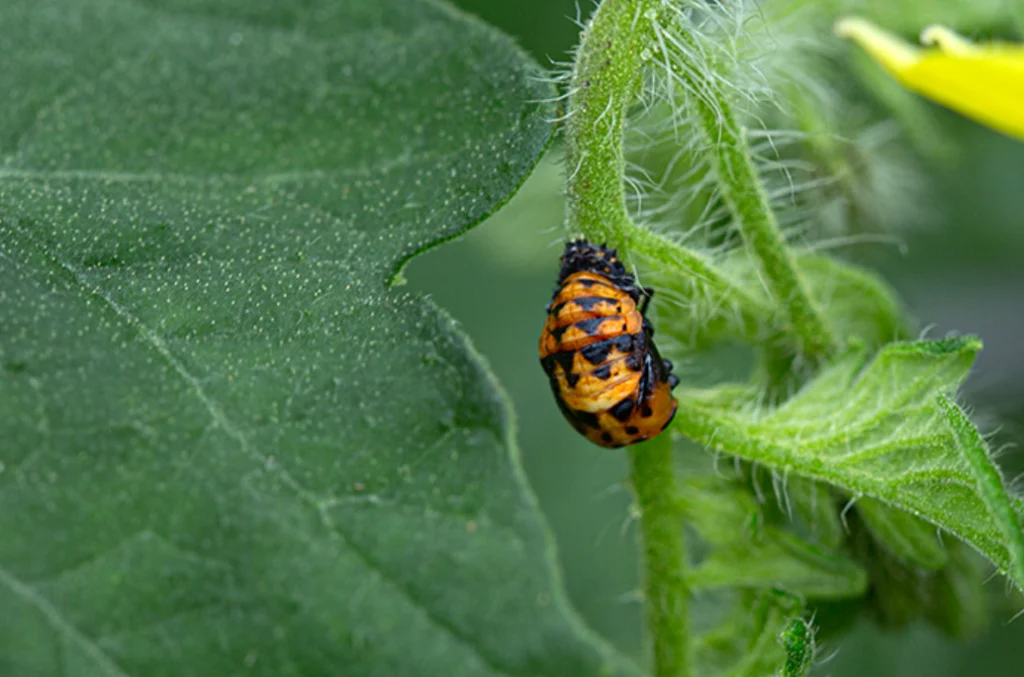
| Pupa | Fixed to a leaf or stem, not moving much | Body changes inside | The larva transforms into an adult beetle |
| Adult | Round beetle with hard wing covers | Feeds, flies, mates, and lays eggs | Adults spread to new plants and begin the cycle again |
Lady beetles go through complete metamorphosis, and the larva usually molts several times before becoming a pupa. The pupal stage often happens on plant surfaces, and adults later emerge to search for food and mates.
The History of Their Scientific Naming
The scientific family name of the lady beetle is Coccinellidae. Lady beetles belong to the order Coleoptera, which includes beetles. This is important because many people call them ladybugs, but they are not true bugs. True bugs belong to a different insect order.
The common name has a long cultural history. The word “ladybug” or “lady beetle” is linked to the phrase “beetle of Our Lady,” a name used in medieval Europe. In that phrase, “Lady” referred to the Virgin Mary. Over time, the name shortened to ladybug, ladybird, and lady beetle.
Important naming points:
- Coccinellidae is the scientific family name.
- Coleoptera is the insect order.
- Lady beetle is more scientifically correct than “ladybug.”
- The ladybird beetle is also commonly used.
- The name lady has a historical religious origin, not a biological one.
Today, scientists use names such as ‘lady beetle‘ to avoid confusion. These insects have chewing mouthparts, hardened front wings, and a beetle body structure. So, while “ladybug” is popular, lady beetle is the better scientific name.
Their Evolution And Their Origin
The origin of lady beetles dates back to insect history. Scientists studying fossils and DNA suggest that the group may have started during the Cretaceous Period, though the fossil record is limited. The oldest known fossil representatives are from the Eocene, with many important specimens found in amber.
Lady beetles are part of the Coleoptera order, one of the most successful insect groups on Earth. Their hard wing covers, compact body shape, and ability to feed on different prey helped them survive in many environments. Over time, they spread across forests, grasslands, wetlands, farms, orchards, and home gardens.
Their evolution is closely tied to food. Many lady beetles became skilled predators of aphids, scale insects, and other small plant-feeding insects. This gave them an important ecological role. As flowering plants and plant-feeding insects spread, lady beetles found more chances to survive, reproduce, and diversify.
Recent molecular studies have helped scientists better understand relationships among different lady beetle groups. One large study analyzed many genes across many species and identified major lineages within Coccinellidae, indicating that the family has a complex evolutionary history.
Not all lady beetles eat the same food. Most familiar species are predators, but some species feed on fungi or plants. This shows that lady beetles did not follow only one path. Their evolution includes changes in diet, body form, habitat choice, and defense.
The bright colors of many lady beetles also have survival value. Red, orange, yellow, and black patterns can warn predators that the beetle may taste bad. This warning coloration helps protect adults while they move openly on leaves, stems, and flowers.
Their main food and its collection process
The main food of many lady beetles is aphids. Aphids are small, soft-bodied insects that suck plant sap. They can multiply quickly and weaken plants. Lady beetles help control them naturally.
Both adult lady beetles and larvae feed on aphids. They may also eat scale insects, mites, whiteflies, thrips, leafhoppers, and small caterpillars. Some species are especially known for attacking certain pests, such as spider mites.
How lady beetles find and collect food:
- They search plants carefully: Adult lady beetles walk across leaves, stems, buds, and flowers looking for prey.
- They follow pest colonies: Female lady beetles often lay eggs near aphids or other prey, so the young larvae have food after hatching.
- Larvae feed heavily: The larval stage is a period of intense feeding. Larvae cannot fly, so they search nearby plant parts and eat what they find.
- Adults can fly to new food sources: If one plant has fewer pests, adult lady beetles can move to another plant or field.
- They use smell and movement cues: Lady beetles can respond to plant and prey signals, helping them locate feeding areas.
- They eat soft-bodied prey first: Aphids and young scale insects are easier to catch and chew than hard-bodied insects.
This feeding process makes lady beetles important in natural pest control. Instead of relying solely on chemical sprays, gardeners and farmers can protect lady beetles, helping keep pest numbers lower.
However, lady beetles need enough prey to stay in an area. If there is no food, adults may fly away. That is why a balanced garden with different plants, flowers, and small insect populations often supports them better than a very “clean” garden with no shelter or food.
Important Things That You Need To Know
The lady beetle is more than a colorful insect on a leaf. It is a working predator, a natural pest controller, and a sign of a garden’s living balance. Many people notice adult lady beetles first because they are round and bright. But lady beetle larvae are just as important, and sometimes even more important, for pest control.
One key thing to know is that the larva does not look friendly. It may look dark, spiny, and strange. Some people kill it by mistake, thinking it is a pest. In reality, this stage eats many aphids and other tiny pests. Protecting the larva means protecting the future adult beetle.
Another important point is that not every spotted beetle behaves the same way. The family Coccinellidae includes many species. Some are native to certain regions, while others have been introduced. Some species are excellent biological control helpers, while a few can become household nuisances when they gather indoors during colder months.
The lady beetle’s life cycle also depends strongly on food, weather, and safe shelter. Warm weather and enough prey help eggs, larvae, pupae, and adults develop well. During cold seasons, adults may retreat to protected places such as leaf litter, bark, cracks, or buildings.
For gardeners, the best support is simple: grow different plants, reduce the use of harsh pesticides, provide some natural shelter, and learn to recognize both adult and larval stages. When you protect lady beetles, you are also helping plants, soil life, birds, pollinators, and the larger Ecosystem.
Their life cycle and ability to survive in nature
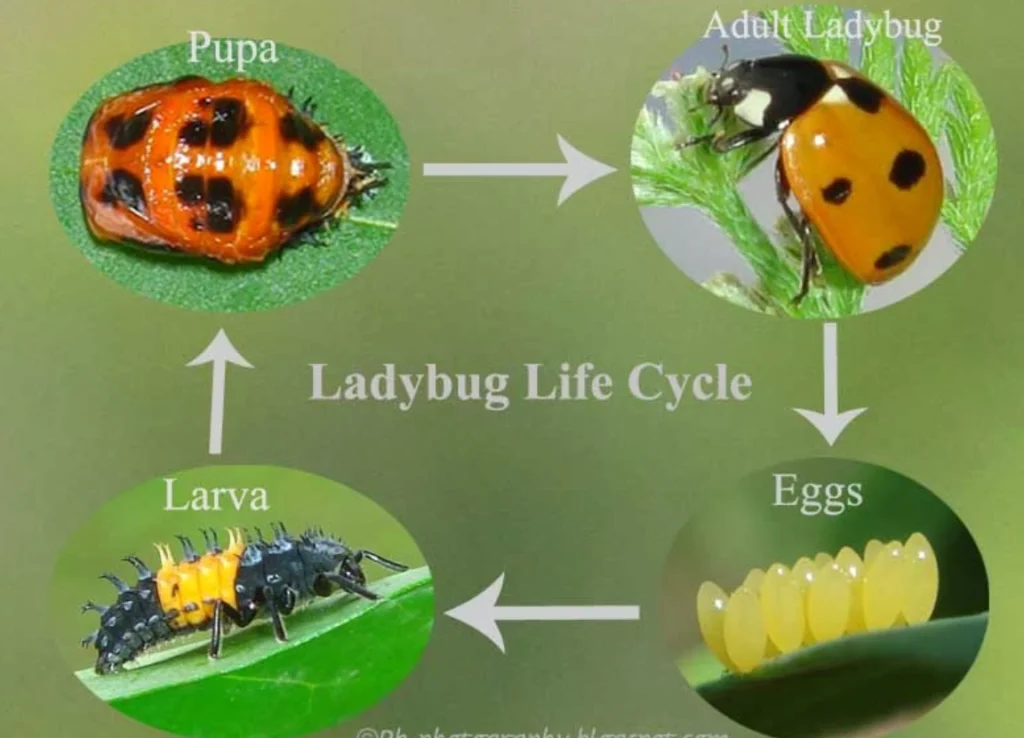
Egg Stage
The egg stage begins when a female lady beetle lays small yellow or orange eggs on plant surfaces. Eggs are often placed in clusters close to aphids or other prey. This gives the newly hatched larvae a better chance of finding food quickly.
Egg placement is a survival strategy. If the larvae hatch near food, they waste less energy searching and face less risk from hunger.
Larval Stage
The larva looks very different from the adult. It is usually long, dark, and somewhat alligator-shaped. This stage is highly active and hungry.
Larvae feed on aphids and other small insects. They molt as they grow, shedding their outer skin. This allows the body to grow before the next stage.
Pupal Stage
After feeding enough, the larva attaches itself to a leaf, stem, or another safe surface and becomes a pupa. It may look quiet from the outside, but inside, major body changes are happening.
The pupa transforms the larval body into an adult beetle body with wings, legs, antennae, and hardened wing covers.
Adult Stage
The adult lady beetle emerges from the pupa. At first, it may look pale and soft. After some time, the outer body hardens, and the normal color appears.
Adults survive by feeding, flying to new food sources, mating, and laying eggs. Many species overwinter as adults in protected places such as leaf litter, bark, dead trees, or buildings.
Their Reproductive Process and raising their children
Lady beetles do not raise their young in the way birds or mammals do. They do not feed their larvae directly after hatching. Instead, their parenting strategy is based on smart egg placement.
Female lady beetles usually choose places where prey is already present. This is very important because larvae need food soon after they hatch. If eggs are laid near an aphid colony, young larvae can begin feeding almost immediately.
Main steps in their reproductive process:
- Mating: Adult males and females mate during warm seasons when food is available.
- Egg laying: Females lay clusters of eggs on leaves, stems, or near pest colonies.
- Food-based protection: The mother does not guard the eggs for long, but she gives larvae a better start by placing eggs near food.
- Hatching: Eggs hatch into larvae that begin searching and feeding.
- Independent growth: Larvae hunt for their own food and molt as they grow.
- Pupation: After enough feeding, larvae attach to a surface and change into pupae.
- Adult emergence: A new adult emerges, hardens, feeds, mates, and repeats the cycle.
This process is efficient. Lady beetles produce multiple young, and the young are independent from the start. Their “child care” is not emotional care but ecological care. The female improves survival by choosing a safe, food-rich place.
In nature, this matters a lot. A leaf full of aphids may look like plant damage to us, but to a female lady beetle, it can be a nursery. That is where the next generation has the best chance to survive.
The importance of them in this Ecosystem
Natural Pest Control
The biggest ecological value of lady beetles is pest control. Adults and larvae eat aphids, scale insects, mites, whiteflies, thrips, and other soft-bodied pests. This helps protect crops, garden plants, wild plants, and trees.
They reduce the need for heavy chemical use when their populations are protected. This is why lady beetles are often discussed in integrated pest management.
Support for Plant Health
When aphid numbers grow too high, plants lose sap, leaves curl, growth slows, and diseases may spread. Lady beetles help lower these pest pressures.
Healthy plants then provide flowers, seeds, shelter, and food for many other organisms.
Part of the Food Web
Lady beetles are predators, but they are also prey. Birds, spiders, frogs, predatory insects, and other animals may feed on them. Their place in the food web connects plant-eating insects with larger animals.
Indicator of Biodiversity
A place with lady beetles often has a variety of plants, prey insects, hiding places, and fewer harmful effects from pesticides. Their presence can suggest that the local Ecosystem still has a useful balance.
Agricultural Value
In farms and orchards, lady beetles support natural biological control. They cannot solve every pest problem alone, but they reduce pressure on farmers and help them use safer pest-management strategies.
What to do to protect them in nature and save the system for the future
Protecting lady beetles means protecting the small details of nature. They need food, shelter, safe breeding places, and fewer chemical threats.
Use these steps:
- Avoid broad-spectrum pesticides: These sprays can kill lady beetles along with pests. Use softer pest-control methods when possible.
- Grow different plants: A mix of flowers, herbs, shrubs, grasses, and vegetables supports more insects and more food sources.
- Keep flowering plants: Adult lady beetles may use nectar and pollen as extra food, especially when prey is low.
- Leave some natural shelter: Leaf litter, bark, dry grass, and plant stems can provide hiding and overwintering places.
- Do not kill larvae: Learn what lady beetle larvae look like. They may look rough, but they are helpful predators.
- Control ants around aphids: Ants may protect aphids from predators for honeydew. Reducing ant protection can help lady beetles reach aphids.
- Use water spray first: For aphids on garden plants, a strong stream of water can reduce pest populations without harming the whole Ecosystem.
- Avoid removing every insect: A garden with zero prey will not keep lady beetles. A small prey population supports predator survival.
- Plant near crop edges: Flower strips and non-crop habitats can support predatory insects in agricultural areas. Research has found that semi-natural habitats such as woodland and grassland patches can support larger lady beetle populations.
- Protect native species: Avoid unnecessary release of purchased beetles if the local habitat can support natural populations.
The future of lady beetles depends on small choices. A safer garden, a mixed farm border, or a pesticide-free corner can become a living shelter.
Frequently Asked Questions (FAQs)
Q1: What is the lady beetle’s life cycle?
A: The lady beetle life cycle has four stages: egg, larva, pupa, and adult. This is called complete metamorphosis.
Q2: Are lady beetles and ladybugs the same?
A: Yes, in common speech, they usually mean the same insect. However, the lady beetles are more accurate because they are beetles, not true bugs.
Q3: What do lady beetle larvae eat?
A: Lady beetle larvae mainly eat aphids, but they may also feed on scale insects, mites, thrips, whiteflies, and other soft-bodied pests.
Q4: What do lady beetle eggs look like?
A: Lady beetle eggs are usually tiny, yellow to orange, and laid in small clusters on leaves or stems near prey.
Q5: Why do lady beetle larvae look dangerous?
A: Larvae look dark, long, and spiny because they are built for crawling and hunting. They may look scary, but they are helpful and usually harmless to people.
Q6: How do lady beetles survive winter?
A: Many lady beetles overwinter as adults in protected places such as leaf litter, bark, dead trees, cracks, or sometimes buildings.
Q7: Are lady beetles good for plants?
A: Yes. They protect plants by eating pests that suck plant sap and weaken leaves, stems, flowers, and fruits.
Q8: How can I attract lady beetles naturally?
A: Grow mixed plants, keep flowering herbs, avoid harsh pesticides, leave some natural shelter, and protect aphids’ natural predators instead of removing every insect from the garden.
Conclusion
The lady beetle life cycle shows how a small insect can make a big difference in nature. From tiny eggs to hungry larvae, quiet pupae, and bright adult beetles, every stage has a purpose. The larva controls pests. The adult spreads to new places, mates, and starts the next generation. Together, they help keep aphids and other soft-bodied insects from taking over plants.
Lady beetles are not just pretty insects. They are natural workers in gardens, farms, forests, and fields. Their presence supports plant health, reduces pest pressure, and strengthens the food web.
To protect them, we need to protect their habitat. Fewer harsh sprays, more plant variety, safe shelter, and better awareness can help lady beetles survive. When we save these small beetles, we also support a healthier ecosystem for the future.
Also Read: immortal jellyfish life cycle