Grasshoppers are fascinating insects known for their jumping ability, distinct chirping, and plant-eating habits. Understanding the Grasshopper insect life cycle provides insight into their development, reproduction, and survival strategies. These insects belong to the order Orthoptera, which also includes crickets and locusts. With over 11,000 species globally, grasshoppers are vital components of ecosystems, feeding on plants while serving as prey for birds, reptiles, and mammals.
Quick Answers (Most Common Questions)
- What is the life cycle of a grasshopper?
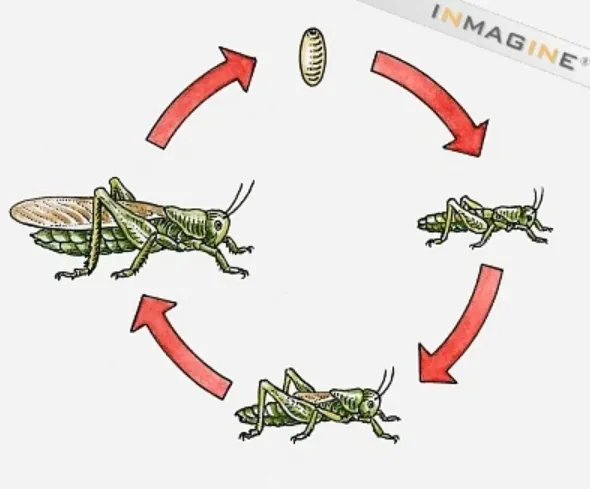
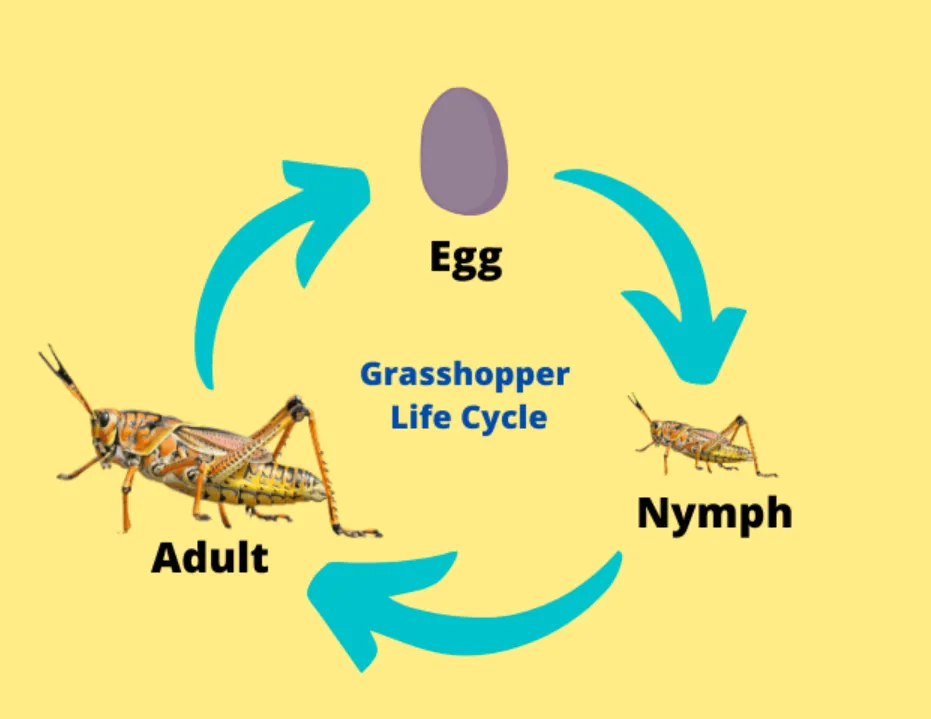
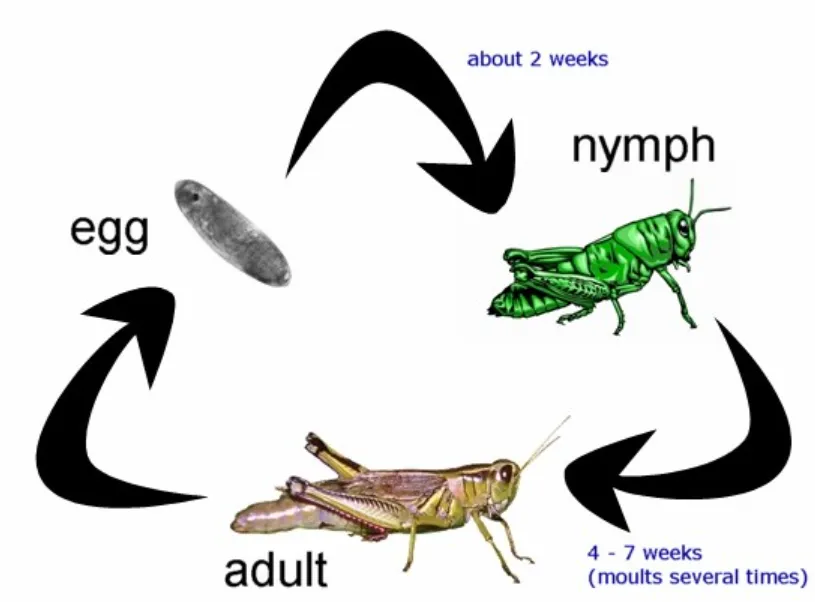
- Grasshoppers undergo incomplete metamorphosis, which includes three main stages: egg, nymph, and adult. They do not have a pupal stage like butterflies.
- What do grasshoppers eat?
- Primarily herbivores, they feed on leaves, stems, flowers, and grasses. Their diet is essential for controlling plant growth and providing energy for reproduction.
- How long do grasshoppers live?
- The average lifespan ranges from a few months to one year, depending on the species and environmental conditions.
Grasshoppers are not just simple insects; their life cycle, feeding habits, and survival mechanisms reveal their complex role in nature.
Quick Life Cycle Table
| Life Stage | Duration | Key Characteristics |
| Egg | 2–6 weeks (depending on species and climate) | Laid in soil; small, oval-shaped; dormant during winter |
| Nymph | 4–6 weeks | Resembles an adult but wingless; undergoes multiple molts (5–6 times) |
| Adult | 1–6 months | Fully winged; capable of reproduction; migratory in some species |
This table simplifies the grasshopper insect life cycle, making it easier to understand their progression from egg to adult.
The History of Their Scientific Naming
- The term “grasshopper” originated in Old English as “græs,” meaning grass, and “hoppa,” meaning “hopper,” to describe their jumping behavior.
- Scientifically, grasshoppers belong to the order Orthoptera. The term “Orthoptera” comes from Greek, meaning “straight wings,” highlighting their wing structure.
- Linnaeus first classified common grasshopper species in the 18th century, giving rise to binomial names such as Caelifera for short-horned grasshoppers.
- Over the centuries, entomologists have identified 11,000+ species worldwide, with detailed classification based on wing length, antennal size, and diet.
- The scientific naming reflects both their physical traits and ecological role, emphasizing their importance in agricultural and natural environments.
Their Evolution and Their Origin
Grasshoppers are ancient insects with a lineage dating back more than 250 million years, originating in the Permian period. Fossil records reveal that their basic body structure—long legs for jumping, strong mandibles for chewing plants, and segmented antennae—has remained relatively unchanged, demonstrating evolutionary stability.
They belong to the order Orthoptera, which also includes crickets and katydids. These insects evolved in grassland ecosystems, adapting to open fields and savannas with abundant vegetation. Their evolution favored mobility, allowing them to escape predators and migrate to find food.
Throughout history, grasshoppers have developed mechanisms like camouflage, rapid reproduction, and swarming behavior in some species, enabling survival during environmental stressors like droughts or food scarcity. Modern grasshoppers have inherited these adaptive traits, allowing them to thrive worldwide, from tropical forests to temperate meadows.
The origin and evolution of grasshoppers reveal a remarkable story of survival, adaptability, and ecological balance, positioning them as both crucial herbivores and prey within their ecosystems.
Their Main Food and Its Collection Process
Grasshoppers are herbivores that feed mainly on green vegetation. Their diet consists of:
- Grasses and Leaves: Primary food source, harvested using strong mandibles.
- Flowers and Stems: Provide additional nutrients and help maintain the balance of the plant population.
- Crop Plants (Occasionally): Can affect agriculture when populations increase.
Food Collection Process:
- Sensing Plants: Grasshoppers use their antennae to detect plant presence through touch and chemical signals.
- Chewing: Equipped with powerful mandibles, they cut leaves into smaller pieces.
- Swallowing and Digestion: Food is ingested and digested with the help of a specialized gut for extracting nutrients efficiently.
- Feeding in Groups: Some species feed collectively, which enhances survival by reducing predator risk.
Their feeding not only supports their growth and reproduction but also contributes to ecosystem regulation by controlling plant density and recycling nutrients.
Their Life Cycle and Ability to Survive in Nature
Life Cycle Stages:
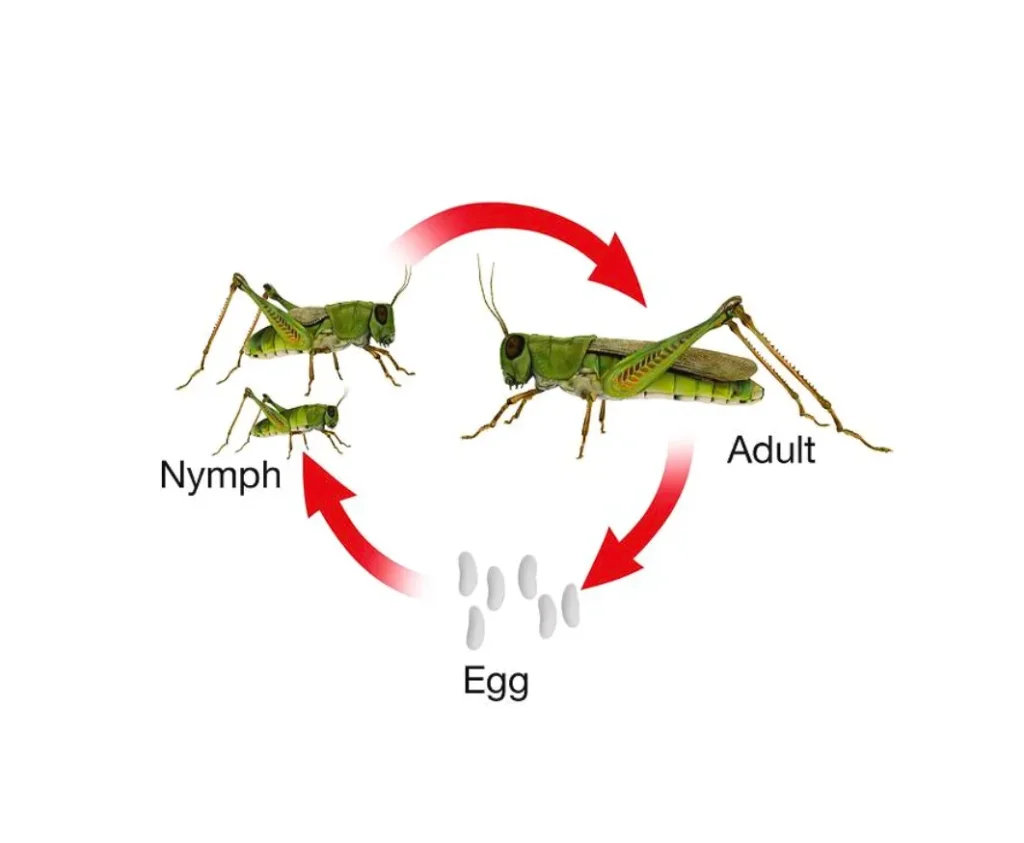
Grasshoppers undergo incomplete metamorphosis, consisting of three key stages: egg, nymph, and adult.
- Egg Stage: Laid in soil clusters called pods, eggs survive harsh winters.
- Nymph Stage: Wingless juveniles molt multiple times to reach adulthood, gradually developing wings.
- Adult Stage: Fully formed insects capable of reproduction and long-distance movement.
Survival Adaptations:
- Camouflage: Body colors blend with grasses and soil to avoid predators.
- Strong hind legs allow quick jumping to escape danger.
- Diet Flexibility: They can consume various plants depending on availability.
- High Reproduction Rate: Ensures species survival even in the face of high predation.
These features collectively enable grasshoppers to survive in diverse environments, from grasslands to agricultural fields, highlighting their ecological resilience.
Their Reproductive Process and Raising Their Children
Grasshoppers reproduce sexually, with clear stages in their reproductive behavior:
- Mating Rituals: Males attract females through sounds and body movements.
- Egg Laying: Females deposit eggs in soil pods, ensuring protection from predators and environmental factors.
- Development: Eggs undergo embryogenesis over weeks, depending on temperature and humidity.
- Hatching and Nymph Growth: Young nymphs emerge and begin feeding immediately, undergoing multiple molts until maturity.
- Parental Care: Grasshoppers do not exhibit parental care; survival depends on egg placement and environmental conditions.
This reproductive strategy, although simple, ensures large numbers of offspring survive, maintaining population levels in natural habitats.
Importance of Them in This Ecosystem
Ecological Role of Grasshoppers
- Primary Consumers: Convert plant biomass into energy for higher trophic levels.
- Prey for Animals: Birds, reptiles, and small mammals rely on them as a food source.
- Soil Fertility: Their droppings enrich soil nutrients, promoting plant growth.
- Population Control: Feed on specific plants to balance vegetation and reduce overgrowth.
Grasshoppers play a crucial role in terrestrial ecosystems. Their presence ensures energy flow, nutrient cycling, and the stability of biodiversity, highlighting the importance of protecting their habitats.
What to Do to Protect Them in Nature and Save the System for the Future
- Preserve Grasslands: Avoid excessive deforestation and urban expansion.
- Reduce Pesticide Use: Chemical sprays harm grasshopper populations and disrupt the food chain.
- Promote Native Plant Growth: Ensure food sources for herbivorous insects.
- Create Insect Habitats: Small patches of natural vegetation act as refuges.
- Support Ecological Farming: Encourage methods that balance crop yield and insect preservation.
- Educate Communities: Awareness campaigns on the importance of grasshoppers in ecosystems.
Protecting grasshoppers ensures ecosystem stability, biodiversity, and future natural pest control.
Important Things That You Need To Know About Grasshopper Insects
Grasshoppers are not only insects but vital indicators of ecological health. Key insights include:
- Grasshopper insect images reveal diverse colors and wing patterns that aid camouflage.
- Close-up observations reveal intricate antennae and mandibles, essential for feeding.
- Grasshopper insect photos demonstrate their adaptability to various climates and habitats.
- Relation to Crickets: Both belong to the order Orthoptera, with similar life cycles and dietary preferences.
- Behavioral Studies: Grasshopper swarming can indicate environmental changes, such as drought or food scarcity.
By understanding these aspects, enthusiasts and researchers can better appreciate the role of grasshoppers in natural ecosystems.
Frequently Asked Questions (FAQs)
- What is the complete life cycle of a grasshopper?
- The cycle includes egg, nymph, and adult stages, with nymphs molting multiple times before maturity.
- Do grasshoppers eat only grass?
- No, they feed on a variety of plants, including leaves, flowers, and stems.
- How long do grasshoppers live?
- Their lifespan ranges from a few months to 1 year, depending on the species.
- Are grasshoppers harmful to crops?
- Large populations can damage crops, but natural predation usually keeps them in balance.
- Do grasshoppers undergo metamorphosis?
- Yes, incomplete metamorphosis with egg, nymph, and adult stages.
- How do grasshoppers protect themselves from predators?
- Camouflage, jumping ability, and group feeding help them evade predators.
- Can grasshoppers survive in urban environments?
- They survive in urban gardens and parks but prefer natural vegetation areas.
- Why are grasshoppers important in the ecosystem?
- They serve as primary consumers, prey for predators, and contributors to soil fertility.
Conclusion
Grasshoppers, often overlooked, are vital to ecosystems due to their feeding habits, reproductive strategies, and survival adaptations. Their life cycle, from egg to adult, reveals resilience and evolutionary efficiency. They help control plant populations, provide food for predators, and enrich soil fertility. Protecting their natural habitats and minimizing harmful interventions, such as pesticides, are crucial for sustaining ecological balance.
Understanding the grasshopper’s life cycle, behavior, and role in the ecosystem underscores the need for conservation. It highlights their importance as more than just insects—they are key contributors to biodiversity and environmental health. With continued awareness and protective measures, grasshoppers can thrive, maintaining the natural harmony that supports countless species.
Also Read: hymenoptera life cycle byjus