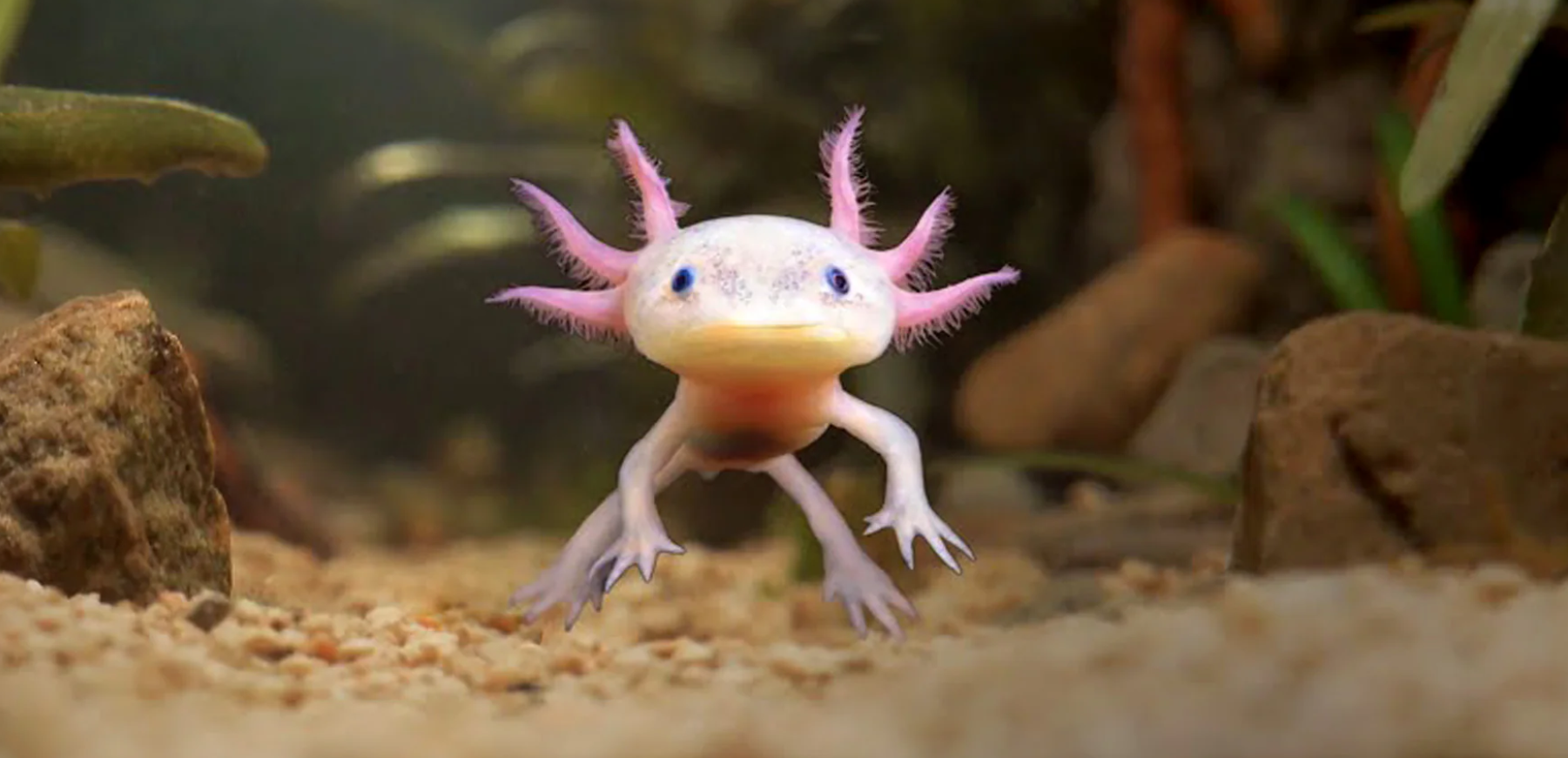
The life cycle of the axolotl is one of the most unusual stories in the amphibian world. Most salamanders hatch in water, grow as larvae, then slowly change into land-living adults. The axolotl does something different. It usually keeps its baby-like features for life, including its soft body, wide head, and feathery external gills. This condition, called neoteny, allows the axolotl to live fully underwater even after it becomes capable of reproducing.
The axolotl’s scientific name is Ambystoma mexicanum. It is not a fish, even though many people call it the “Mexican walking fish.” It is a salamander native to the lake and canal system around Xochimilco, Mexico City. Today, wild axolotls are listed as Critically Endangered, mainly due to habitat loss, pollution, and the introduction of species such as carp and tilapia. Current conservation sources still describe its wild population trend as decreasing.
People search for baby axolotl, cute axolotl, axolotl pet, and even blue axolotl because this animal has become famous online. But behind its cute face is a rare amphibian with significant scientific value, strong cultural significance, and a fragile future in the wild.
Q: What are the stages in the life cycle of an axolotl?
A: The main stages are egg, embryo, larva, juvenile, and sexually mature adult.
Q: Does an axolotl turn into a land salamander?
A: Usually, no. Axolotls normally stay aquatic for life because they keep larval traits even as adults.
Q: How long does an axolotl live?
A: In good captive care, an axolotl may live around 10–15 years. Wild survival is harder because of predators, poor water quality, and habitat damage.
Quick Life Cycle Table
| Stage | What Happens | Simple Details |
| Egg | A female lays eggs in water | Eggs attach to plants, rocks, or safe surfaces |
| Embryo | The body forms inside the egg | Head, tail, gills, and body shape develop |
| Larva | Baby axolotl hatches | It has external gills and starts feeding on tiny live food |
| Young Juvenile | Legs grow stronger | Front legs appear first, then back legs develop |
| Older Juvenile | Body size increases | It begins eating larger prey and becomes more active |
| Adult | The reproductive stage begins | It keeps gills, stays underwater, and can breed |
| Long-Term Survival | Adult continues aquatic life | It uses gills, lungs, skin, and regeneration to survive |
The History of Their Scientific Naming
The axolotl’s scientific name, Ambystoma mexicanum, tells us a lot about where it belongs and where it comes from.
- Ambystoma is the genus name. It includes many mole salamanders from North America.
- Mexicanum points to Mexico, the axolotl’s natural home.
- The common name “axolotl” comes from the Nahuatl language and is often linked to the Aztec god Xolotl.
- In older stories, Xolotl was connected with transformation, death, lightning, and movement between worlds.
- The axolotl became famous in science because it seemed to challenge the normal idea of amphibian growth.
- European scientists began studying axolotls in the 1800s after live animals were brought from Mexico.
- Researchers noticed that axolotls could reproduce while still looking like larvae.
- This discovery made the axolotl important for studies of development, regeneration, and evolution.
The name is more than a label. It carries biology, geography, and culture together. When people search for axolotl drawings or cute axolotl, they often see only the sweet face. But the scientific name reminds us that this animal is a real species from a real place, not just an internet character.
Their Evolution And Their Origin
The axolotl belongs to the salamander family Ambystomatidae, often called mole salamanders. Most relatives in this group hatch in water, grow as aquatic larvae, then go through metamorphosis and move onto land. Axolotls took a different path.
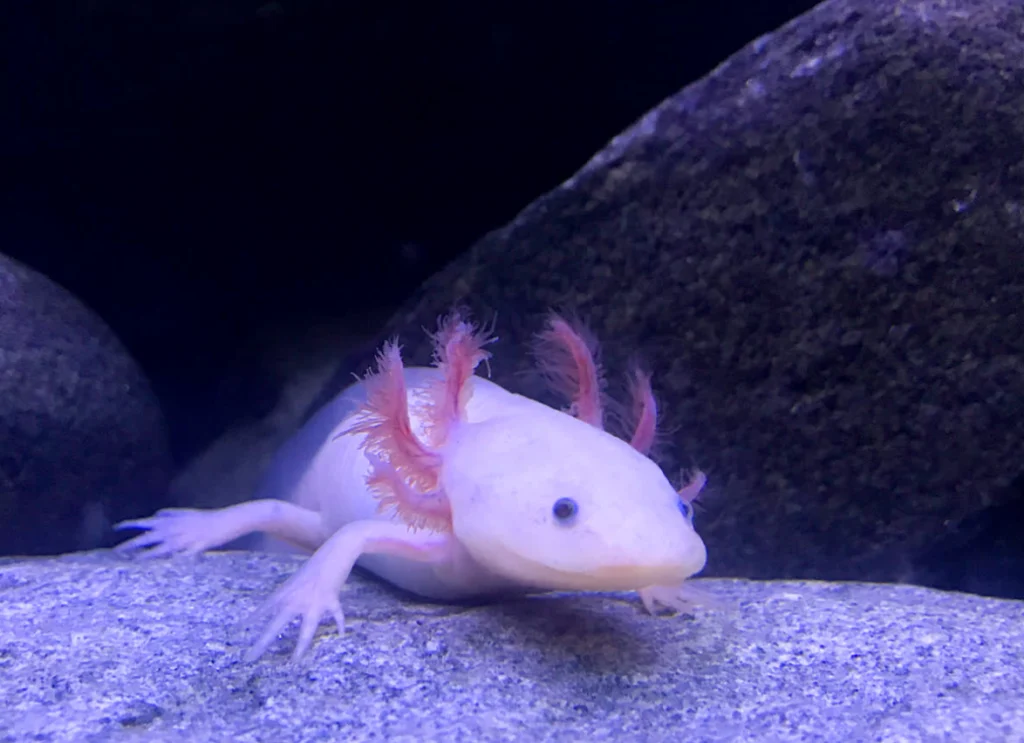
Their most famous feature is neoteny. This means they become sexually mature while keeping juvenile traits. They keep their external gills, fin-like tail, soft aquatic skin, and water-based lifestyle. In simple words, an adult axolotl still looks partly like a baby salamander.
This unusual life pattern likely helped axolotls survive in the old lake systems of the Valley of Mexico. These lakes had stable water, plenty of small prey, and fewer reasons for the animal to leave the water. If the water habitat is safe enough, staying aquatic can be useful. The axolotl does not need to risk drying out on land.
Modern studies describe neoteny as a developmental strategy in which an animal reaches reproductive age without fully developing the adult body form seen in related species.
The axolotl’s origin is tied closely to Lake Xochimilco and the former lake systems near Mexico City. These wetlands were once much larger. Over time, urban growth, drainage, changes in farming, and pollution reduced the habitat. Today, the wild axolotl survives in a much smaller, more stressful environment than its ancestors knew.
Another reason axolotls are famous is their ability to regenerate. They can regrow limbs, parts of the tail, skin, gill tissue, and even parts of organs. This does not mean they are indestructible. It means their body has a rare healing ability that scientists study closely.
So, the axolotl’s evolution is not only about looking cute. It is about a species shaped by water, isolation, slow development, and a strange but powerful survival style.
Their main food and its collection process
The axolotl is a carnivorous amphibian. It eats animal-based food rather than plants. In nature, it feeds on small aquatic creatures and mud-dwelling organisms.
Its feeding method is simple but effective. It senses movement and smell, then opens its mouth quickly to suck prey in with water. This is called suction feeding.
Here are the main foods of axolotls:
- Small worms: Wild axolotls eat aquatic worms and other soft-bodied invertebrates.
- Insect larvae: Mosquito and other water-insect larvae can be part of their diet.
- Small crustaceans: Tiny shrimp-like animals provide protein.
- Mollusks: Small snails and soft aquatic organisms may be eaten.
- Small fish or fry: Axolotls may eat tiny fish when they can catch them.
- Other small aquatic animals are opportunistic feeders, meaning they eat whatever fits in their mouths.
Axolotls do not chew like mammals. They swallow food whole or in pieces small enough to pass through the mouth. Their eyes are not their strongest tool for hunting. Smell, vibration, and sudden movement matter more.
In captivity, an axolotl pet is often fed earthworms, bloodworms, blackworms, brine shrimp for babies, or specially made axolotl pellets. Baby axolotls need tiny live foods at first because they respond strongly to movement.
Food collection in nature happens mostly near the bottom of the water. The axolotl waits, moves slowly, then snaps when prey comes close. This quiet hunting style helps it save energy.
But pollution and invasive fish can reduce the availability of natural food. Carp stir up mud and damage plants. Tilapia and other fish may compete for food or eat eggs and young axolotls. This makes feeding wild axolotls harder and weakens their chances of survival.
Their life cycle and ability to survive in nature
Egg Stage
The life cycle of an axolotl begins when the female lays eggs in water. Eggs are usually attached one by one to plants, rocks, or other underwater surfaces. Each egg has a jelly-like covering that protects the growing embryo.
Inside the egg, the tiny axolotl slowly forms a head, tail, body line, and early gill structures.
Larval Stage
After hatching, the young axolotl is very small and delicate. It has external gills, a tail fin, and a soft body. At this stage, it needs tiny live food.
The larva grows quickly if the water quality, oxygen, and food are good. The front legs appear first, then the back legs develop later.
Juvenile Stage
The juvenile axolotl begins to look more like a small adult. Its legs become stronger, its head widens, and its gills become more noticeable. It still lives fully underwater.
This stage is risky in nature. Fish, birds, and larger aquatic animals can eat young axolotls.
Adult Stage
The adult axolotl becomes able to reproduce but still keeps larval features. This is the key difference between axolotls and many other salamanders.
It breathes through external gills, skin, and lungs. Sometimes it rises to the surface to gulp air. San Diego Zoo notes that axolotls keep their feathery gills and live underwater like larvae throughout life.
Survival Ability
Axolotls survive through slow movement, camouflage, suction feeding, regeneration, and full aquatic living. But in today’s wild habitat, those natural strengths are not enough on their own.
Their Reproductive Process and raising their children
The reproductive process of the axolotl is quiet but fascinating. It usually happens in water when the animals are mature and conditions are suitable.
- Courtship begins with movement: The male and female move around each other. The male may nudge or guide the female.
- Male deposits spermatophores: A spermatophore is a small packet of sperm placed on the bottom surface.
- The female picks up the sperm packet: The female takes the sperm into her body through her cloaca.
- Egg laying happens later: After fertilization, the female lays eggs one by one.
- Eggs stick to surfaces: Plants, rocks, and aquarium decorations can hold the eggs.
- A female can lay many eggs: Depending on age, size, and health, a female may lay hundreds of eggs.
- Parents do not guard the eggs: Axolotls do not raise their young like birds or mammals.
- Eggs must survive on their own: The jelly layer gives some protection, but eggs can still be eaten.
- Baby axolotls need tiny moving food: Newly hatched larvae usually need very small live prey.
- Cannibalism can occur: Young axolotls may bite or eat smaller siblings when food is scarce or space is crowded.
In nature, raising young is mostly about choosing safe places to lay eggs. Aquatic plants matter because they provide places for eggs to attach and hiding spots for babies after hatching.
This is why habitat quality is so important. If the water has fewer plants, more pollution, and more invasive fish, the eggs and larvae suffer first. A wild population cannot recover if babies do not survive long enough to become adults.
For captive breeding, responsible care is also important. People looking to buy axolotl should only buy captive-bred animals from ethical sources. Wild axolotls should never be taken from nature.
Important Things That You Need To Know
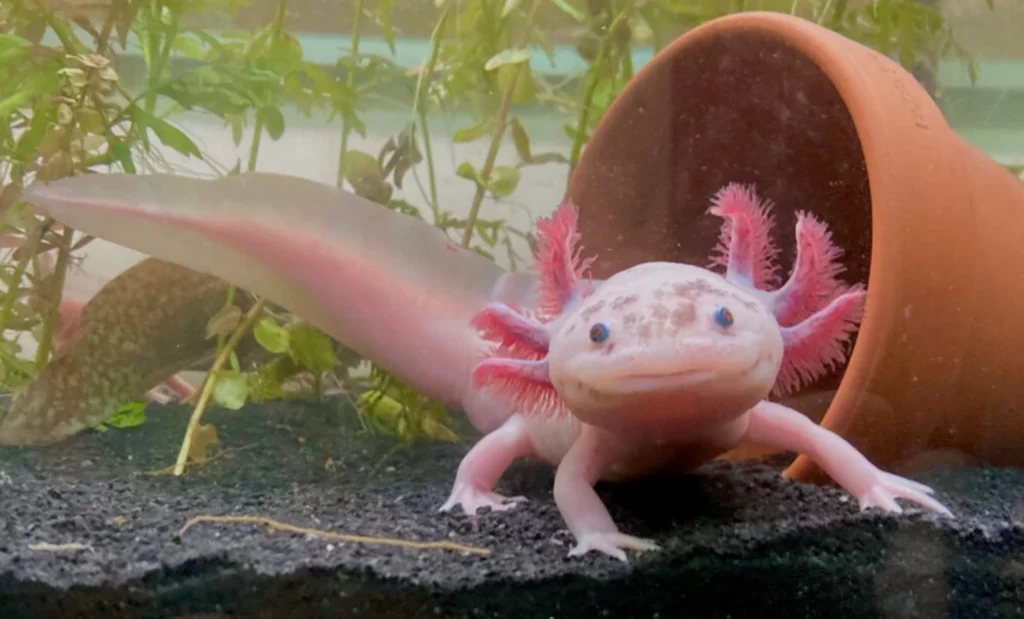
Many people first discover the axolotl through photos, games, toys, or videos. Search terms like cute axolotl, baby axolotl, blue axolotl, axolotl drawing, and axolotl pet are popular because the animal has a soft, friendly look. Its face appears to smile, and its feathery gills look almost decorative.
But not everything online is accurate.
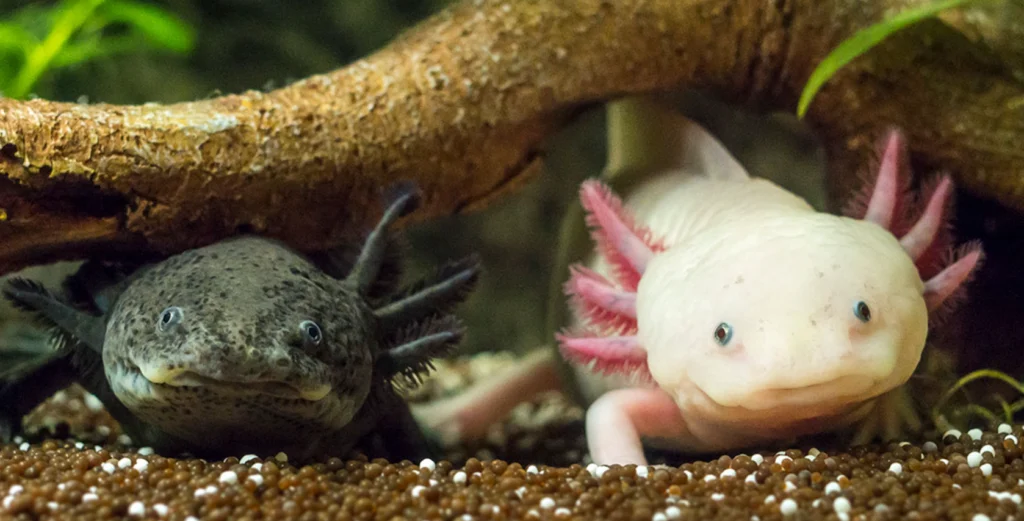
A blue axolotl is usually a pop-culture idea, especially from games and digital art. Real axolotls can appear in different color forms such as wild type, leucistic, albino, golden albino, melanoid, and copper. Some darker axolotls may appear bluish under certain lighting, but true bright blue is not a natural color.
An axolotl pet needs cold, clean, stable water. It is not a simple beginner pet for everyone. Warm water, dirty tanks, rough gravel, and poor food can make it sick. Axolotls should also not be handled often, as their skin is sensitive.
A baby axolotl looks tiny and fragile, but it grows fast with proper food. Young ones need special feeding and careful separation when needed.
People searching for axolotl for sale should be careful. Buying from poor breeders can support the breeding of unhealthy animals and poor care. Ethical captive breeding is better than any trade that harms wild populations.
An axolotl drawing or toy may be cute, but the real animal is rare in the wild. Its popularity should lead to respect, not careless buying.
The importance of them in this Ecosystem
They Help Balance Small Aquatic Life
In their natural habitat, axolotls feed on worms, insect larvae, small crustaceans, and other tiny animals. This helps maintain balance in small aquatic populations.
They are not top predators, but they are important middle-level hunters in the food web.
They Are Part of the Xochimilco Wetland System
The wild axolotl is closely associated with the canals and wetlands of Xochimilco. This habitat also supports plants, insects, birds, and fish, as well as traditional farming areas called chinampas.
Protecting axolotls means protecting a larger living system.
They Show Water Quality Problems
Axolotls need clean, cool, oxygen-rich water. When they disappear, it can be a warning sign that the water system is unhealthy.
Their decline indicates that pollution, urbanization, and invasive species are damaging the Ecosystem.
They Have Scientific Value
Axolotls are among the most studied amphibians in the world because of their regeneration ability. Scientists study them to understand healing, limb regrowth, development, and cell behavior.
This does not only matter for biology. It may also help future medical research.
They Carry Cultural Meaning
The axolotl is also part of Mexican identity and history. It appears in stories, art, education, conservation campaigns, and even modern media.
The Associated Press has reported on the axolotl’s cultural importance in Mexico and current efforts to protect its habitat.
What to do to protect them in nature and save the system for the future
Protecting axolotls is not only about saving one cute animal. It is about saving water, wetlands, food chains, and a piece of Mexican natural history.
- Protect Xochimilco’s canals: The wild axolotl needs a clean and safe freshwater habitat.
- Reduce water pollution: Sewage, chemicals, waste, and dirty runoff must be controlled.
- Support habitat restoration: Native aquatic plants should be restored because they give eggs and young axolotls shelter.
- Control invasive fish: Carp and tilapia can damage habitat, compete for food, and eat eggs.
- Support chinampa-friendly conservation: Traditional farming systems can help protect clean canal areas when managed well.
- Never remove wild axolotls: Wild animals should stay in their natural habitat.
- Choose captive-bred pets only: Anyone buying an axolotl should avoid sellers who source them from the wild.
- Learn proper pet care before buying: Bad care leads to suffering and early death.
- Avoid releasing pet axolotls: Captive animals can bring disease or genetic problems into wild systems.
- Teach others the real story: The axolotl is not just a cute internet animal. It is a Critically Endangered species.
- Support trusted conservation groups: Local science, habitat work, and community action are key.
- Reduce plastic and chemical waste: Cleaner water systems help amphibians and many other animals.
The axolotl became famous because of its face. It will survive only if people care about the water behind that face.
Frequently Asked Questions (FAQs)
Q1: What is the life cycle of an axolotl?
A: The life cycle of axolotl includes egg, embryo, larva, juvenile, and adult stages. Unlike many salamanders, the axolotl usually does not change into a land adult. It stays aquatic for life.
Q2: Is an axolotl a fish?
A: No. The axolotl is an amphibian, specifically a salamander. The nickname “Mexican walking fish” is common, but it is not scientifically correct.
Q3: Why does an axolotl keep its gills?
A: Axolotls keep their external gills because of neoteny. This means they retain even features and traits
: Where do axolotls live in the wild?
A: Wild axolotls are native to the freshwater lake and canal system around Xochimilco, Mexico City. Their natural range is now much smaller than it was previously.
Q5: What does a baby axolotl eat?
A: A baby axolotl eats tiny live foods such as small brine shrimp, daphnia, or other very small aquatic animals. As it grows, it can eat larger worms and soft animal-based foods.
Q6: Can axolotls regrow body parts?
A: Yes. Axolotls can regrow limbs, tail tissue, gill parts, and some other tissues. This makes them very important in scientific research.
Q7: Is a blue axolotl real?
A: A bright blue axolotl is mostly known from games, art, and online culture. Real axolotls come in color types such as wild type, leucistic, albino, golden albino, melanoid, and copper.
Q8: Can I keep an axolotl as a pet?
A: Yes, an axolotl pet can be kept legally in many places, but laws vary. It needs cold, clean water, a proper tank, safe substrate, and careful feeding. Always check local rules before buying.
Conclusion
The life cycle of the axolotl is special because this amphibian grows up without fully leaving its baby-like form. From a soft egg to a gilled larva, then to a juvenile and adult, the axolotl remains tied to water. Its strange growth pattern, gentle look, and powerful regeneration ability make it one of the most interesting animals on Earth.
But the real axolotl is more than a cute picture or pet trend. In the wild, Ambystoma mexicanum is in danger. Its home in Xochimilco has been damaged by pollution, habitat loss, and invasive species. That means every conservation action matters.
Learning about the axolotl’s diet, reproduction, survival, and its role in the Ecosystem helps us understand why it must be protected. If people respect both the animal and its habitat, the axolotl may still have a future in nature. Its story is small, strange, and beautiful, but it is also a warning about what happens when wetlands are pushed too far.
Also Read: grasshopper insect life cycle