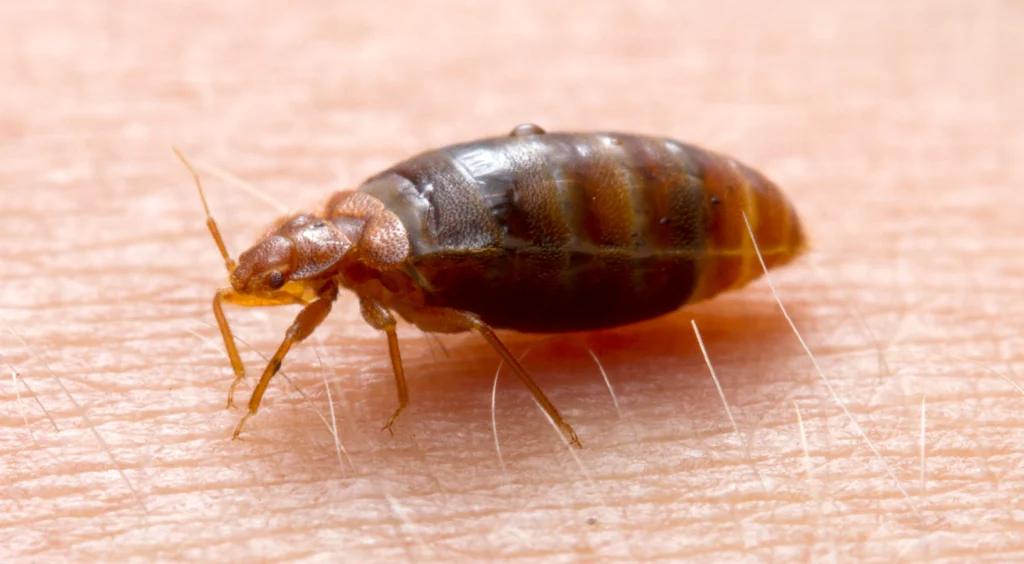
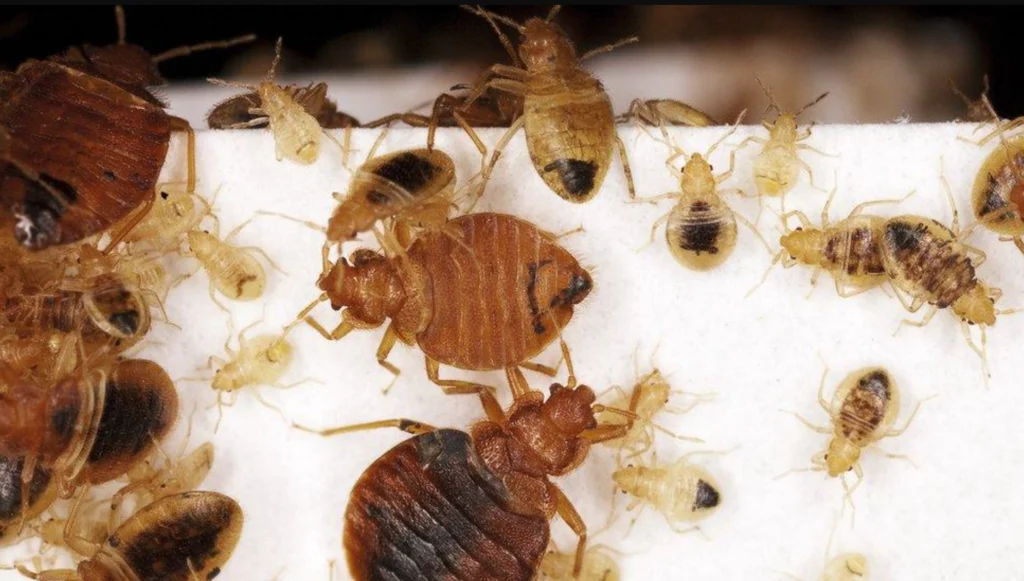
The life cycle of bed bugs is important to understand because these insects can multiply quickly, hide in very small spaces, and survive for a long time without feeding. The common bed bug, scientifically known as Cimex lectularius, is a small, flat, blood-feeding insect that usually lives close to where people sleep. Adult bed bugs are often reddish-brown, oval-shaped, and about 4 to 5 mm long, while younger bed bugs are smaller and lighter in color.
Bed bugs do not usually live on the human body like lice. Instead, they hide in mattress seams, bed frames, cracks, furniture joints, wall gaps, and luggage. At night, they come out to feed. Their bites may cause itching, sleep loss, stress, and sometimes allergic reactions, but current public health guidance says bed bugs are not known to spread disease to people.
Understanding their stages, egg, nymph, and adult, helps people detect infestations early and choose safer control methods. A small infestation is much easier to manage than a large one.
Q: What is the life cycle of bed bugs?
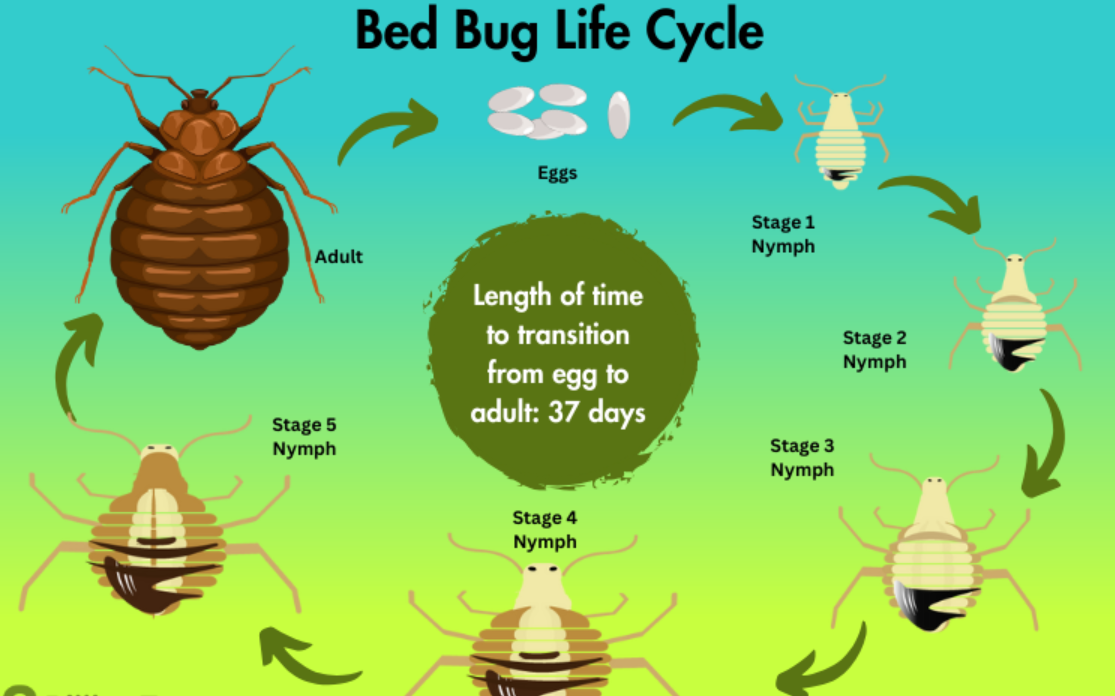
A: The life cycle of bed bugs has three main parts: egg, five nymph stages, and adult. Each nymphal stage requires a blood meal before it can progress to the next stage.
Q: How long does it take for bed bugs to grow?
A: Growth depends on temperature and food. At room temperature, eggs may hatch in about 5 to 10 days, and the full cycle can move faster when warmth and blood meals are available.
Q: How do I know if I have bed bugs?
A: Look for live bugs, tiny white eggs, shed skins, dark fecal spots, reddish stains on sheets, and itchy bites after sleeping. Bed bugs often hide near beds and upholstered furniture.
Quick Life Cycle Table
| Stage | What it looks like | Main activity | Key fact |
| Egg | Tiny, white, about 1 mm | Sticks to hidden surfaces | Hatches in several days under warm indoor conditions |
| 1st nymph | Very small, pale, about 1.5 mm | Searches for the first blood meal | Must feed before growing |
| 2nd nymph | Slightly larger, still light-colored | Hides and feeds | Sheds skin after feeding |
| 3rd nymph | About 2.5 mm | Continues growing | Easier to see after feeding |
| 4th nymph | Larger, brownish after meals | Feeds and molts | Hides in cracks and seams |
| 5th nymph | About 4.5 mm | Final immature stage | One more molt leads to an adult |
| Adult | Flat, oval, reddish-brown, 4–5 mm | Feeds and reproduces | Females can lay many eggs when fed |
The bed bug life cycle is simple but effective. The insect does not pass through a pupal stage like butterflies or flies. Instead, it grows through several early stages that look like smaller versions of the adult. EPA lists the life stages as egg, five nymph stages, and adult, with body size increasing at each step.
The History of Their Scientific Naming
The scientific name of the common bed bug is Cimex lectularius. This name was formally connected with Linnaeus, 1758, which places the insect within the long tradition of biological classification. The word Cimex refers to a bug, while lectularius is linked with beds or couches, which fits the insect’s habit of hiding near sleeping places.
From a taxonomy view, bed bugs belong to the kingdom Animalia, phylum Arthropoda, class Insecta, order Hemiptera, and family Cimicidae. The order Hemiptera includes true bugs, insects with piercing and sucking mouthparts. Bed bugs use these mouthparts to pierce skin and take blood meals from humans, mammals, and sometimes birds.
The name is useful because “bed bug” can be used casually for more than one related species. The most famous species is Cimex lectularius, the common bed bug, while Cimex hemipterus, the tropical bed bug, is also important in warmer regions. Scientific naming helps researchers, pest control experts, and public health workers speak clearly about the exact insect they are discussing.
Their Evolution And Their Origin
The evolutionary story of bed bugs is older than many people expect. Modern research suggests that the bed bug family, Cimicidae, evolved about 115 million years ago, which means their ancestors existed long before humans and even before bats were once thought to be their original hosts. A major study in Current Biology reported that bedbugs arose before their assumed ancestral bat hosts and later developed different host associations.
This means bed bugs were not created as “human pests” from the beginning. Their ancestors were blood-feeding insects that likely used other warm-blooded animals as hosts. Over time, different lineages became connected with birds, bats, and eventually humans. The relationship between humans and bed bugs grew stronger as people began living in fixed shelters, caves, villages, and, later, crowded towns.
Human settlements provided bed bugs with a stable environment. People repeatedly slept in the same places, used bedding and furniture, and lived close to one another. These conditions created perfect hiding spaces and regular access to blood meals. Recent discussion of bed bug history also connects their spread to early urban living, as dense human settlements made it easier for these insects to move from one sleeping area to another.
Today, bed bugs are found across many parts of the world. They are not only a sign of dirty living. They spread mainly by hiding in luggage, used furniture, bedding, clothing, and cracks in buildings. This is why even in clean homes, hotels, dormitories, hospitals, and public transport, bed bugs can still be a problem.
Their main food and its collection process
The main food of bed bugs is blood. They are called obligate blood feeders, which means they need blood for development and reproduction. They do not eat crumbs, wood, fabric, dead skin, or household waste. Both young and adult bed bugs feed on blood, and each nymph must take a blood meal before it can molt into the next stage.
Their feeding process is quiet and usually happens when the host is resting or sleeping.
Main feeding steps:
- Finding the host: Bed bugs are attracted by warmth, carbon dioxide, and human body odors. They usually come out at night, but hungry bed bugs may also feed during the day if the room is quiet.
- Moving from hiding places: They leave cracks, mattress seams, bed frames, headboards, furniture joints, and wall gaps. They usually stay close to sleeping areas because walking long distances increases danger.
- Piercing the skin: A bed bug uses needle-like mouthparts to pierce exposed skin. Common bite areas include arms, hands, neck, face, shoulders, and legs.
- Injecting saliva: Their saliva contains substances that help blood flow and reduce immediate pain. This is why many people do not feel the bite while it is happening.
- Taking the blood meal: Feeding can take several minutes. After feeding, the bed bug becomes larger, darker, and redder because its body fills with blood.
- Returning to hiding: After feeding, it usually retreats to a hiding place to digest the meal, molt, mate, or lay eggs.
Bed bug bites affect people differently. Some people show no marks, while others develop itchy red bumps, swelling, or allergic reactions. Scratching can increase the risk of secondary skin infection, so bites should be kept clean.
Important Things That You Need To Know
Many people search for bed bug bites, what bed bugs look like, how to check for bed bugs, and how to get rid of bed bugs because infestations are stressful and confusing. The first thing to know is that bed bugs are visible to the naked eye, but young nymphs and eggs can be hard to notice. Adult bed bugs are usually flat, oval, and reddish-brown, while nymphs are smaller and paler.
Bed bug bites alone do not confirm an infestation. Mosquitoes, fleas, mites, allergies, and skin irritation can look similar. A better method is to search for several signs together: live insects, white eggs, dark fecal stains, shed skins, and blood marks on bedding.
To check for bed bugs, start with the mattress seams, bed frame, headboard, box spring, cracks near the bed, sofa seams, curtain folds, luggage, and nearby furniture. Use a flashlight and a thin card to inspect tight spaces.
To get rid of bed bugs, do not rely on a single quick spray. Current EPA guidance recommends an Integrated Pest Management approach, combining inspection, cleaning, heat or cold treatment where suitable, encasements, monitoring, and careful pesticide use when needed. Professional pest control is often the most effective option for serious infestations.
One more important point: bed bugs can affect anyone. They are more strongly linked to travel, second-hand items, shared buildings, and hidden movement than to personal cleanliness.
Their life cycle and ability to survive in nature
Egg stage
The egg stage starts when a female bed bug lays tiny white eggs in hidden places. Eggs are often placed in cracks, mattress seams, furniture joints, or other protected spots near a host. They are about 1 mm long and can be difficult to see without careful inspection.
Nymph stages
After hatching, the young bed bug is called a nymph. Bed bugs have five nymph stages. Each nymph looks like a smaller adult but is usually lighter in color. Before moving to the next stage, it must feed and shed its outer skin. These shed skins are a common sign of infestation.
Adult stage
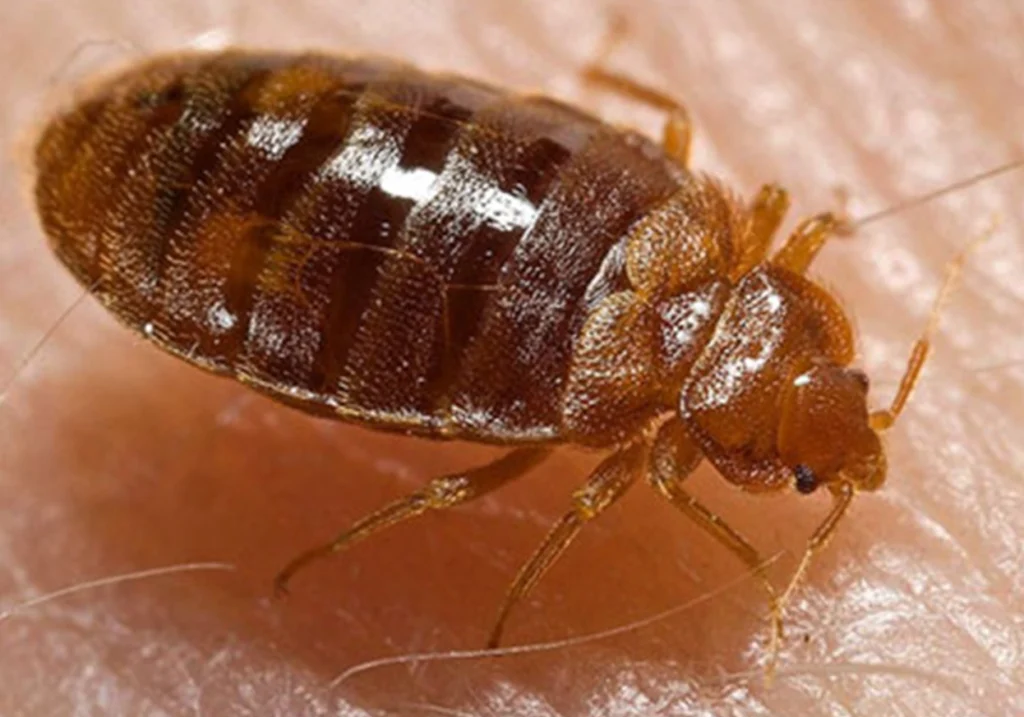
The adult bed bug is larger, flatter when unfed, and reddish-brown. After feeding, its body becomes swollen and darker. Adults can mate, lay eggs, and continue the infestation. Female bed bugs need blood meals to successfully produce eggs.
Survival ability
Bed bugs survive well because they hide effectively, feed quickly, and can go long periods without feeding. EPA notes that bed bugs typically feed every five to ten days, but they can live for several months without feeding. University of Kentucky guidance also explains that in normal temperature-controlled buildings, bed bugs may survive about 1 to 4 months without feeding, and longer in cooler conditions.
Their Reproductive Process and raising their children
Bed bug reproduction is one reason infestations can grow so quickly. A fed adult female can lay eggs repeatedly, often in protected hiding places close to sleeping areas. Penn State Extension notes that a female may lay up to 5 eggs per day and about 500 eggs in her lifetime under favorable conditions.
Key points about reproduction:
- Mating method: Bed bugs reproduce through traumatic insemination. In this process, the male pierces the female’s body wall and transfers sperm. This unusual reproductive system is well documented in bed bug research.
- Egg laying: After feeding and mating, the female lays tiny white eggs in cracks, seams, and sheltered areas. These places protect the eggs from light, movement, and cleaning.
- No parental care: Bed bugs do not raise their young like birds or mammals. There is no feeding, guarding, teaching, or nest care from the parents.
- Young survive independently: Once eggs hatch, the nymphs must find blood meals by themselves. They use the same basic feeding behavior as adults.
- Fast population growth: If the room has warmth, hiding spaces, and regular hosts, the population can increase rapidly. Eggs, nymphs, and adults may all be present at the same time.
- Repeated generations: Because bed bugs can reproduce indoors, they are not limited to one outdoor season. Heated buildings allow them to remain active year-round.
This is why early detection matters. Removing only adult bugs is not enough. Eggs and hidden nymphs must also be controlled, or the infestation can return after a short time.
The importance of them in this Ecosystem
A difficult but real ecological role
Although bed bugs are harmful pests in human homes, they are still part of the wider natural world. In nature, their relatives feed on birds, bats, and other warm-blooded animals. These blood-feeding insects are part of food webs and evolutionary relationships between parasites and hosts.
Food for other organisms
Bed bugs can be eaten by some predators such as spiders, ants, cockroaches, and other small arthropods. However, this does not mean people should depend on predators to control an infestation. Natural predation is not strong enough to remove bed bugs from bedrooms, hotels, or apartments.
Scientific importance
Bed bugs are important in science because they help researchers study insect behavior, pesticide resistance, blood-feeding biology, urban pest management, and human-insect relationships. Their ability to hide, survive starvation, and resist some control methods makes them useful for understanding pest adaptation. EPA and extension sources now recommend integrated control because bed bug management is complex and cannot depend only on simple spraying.
Public health importance
Bed bugs are also important because they affect human comfort, sleep, mental health, and household costs. They are considered a public health pest even though they are not known to transmit disease. Their impact comes from itching, sleep loss, anxiety, allergic reactions, and the difficulty of control.
So, their ecological importance does not mean they should be protected inside homes. It means they should be understood and managed responsibly.
What to do to protect them in nature and save the system for the future
Bed bugs are not endangered insects, and indoor infestations should not be protected. The better goal is to protect the wider Ecosystem while controlling bed bugs safely and responsibly.
- Avoid unnecessary pesticide use: Do not spray random chemicals everywhere. Overuse can harm people, pets, and non-target insects.
- Use Integrated Pest Management: Combine inspection, cleaning, heat, encasements, monitoring, and targeted pesticide use when needed. This reduces chemical pressure on the environment.
- Do not use dangerous home remedies: EPA warns against unsafe methods such as gasoline, kerosene, and improper heating. These can cause poisoning, fire, or explosion.
- Protect beneficial insects outdoors: Bed bug control should focus on indoor hiding places, not broad outdoor spraying that can harm bees, butterflies, beetles, and other helpful organisms.
- Inspect second-hand furniture: Checking used beds, sofas, and mattresses helps prevent the spread without unnecessary chemical treatment.
- Travel carefully: Keep luggage away from beds and inspect hotel sleeping areas before unpacking. This prevents movement from one place to another.
- Use professional help for serious infestations: A trained pest management professional can target the problem more safely than repeated amateur spraying. University of Minnesota Extension notes that hiring a pest management professional is often the most effective way to deal with an infestation.
- Educate people without shame: Bed bugs can happen in clean or dirty places. Reducing stigma encourages early reporting and faster control.
Responsible control protects both people and the environment.
Frequently Asked Questions (FAQs)
Q1: What is the full life cycle of bed bugs?
A: The full life cycle of bed bugs includes the egg, five nymph stages, and the adult stage. Nymphs must feed before molting into the next stage.
Q2: What do bed bugs look like?
A: Adult bed bugs are small, flat, oval, and usually reddish-brown. They are about 4-5 mm long. Young bed bugs are smaller and lighter, sometimes almost colorless, before feeding.
Q3: What do bed bug bites look like?
A: Bed bug bites may look like itchy red bumps, small welts, or swollen marks. Some people show strong reactions, while others show no visible marks. Bites alone are not enough to confirm the presence of bed bugs.
Q4: How to check for bed bugs at home?
A: Check mattress seams, box springs, bed frames, headboards, sofa seams, cracks, curtains, luggage, and furniture joints. Look for live bugs, eggs, dark spots, reddish stains, and shed skins.
Q5: How long can bed bugs live without food?
A: Bed bugs can survive for months without feeding. In normal indoor conditions, survival without a meal is typically 1 to 4 months, but cooler conditions can extend it.
Q6: Can bed bugs spread disease?
A: Current CDC guidance says bed bugs are not known to spread disease to people. However, bites can cause itching, sleep disturbance, allergic reactions, and secondary infection if scratched deeply.
Q7: How to get rid of bed bugs safely?
A: Use a combined method: inspect, reduce clutter, vacuum carefully, wash and dry washable items on high heat where safe, use mattress encasements, monitor with interceptors, and contact a professional for larger infestations. EPA recommends an Integrated Pest Management approach.
Q8: Do dirty rooms cause bed bugs?
A: Not always. The movement of infested items such as luggage, furniture, bedding, and clothing mainly spreads bed bugs. Even in clean homes, hotels, apartments, dormitories, and offices, bed bugs can still get in.
Conclusion
The life cycle of bed bugs explains why these insects are so difficult to control. They begin as tiny eggs, pass through five nymph stages, and become adults that can feed, hide, mate, and lay more eggs. Their small size, flat body, night activity, and ability to survive for months without feeding make them strong indoor pests.
Still, bed bugs can be managed when people act early and use the right methods. The best approach is not to panic or to spray randomly. It is careful inspection, correct identification, cleaning, heat treatment where suitable, monitoring, and professional help when needed. Bed bug bites, hidden eggs, and dark stains should be taken seriously but handled calmly.
Bed bugs are part of nature, but they do not belong in sleeping spaces. By understanding their biology and using safe control methods, people can protect their homes, health, and the wider environment.
Also Read: life cycle of axolotl