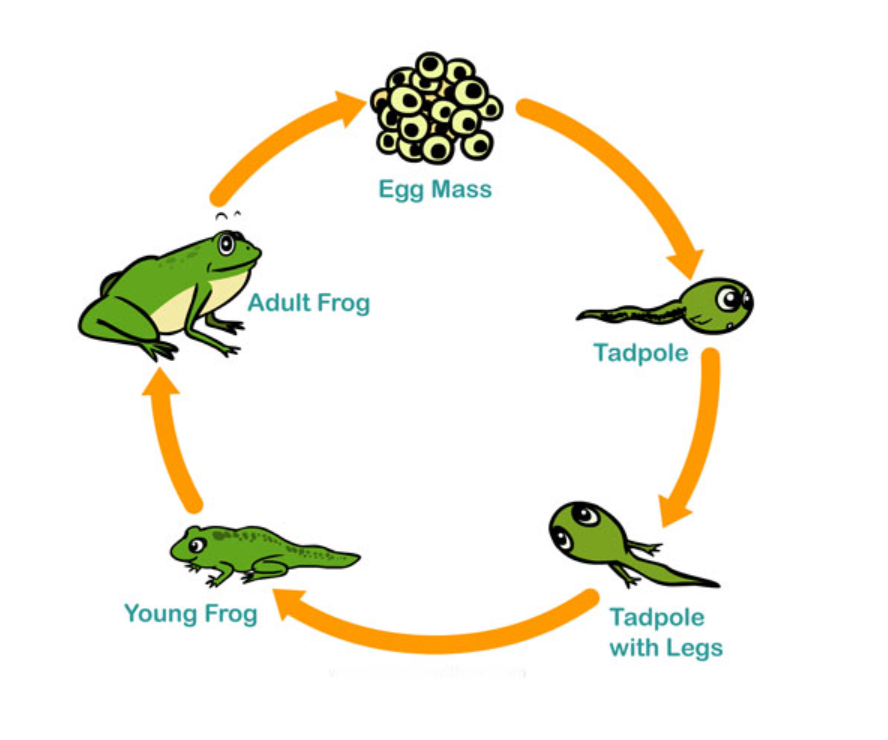
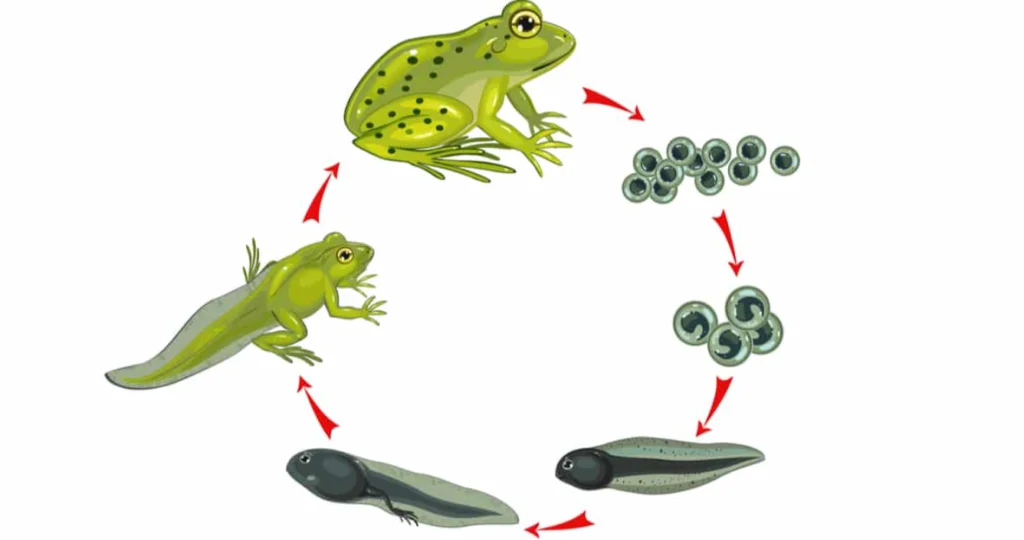
The life cycle of Frog is one of the most interesting examples of natural transformation. A frog does not begin life looking like an adult frog. It starts as a soft jelly-like egg, changes into a swimming tadpole, grows legs, loses its tail, and finally becomes an adult frog. This full change is called metamorphosis.
Frogs are amphibians, meaning they can live both in water and on land at different times in their lives. Most frogs begin life in water because their eggs need moisture to survive. Later, when they grow lungs and legs, they can move onto land, although many still stay close to ponds, wetlands, forests, or damp places. AmphibiaWeb explains that the typical amphibian life cycle includes a larval stage, metamorphosis, and a longer adult life, although some frog species have unusual life cycles.
Frogs are also important for the environment. They eat insects, become food for birds and snakes, and help scientists understand if an ecosystem is healthy. Current conservation data also shows why frogs matter: amphibians are among the most threatened vertebrate groups, with about 2 in every 5 amphibian species at risk of extinction.
Q: What are the main stages in the life cycle of a frog?
A: The main stages are egg, tadpole, tadpole with legs, froglet, and adult frog.
Q: How long does a frog’s life cycle take?
A: It depends on the species, temperature, food, and habitat. In many common frogs, the change from egg to young Frog can take several weeks to a few months.
Q: What is metamorphosis in frogs?
A: Metamorphosis is the process by which a tadpole changes into a frog by growing legs, developing lungs, changing its mouth and digestive system, and absorbing its tail.
Quick Life Cycle Table
| Stage | What Happens | Main Habitat |
| Egg | Jelly-like eggs are laid in water or moist places | Pond, wetland, stream |
| Embryo | The baby frog develops inside the egg | Inside egg jelly |
| Tadpole | Hatches with a tail and gills, swims in water | Freshwater |
| Tadpole with legs | Back legs and then front legs grow | Water and pond edges |
| Froglet | Looks like a small frog, but may still have a short tail | Shallow water, damp land |
| Adult frog | A fully developed frog can reproduce | Land and water |
The History of Their Scientific Naming
The scientific study of frogs is associated with the word Anura, which refers to the order that includes frogs and toads. The term Anura comes from the Greek meaning “without tail,” because adult frogs normally do not have a tail. Britannica describes frogs and toads as amphibians belonging to the order Anura, with adult frogs characterized by a tailless body form.
A few important naming points are:
- Frog is a common name, not one single species name.
- Anura is the scientific order for frogs and toads.
- Amphibia is the class that includes frogs, toads, salamanders, newts, and caecilians.
- Ranidae is often called the family of “true frogs.”
- Toad is not always a strict scientific term. Many toads are simply a type of Frog with drier, rougher skin.
This naming history helps people understand that a frog is not just one animal. It is a large group of amphibians with many species, body shapes, colors, and survival methods.
Their Evolution And Their Origin
The origin of frogs goes back millions of years. Frogs belong to the broader group of amphibians, which were among the first vertebrates to move from water to land. This is why frogs still show a strong connection to both water and land.
In evolutionary terms, frogs are special because their life cycles exhibit both aquatic and terrestrial adaptations. The tadpole stage resembles a small fish because it has a tail, swims in water, and often breathes through gills. Later, the tadpole changes into a frog with legs, lungs, and a body suitable for jumping, climbing, hiding, and hunting on land.
This change is not random. It is the result of long evolutionary adaptation. Frogs needed water for reproduction, but they also needed land to find food, escape predators, and spread into new habitats.
Today, frogs live in many environments. Some live in rainforests, some in deserts, some in mountain streams, and some in garden ponds. Species such as the poison dart frog live in tropical forests, while glass frog species are famous for their transparent-looking body parts. Rain frog species are often linked with moist soil and rainy habitats.
Frogs also evolved many survival tools. Some use camouflage. Some have toxic skin. Some jump far. Some climb trees. Some make loud calls to attract mates. Their long history shows how flexible and successful frogs have been, but modern threats like habitat loss, pollution, disease, and climate change are now putting many species under pressure.
Their main food and its collection process
Frogs are mostly carnivorous as adults, which means they mainly eat other small animals. Their food depends on their size, species, and habitat.
Most adult frogs eat:
- Mosquitoes
- Flies
- Moths
- Beetles
- Grasshoppers
- Crickets
- Spiders
- Worms
- Small snails
- Sometimes, smaller frogs or tiny fish
The food collection process is simple but very effective. A frog usually waits quietly until prey comes close. Then it quickly opens its mouth and uses its sticky tongue to catch the prey. Many frogs depend heavily on movement, so they often notice insects when the insects fly, crawl, or jump.
Tadpoles eat differently. Many tadpoles feed on algae, soft plant material, tiny organic particles, and microorganisms in the water. This makes them useful in freshwater habitats because they help clean algae and recycle nutrients.
Frogs do not chew their food as humans do. They usually swallow prey whole. Their eyes also help push food down because they can sink slightly into the head during swallowing.
Food availability affects the whole life cycle of the Frog. If tadpoles do not get enough food, they may grow slowly. If adult frogs cannot find insects, they may become weak and reproduce less successfully. This is why clean ponds, healthy wetlands, and insect-rich natural spaces are very important for frog survival.
Important Things That You Need To Know
When people search for frogs online, they often use different words that are not always scientific. Some search terms are about real animals, while others are connected to cartoons, memes, or internet culture.
The word Frog refers to real amphibians in the order Anura. These animals have moist skin, powerful legs, and a life cycle that often moves from water to land. A poison dart frog is a real frog group known for bright colors and toxic skin chemicals in the wild. A glass frog is real and famous because some species have transparent skin on the underside of their bodies. A rain frog is another type of Frog, often found in rainy or damp environments.
Other terms are not scientific frog names. Kermit the Frog is a famous puppet character. Crazy Frog is a digital entertainment character. Pepe the Frog is an internet meme character. These names may increase online search volume, but they should not be confused with real frog biology.
The term “frog butt” is also not a scientific species name. It is usually a casual search phrase related to frog body shape, back legs, or the rear body area. In science, frogs have a body opening called the cloaca, which serves for waste disposal and reproduction.
So, when learning about the life cycle of a frog, it is better to focus on real biological terms such as egg, tadpole, froglet, adult frog, metamorphosis, and Anura.
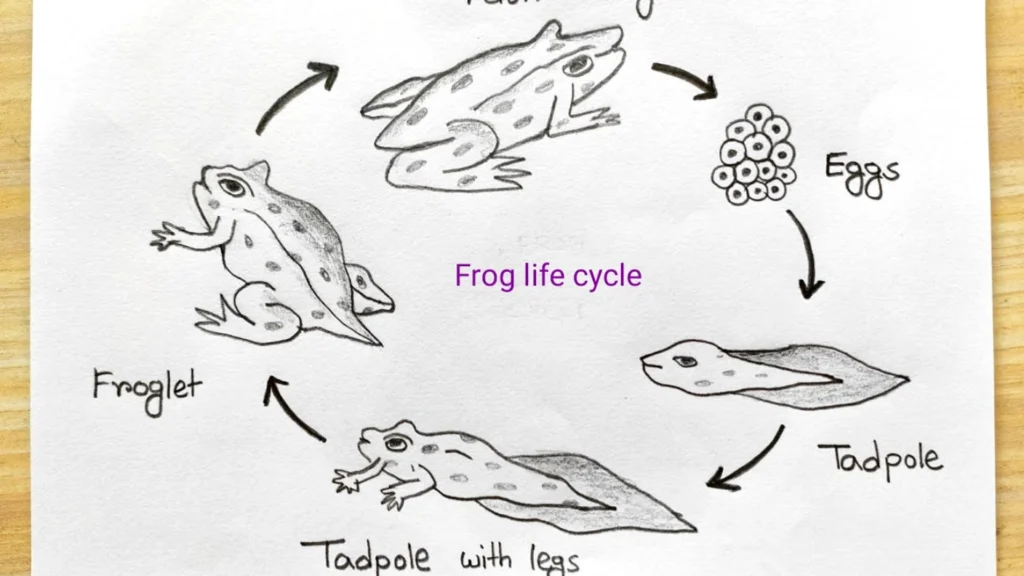
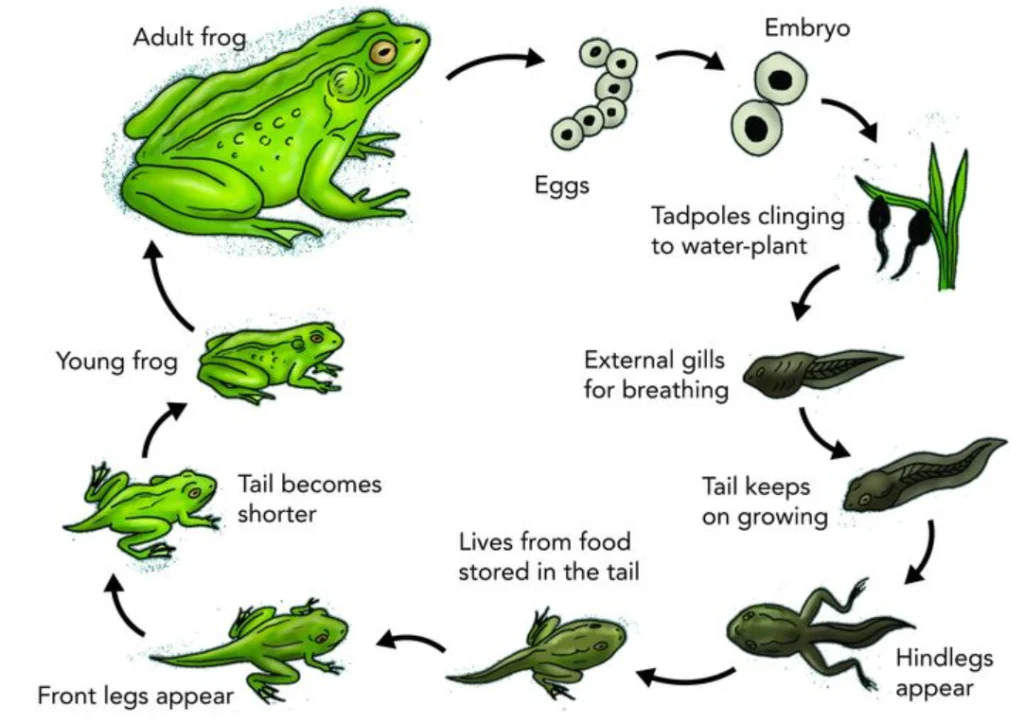
Their life cycle and ability to survive in nature
Egg Stage
The life cycle begins when female frogs lay eggs in water or very moist places. These eggs are usually covered in jelly-like material. This jelly protects the eggs from drying out and gives some protection from small predators.
Tadpole Stage
After development inside the egg, the young Frog hatches as a tadpole. At this stage, it has a tail and usually lives fully in water. Tadpoles are weak at first, so they often stay near plants, algae, and shallow water.
Metamorphosis Stage
During metamorphosis, the tadpole slowly changes. It grows back legs first, then front legs. Its lungs develop, its mouth changes, and its digestive system becomes suitable for a more meat-based adult diet.
Froglet Stage
A froglet looks like a tiny frog but may still have a small tail. This tail is gradually absorbed into the body. The froglet starts spending more time near land but still needs moisture.
Adult Frog Stage
The adult frog can hunt, escape predators, and reproduce. Frogs survive through jumping, hiding, camouflage, skin toxins, night activity, and staying near moist habitats. Their survival depends on clean water, safe breeding places, enough food, and protection from pollution.
Their Reproductive Process and raising their children
Frog reproduction is closely connected with water, sound, and seasonal changes. Many frogs breed during rainy seasons or in the spring because water is more available.
Important steps include:
- Male calling: Male frogs often call loudly to attract females. Each species has its own sound pattern.
- Mate selection: Female frogs may choose males based on call strength, location, size, or health.
- Amplexus: In many species, the male holds the female in this position.
- Egg laying: The female releases eggs into water or moist areas.
- External fertilization: In many frogs, the male releases sperm over the eggs outside the female’s body.
- Egg protection: Many frogs leave eggs after laying them, but some species guard eggs or place them in safer areas.
- Tadpole development: Tadpoles hatch and begin feeding in water.
- Independent growth: Most tadpoles grow without parental care, but they rely on the safety of their habitat.
Not all frogs raise their young in the same way. Some tropical frogs carry tadpoles on their backs. Some place eggs in tree holes or leaf pools. Some guard eggs until they hatch. There are even unusual frogs in which young develop in ways outside the common pond-based pattern.
This shows that frog reproduction is diverse. Still, the main goal is the same: protect the next generation long enough for eggs to become tadpoles, tadpoles to become froglets, and froglets to become adult frogs.
The importance of them in this Ecosystem
Natural Pest Control
Frogs eat many insects, including mosquitoes and crop pests. This helps control insect populations naturally. The USGS notes that amphibians eat insect pests, benefit agriculture, and help control mosquitoes.
Food Chain Balance
Frogs are both predators and prey. They eat insects, but snakes, birds, fish, mammals, and larger amphibians also eat them. This makes frogs an important link in the food chain.
Clean Water Support
Tadpoles often feed on algae and organic matter. This helps maintain balance in ponds and wetlands. Healthy tadpole populations can support cleaner and more stable freshwater systems.
Environmental Indicators
Frogs have moist and permeable skin. As a result, they are sensitive to pollution, drought, and chemical changes. When frog populations decline, it can be a warning sign that the environment is unhealthy.
Biodiversity Value
Frogs add beauty, sound, and biological variety to nature. Their calls, colors, behaviors, and life cycles enrich and balance ecosystems. Without frogs, many habitats would lose an important part of their natural system.
What to do to protect them in nature and save the system for the future
- Protect wetlands: Save ponds, marshes, streams, and swamps because these are key breeding places for frogs.
- Avoid chemical pollution: Reduce the use of pesticides, herbicides, and other harmful garden chemicals, as frogs absorb toxins through their skin.
- Keep garden ponds natural: Add native plants, shallow edges, and clean water so frogs can breed safely.
- Do not remove frogspawn: Frog eggs should be left in their natural habitat unless there is a serious rescue need.
- Create safe hiding places: Logs, leaf litter, stones, and native plants give frogs shelter from heat and predators.
- Protect insects naturally: Avoid killing all insects, as frogs need them as food.
- Stop habitat destruction: Forest clearing, wetland filling, and heavy construction can destroy frog breeding areas.
- Control invasive species: Non-native fish, predators, and plants can damage frog eggs and tadpoles.
- Reduce climate stress: Support actions that protect water sources and reduce extreme heat impacts.
- Teach others: Simple education about the life cycle of a frog. Frog helps children and adults respect frogs rather than fear them.
Frequently Asked Questions (FAQs)
Q1: What is the life cycle of a frog?
A: The life cycle of a frog is the natural growth process from egg to tadpole, then froglet, and finally adult frog.
Q2: What is the first stage of a frog’s life cycle?
A: The first stage is the egg. Most frogs lay eggs in water or moist places.
Q3: What is a tadpole?
A: A tadpole is the early aquatic stage of a frog. It has a tail, swims in water, and usually breathes through gills at first.
Q4: What is a froglet?
A: A froglet is a young frog that has legs and lungs but may still have a small tail.
Q5: Why do frogs lay eggs in water?
A: Frog eggs are soft and do not have hard shells, so they need water or moisture to stop them from drying out.
Q6: Do all frogs have the same life cycle?
A: No. Most frogs follow the egg, tadpole, froglet, and adult pattern, but some species exhibit direct development or unusual parental care.
Q7: What do frogs eat?
A: Adult frogs mostly eat insects, worms, spiders, and other small animals. Tadpoles often eat algae and soft plant material.
Q8: Why are frogs important?
A: Frogs control insects, support food chains, help clean freshwater systems, and act as signs of environmental health.
Conclusion
The life cycle of a frog is a powerful example of change, survival, and balance in nature. A frog begins as a soft egg, becomes a swimming tadpole, changes through metamorphosis, grows into a froglet, and finally becomes an adult frog. Each stage has a special purpose and depends on clean water, safe shelter, enough food, and a healthy ecosystem.
Frogs are not just small animals living near ponds. They are natural pest controllers, a food source for many species, and important indicators of environmental health. Their decline can warn us that wetlands, forests, and freshwater systems are in danger.
Protecting frogs means protecting the wider natural system. By conserving wetlands, reducing pollution, avoiding the use of harmful chemicals, and protecting frog habitats, we help future generations enjoy the sound, beauty, and ecological value of frogs in nature.
Also Read: lady beetle life cycle