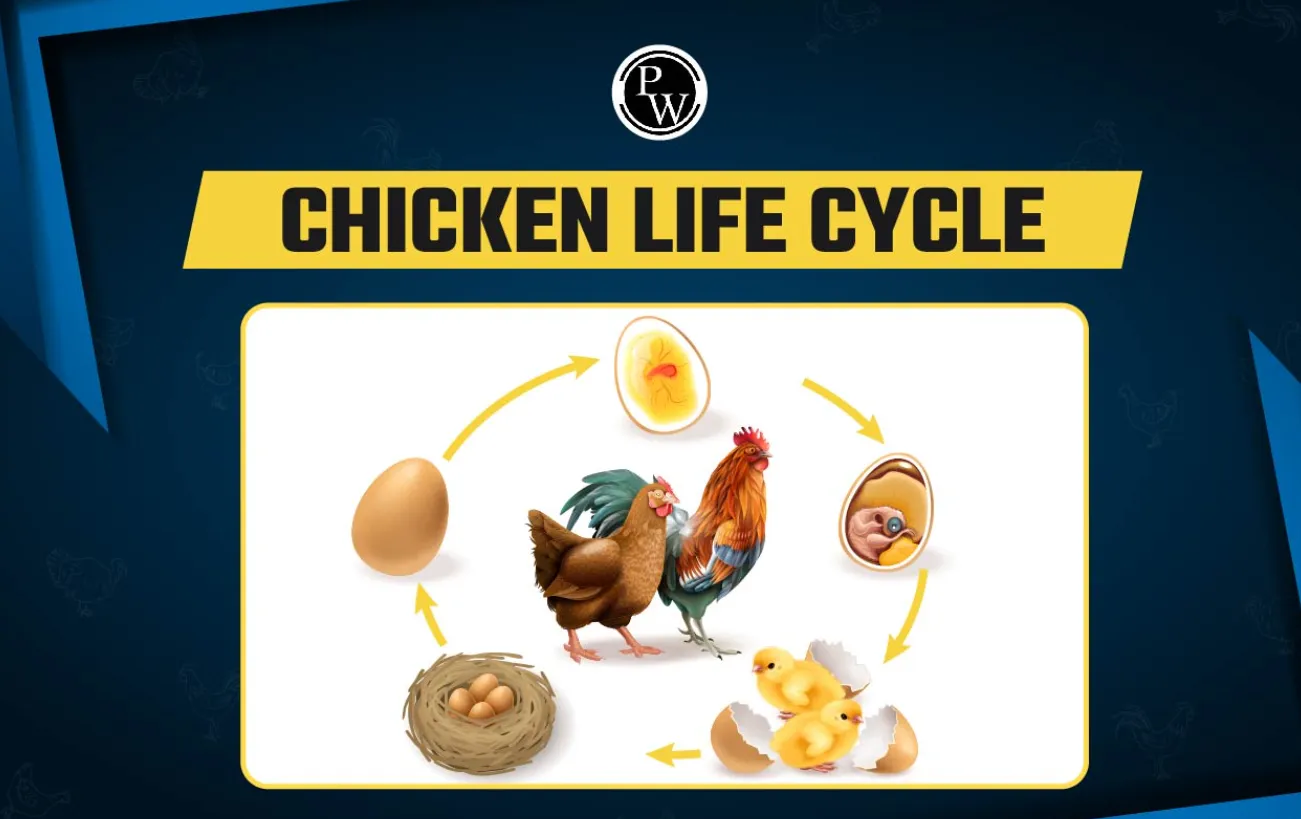
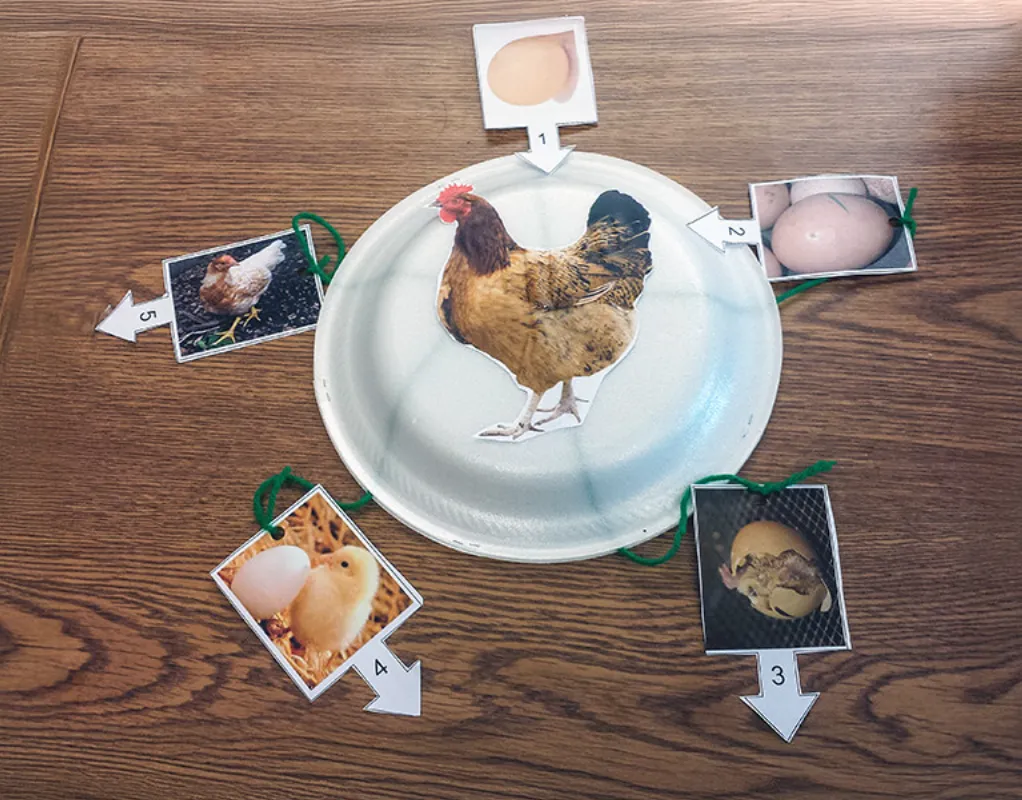
The life cycle of a chick begins inside a fertilized chicken egg and continues through hatching, early growth, juvenile development, and adulthood. A chick is the young stage of the domestic chicken, scientifically known as Gallus gallus domesticus, a domesticated form closely linked to the red junglefowl. Chick development is one of the most familiar examples of bird growth because it can be observed clearly from egg incubation to the adult hen or rooster stage.
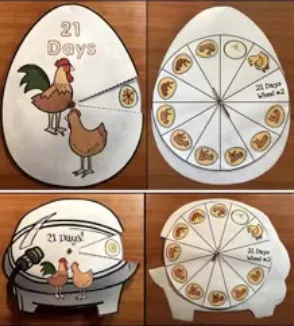
In normal conditions, a fertilized chicken egg takes about 21 days of incubation to hatch. Near hatching, the chick uses a temporary hard tip on its beak called an egg tooth to break the shell and escape. After hatching, the chick dries, becomes fluffy, starts walking, and begins feeding. University poultry extension sources describe these 21 days as the standard for chicken embryo development.
Q: How long does it take for a chick to hatch?
A: A chick usually hatches after about 21 days of incubation.
Q: What is a baby chicken called?
A: A baby chicken is called a chick. A young female is a pullet, and a young male is a cockerel.
Q: Can every egg become a chick?
A: No. Only a fertilized egg can develop into a chick, and it also needs proper warmth, humidity, oxygen, and turning during incubation.
Quick Life Cycle Table
| Stage | Age/Time | What Happens | Key Need |
| Fertilized Egg | Day 0 | The embryo begins after fertilization | Warm incubation |
| Embryo | Days 1–20 | Organs, feathers, beak, legs, and body systems form | Stable heat and oxygen |
| Hatching Chick | Around Day 21 | Chick pips the shell using an egg tooth | Rest and safe hatching |
| Young Chick | 0–6 weeks | Down changes to feathers; walking and feeding improve | Heat, starter feed, water |
| Juvenile Chicken | 6–18 weeks | Grows into a pullet or cockerel | Space and a balanced diet |
| Adult Chicken | 18+ weeks | Becomes a mature hen or rooster | Shelter, food, flock safety |
Important Things That You Need To Know
When people search for the life cycle of a chick, they may also see LSI keywords such as chick, chicken salad chick, Chick-fil-A, Chick-fil-A near me, and Chick-fil-A breakfast menu. These terms contain the word “chick,” but they do not all mean the same thing.
In biology, a chick means a young bird, especially a baby chicken. This article focuses on the natural and scientific development of a chick from a fertilized egg to an adult chicken. The keyword life cycle of a chick is therefore an educational, farming, biology, and animal development topic.
Terms like chicken salad chick, Chick-fil-A, Chick-fil-A near me, and Chick-fil-A breakfast menu are food-service or restaurant-related search terms. They are useful for understanding search behavior, but they should not be overemphasized in the biological explanation. Overusing these unrelated phrases can make the article confusing for readers and search engines.
For SEO, the best approach is to keep the main article focused on chick growth, egg incubation, hatching, pullet development, rooster development, and chicken lifespan. The LSI terms can be mentioned naturally in one clarification section like this, but the article should stay centered on real-life chick biology.
The History of Their Scientific Naming, Evolution, and Origin
Scientific Naming of the Chick
The domestic chicken is commonly classified as Gallus gallus domesticus. The early stage of this bird is called a chick. The species is closely related to the red junglefowl, Gallus gallus, widely accepted as the primary wild ancestor of modern chickens.
Evolutionary Background
The chicken belongs to a group of ground-feeding birds that adapted to scratching soil, foraging for seeds, and eating insects. These traits are still visible in modern chicks and adult chickens. Even newly hatched chicks quickly show natural behaviors such as pecking, scratching, following warmth, and responding to calls.
Origin of Domestic Chickens
Genetic studies show that domestic chickens are closely related to wild red junglefowl populations in South and Southeast Asia. Research on red junglefowl genetics also highlights that wild populations remain important because they preserve ancestry and genetic diversity connected to modern chickens.
Human Domestication
Humans gradually domesticated chickens for eggs, meat, feathers, companionship, and cultural use. Over generations, selective breeding created many chicken breeds with different sizes, colors, egg-laying ability, body shapes, and growth rates.
Their Reproductive Process, Giving Birth, And Rising Their Children
Mating and Fertilization
Chickens do not give birth like mammals. A hen lays eggs, and a chick develops only if a rooster has fertilized the egg. During mating, sperm from the rooster fertilize the ovum inside the hen before the shell is fully formed.
Once the fertilized egg is laid, development pauses unless the egg receives proper incubation warmth. This is why a fertilized egg needs either a broody hen or an artificial incubator.
Egg Laying and Incubation
A hen lays the egg with a protective shell, albumen, yolk, membranes, and an air cell. The yolk provides nutrition for the developing embryo. The shell protects the embryo while allowing gas exchange through tiny pores.
During incubation, the egg must stay warm and should be turned regularly in early development. Turning helps prevent the embryo from sticking to the shell membrane.
Hatching Process
Near day 21, the chick moves into hatching position. It breaks into the air cell, begins lung breathing, and then uses its egg tooth to pip the shell. The process can take many hours because the chick rests between efforts.
Raising the Chicks
After hatching, the chick is wet, tired, and weak. Soon, it dries into a fluffy chick and begins walking. In natural conditions, the mother hen provides warmth, protection, and guidance. In captivity, chicks need a clean brooder, safe heat, fresh water, and proper starter feed.
Stages of the Life Cycle of a Chick
Stage 1: Fertilized Egg
The life cycle starts when the hen produces an egg that a rooster has fertilized. Inside the egg, the early embryo begins as a small group of cells. The yolk feeds the embryo, while the shell protects it from damage and dehydration.
This stage is very delicate. Without proper warmth, the embryo will not continue developing.
Stage 2: Embryo Development
During the 21-day incubation period, the embryo develops quickly. Major organs, blood vessels, eyes, beak, legs, wings, and feathers begin forming. By the final days, the chick absorbs the remaining yolk to support itself during and shortly after hatching.
Extension embryology guides describe this as a step-by-step transformation from a tiny embryo into a fully formed chick ready to hatch.
Stage 3: Hatching Chick
Around day 21, the chick begins to hatch. It first breaks into the air cell inside the egg, then cracks the shell. The egg tooth helps cut around the shell until the chick can push free.
This stage requires patience. A healthy chick may rest several times before fully escaping the egg.
Stage 4: Chick to Adult Chicken
After hatching, the chick grows rapidly. It changes from soft down to real feathers, learns to peck food, drink water, scratch the ground, and interact with the flock.
By several weeks of age, it becomes a juvenile. A young female becomes a pullet, while a young male becomes a cockerel. Later, they mature into adult hens or roosters.
Their main diet, food sources, and collection process are explained
Chicks and chickens are natural foragers. Their wild relatives, such as red junglefowl, eat a mixed diet of seeds, grains, grasses, insects, and worms. Animal Diversity Web describes red junglefowl as both herbivorous and insectivorous, meaning they eat plant materials and small animals such as insects.
In the first weeks, a domestic chick needs a balanced chick starter feed. This feed is usually higher in protein than adult chicken feed because chicks are building bones, muscles, feathers, and immune strength.
Main food sources include:
- Starter feed for early growth.
- Clean water is available at all times.
- Small grains and seeds as they grow older.
- Insects and worms are natural foragers.
- Greens and grasses in safe outdoor areas.
- Grit when chicks begin eating harder foods.
Chicks collect food by pecking. They use their sharp vision to notice tiny objects, then peck and swallow. Adult hens often guide chicks by scratching the soil and calling them toward food.
Insects can also be part of poultry nutrition. Poultry extension resources note that insects such as fly larvae, crickets, grasshoppers, and similar species have been studied as safe feed sources for chickens when properly managed.
How long does the life cycle of a Chick Live
The phrase how long does a chick live usually means how long the bird lives after hatching. A chick does not stay a chick forever. It grows into a juvenile chicken, then into an adult hen or rooster.
Backyard hens may live for 6–8 years, although their strongest egg production usually lasts fewer years. University of Wisconsin Extension notes that backyard hens may live 6–8 years, while many flocks produce eggs well for around 3–4 years. Colorado State University Extension similarly reports that hens may live up to 7 years in backyard conditions.
Key lifespan points:
- Chick stage:
- The chick stage usually lasts the first 6 weeks, when the bird is small, fluffy, and highly dependent on warmth and protection.
- Juvenile stage:
- From about 6 to 18 weeks, the bird becomes a growing juvenile. Feathers become stronger, body size increases, and sex differences become clearer.
- Adult stage:
- Around 18 weeks or later, many chickens reach sexual maturity, though the exact timing depends on breed, nutrition, season, and health.
- Backyard lifespan:
- A well-managed backyard chicken can often live several years when protected from predators, disease, extreme weather, and poor nutrition.
- Commercial lifespan:
- Commercial poultry lifespans vary greatly depending on whether birds are raised for eggs or meat. Meat-type birds are usually kept for a much shorter time than backyard or heritage birds.
- Breed effect:
- Heritage breeds often grow more slowly but may remain active for longer. Fast-growing meat breeds may face more health pressure if kept long-term.
- Predator risk:
- In open outdoor conditions, chicks are vulnerable to cats, dogs, snakes, rats, hawks, owls, foxes, and other predators.
- Health and hygiene:
- Clean bedding, dry housing, fresh water, proper feed, and vaccination or disease prevention can improve survival.
- Weather protection:
- Chicks can die quickly from cold stress, overheating, damp bedding, or poor ventilation.
- Flock management:
- Safe integration into a flock reduces bullying, injury, and stress as chicks grow into juveniles.
Life Cycle of a Chick Lifespan in the Wild vs. in Captivity
Lifespan in Wild or Semi-Wild Conditions
A true domestic chick rarely lives fully “wild,” but its wild relatives, such as red junglefowl, live in natural habitats where survival depends on food, cover, climate, and predator avoidance. In the wild, young birds face high risks from predators, disease, poor weather, and food shortages.
Wild chicks must learn to follow the mother, hide quickly, forage efficiently, and respond to danger calls. Many may not survive to adulthood.
Lifespan in Captivity or Backyard Care
In captivity, chicks usually have a better chance of survival if they receive proper brooder heat, clean water, balanced feed, and predator-proof shelter. Backyard chickens can live for several years under good care. Extension sources report typical backyard hen lifespans of 6–8 years, or up to 7 years, depending on conditions and management.
Main Difference
The biggest difference is protection. Captive chicks are protected from many natural dangers, while wild or free-ranging chicks must survive weather, predators, parasites, and competition.
Importance of the Life Cycle of a Chick in this Ecosystem
Natural Foraging and Insect Control
Chickens and their wild relatives help control insects by eating worms, larvae, beetles, grasshoppers, and other small invertebrates. This feeding behavior can reduce some pest pressure in gardens, farms, and natural areas.
Soil Scratching and Nutrient Mixing
Chickens scratch the soil as they search for food. This behavior can mix surface litter, break down organic matter, and help expose insects. When managed properly, scratching can support nutrient cycling in small farm systems.
Manure and Soil Fertility
Poultry manure contains nutrients such as nitrogen and phosphorus. FAO resources explain that poultry by-products can be valuable when properly managed and recycled, though poor management can raise concerns about soil, water, and air quality.
Role in Food Chains
Chicks and chickens are part of food webs. They eat plants and insects, while they may also become prey for larger animals. This makes them both consumers and potential prey within the ecosystem.
Human Food Systems
Domestic chickens are also important in human food systems because they provide eggs and meat. Understanding the life cycle of a chick helps farmers, students, and backyard keepers manage poultry more responsibly.
What to do to protect them in nature and save the system for the future
Protect Natural Habitat
- Keep natural vegetation, shrubs, and safe ground cover where chicks and wild junglefowl-like birds can hide.
- Avoid unnecessary clearing of nesting and foraging areas.
- Maintain mixed landscapes with insects, seeds, and safe shelter.
Reduce Predator and Human-Caused Risks
- Use predator-safe housing for backyard chicks.
- Keep chicks away from roads, open drains, and unsafe farm machinery.
- Do not release domestic chickens into wild habitats where they may suffer or spread disease.
Support Clean Water and Safe Feeding
- Provide clean drinking water every day.
- Avoid moldy feed, spoiled scraps, and contaminated grain.
- Store feed in sealed containers to prevent rat infestations and the spread of disease.
Manage Poultry Waste Responsibly
- Compost or manage manure correctly.
- Do not allow poultry waste to pollute streams, ponds, or groundwater.
- Use manure as fertilizer only in safe, balanced amounts.
Prevent Disease Spread
- Keep brooders, coops, feeders, and drinkers clean.
- Isolate sick birds quickly.
- Avoid mixing unknown birds into a healthy flock without quarantine.
Fun & Interesting Facts About the Life Cycle of a Chick
- A chick can begin communicating from inside the egg before it hatches.
- The egg tooth is temporary and falls off after hatching.
- A chick absorbs yolk before hatching, which gives it energy for the first stage of life.
- Newly hatched chicks are wet at first, then become fluffy as they dry.
- Chicks naturally peck at small objects as they explore food.
- A mother hen uses special sounds to call chicks toward food or warn them about danger.
- Chicks can walk soon after hatching because chickens are precocial birds, meaning they are relatively developed at birth compared with many songbirds.
- A young female chicken is called a pullet before she becomes a hen.
- A young male chicken is called a cockerel before he becomes a rooster.
- Chicken embryos develop rapidly, completing the full egg stage in about 21 days.
- Chicks learn social behavior early by staying close to the mother hen or flock.
- Feather growth is one of the clearest signs that a chick is moving toward the juvenile stage.
Frequently Asked Questions (FAQs)
Q: What are the main stages in the life cycle of a chick?
A: The main stages are fertilized egg, embryo, hatching chick, young chick, juvenile chicken, and adult hen or rooster.
Q: How many days does a chick take to hatch?
A: A chick usually takes about 21 days to hatch under proper incubation conditions.
Q: What does a chick eat after hatching?
A: A chick should eat chick starter feed and drink clean water. As it grows, it may also eat grains, greens, insects, and worms.
Q: What is the difference between a chick and a pullet?
A: A chick is a newly hatched or very young chicken. A pullet is a young female chicken that has not yet become a mature laying hen.
Q: Can a chick survive without a mother hen?
A: Yes, but it needs human-managed care such as brooder heat, clean bedding, fresh water, starter feed, and protection from predators.
Conclusion
The life cycle of a chick is a fascinating journey from a tiny fertilized cell inside an egg to a fully grown hen or rooster. In about 21 days, a fertilized egg can develop into a hatchling, and within weeks, the chick begins to change into a feathered juvenile. Its growth depends on warmth, oxygen, nutrition, water, hygiene, and protection.
Understanding this life cycle is important for students, poultry keepers, farmers, and nature lovers. It explains how chicks hatch, what they eat, how they grow, how long chickens live, and why responsible care matters. The chick is more than a cute farm animal; it is part of food systems, soil nutrient cycles, insect control, and human agricultural history. By protecting chicks, managing poultry responsibly, and respecting natural systems, we help support healthier animals and a more balanced ecosystem.
Also Read: life cycle of the bees