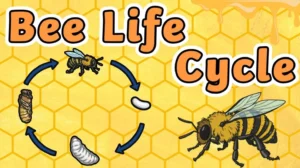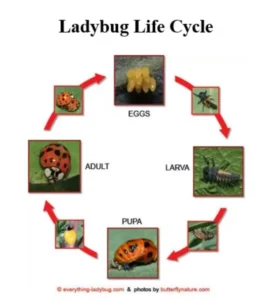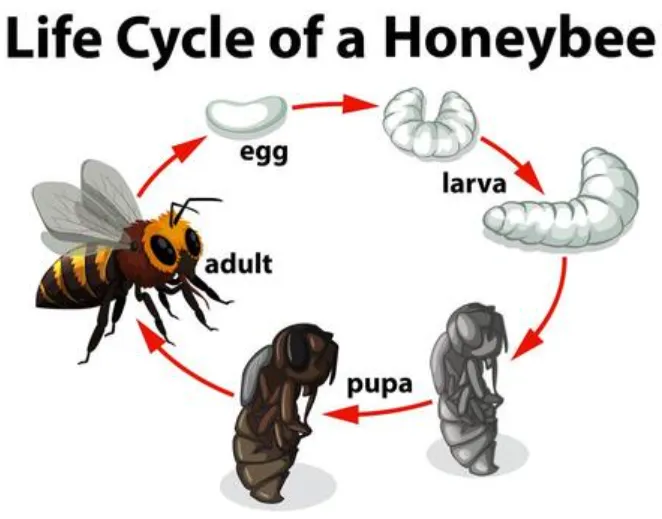
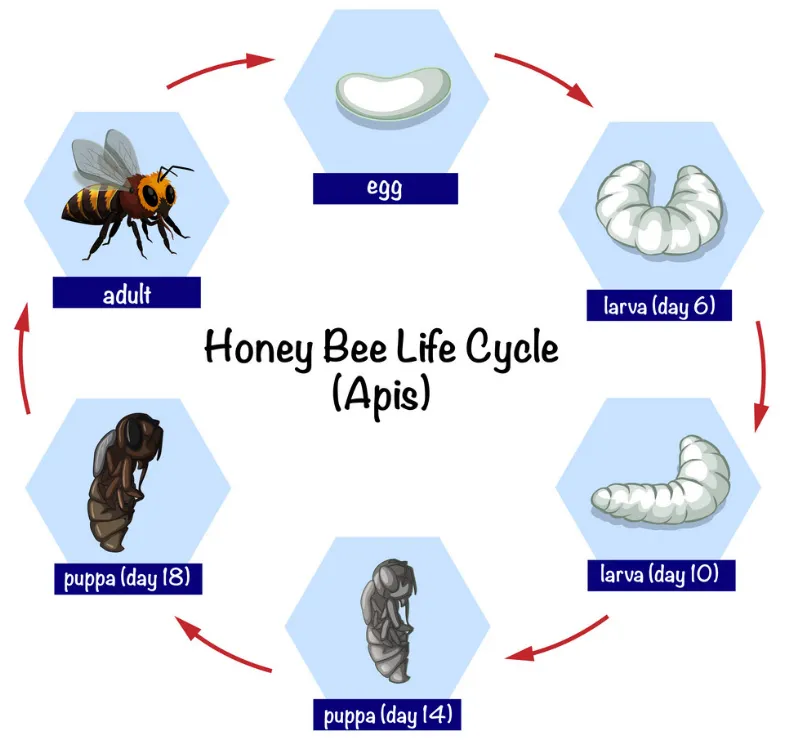
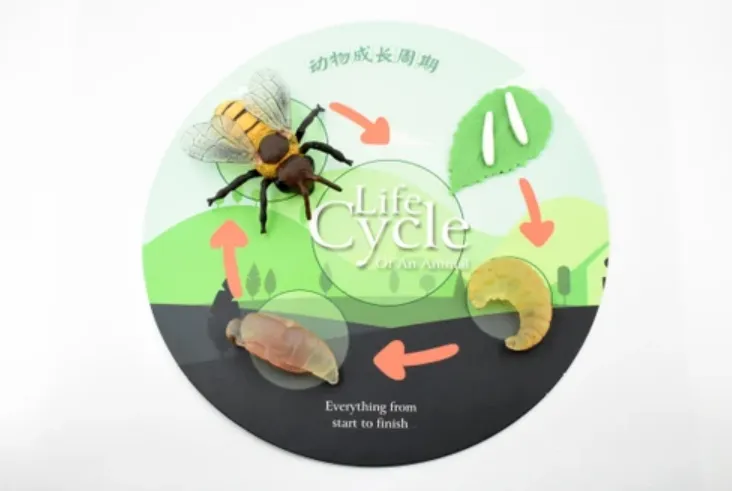
The life cycle of the bees is one of the most fascinating natural processes in the insect world. Bees are complete metamorphosis insects, which means they pass through four clear stages: egg, larva, pupa, and adult. This process helps bees grow from a tiny egg into a fully developed flying insect that can work, reproduce, collect food, protect the colony, or pollinate plants.
Most people think only of honey bees, but the word “bees” encompasses many types, including honey bees, bumblebees, stingless bees, and solitary bees. Honey bees are the most studied because they live in large colonies and play a major role in agriculture. The western honey bee, scientifically known as Apis mellifera, was named by Linnaeus in 1758.
Bees are important because they help flowering plants reproduce through pollination. According to the USDA, about 35% of the world’s food crops depend on animal pollinators, and more than 3,500 native bee species help increase crop yields.
Q: What are the four stages in the life cycle of the bees?
A: The four stages are egg, larva, pupa, and adult.
Q: How long does it take for a honey bee to become an adult?
A: In honey bees, a queen develops in about 16 days, a worker bee in about 21 days, and a drone in about 24 days.
Q: Why are bees important to humans?
A: Bees pollinate fruits, vegetables, nuts, seeds, and wild plants, making them essential for food production and biodiversity.
Quick Life Cycle Table
| Stage | What Happens | Time Period | Key Point |
| Egg | Queen lays tiny eggs in cells | Around 3 days | Beginning of bee life |
| Larva | Larva eats and grows quickly | Around 5–6 days | Needs constant feeding |
| Pupa | The body changes into an adult form | Varies by caste | Wings, legs, and eyes develop |
| Adult | The bee emerges and starts its role | Queen: 16 days, Worker: 21 days, Drone: 24 days | Fully active bee |
The History of Their Scientific Naming, Evolution, and Origin
Scientific Naming of Bees
The most familiar honey bee is called Apis mellifera. The name was given by Carl Linnaeus in 1758. In Latin, Apis means bee, and mellifera means honey-bearing. This name reflects the bee’s ability to produce and store honey.
Evolution of Bees
Bees belong to the order Hymenoptera, which also includes ants and wasps. Over time, bees evolved from wasp-like ancestors that shifted from hunting prey to feeding on pollen and nectar. This change helped flowering plants and bees develop a strong natural relationship.
Origin of Honey Bees
The western honey bee, Apis mellifera, is native to Europe, western Asia, and Africa. Humans later introduced it to many other regions, including the Americas and Australia.
This long history shows why bees are not only insects but also a key part of agriculture, ecology, and human survival.
Their Reproductive Process, Giving Birth, And Rising Their Children
Queen Bee and Egg Laying
In a honey bee colony, the queen bee is the main reproductive female. A healthy queen can lay a large number of eggs during peak season. Britannica notes that a queen may lay a thousand or more eggs per day in a strong colony.
The queen lays eggs inside wax cells made by worker bees. Each egg is carefully placed at the bottom of a cell. The future role of the bee depends on fertilization and food.
Fertilized and Unfertilized Eggs
A fertilized egg becomes a female bee, either a worker or a queen. An unfertilized egg becomes a male drone. Penn State Extension explains that fertilized eggs can develop into queens or workers, while unfertilized eggs develop into drones.
Raising the Young Bees
Bees do not raise their young like mammals, but they care for them through colony teamwork. Nurse bees feed the larvae with special food. Young larvae first receive royal jelly. Future queens continue receiving royal jelly, while worker and drone larvae later receive a mixture of pollen and nectar-based food.
Colony Care and Protection
Worker bees clean cells, feed larvae, regulate hive temperature, guard the hive, and collect food. This organized care system helps the colony survive and allows thousands of young bees to develop safely.
Stages of the Life Cycle of the Bees
Egg Stage
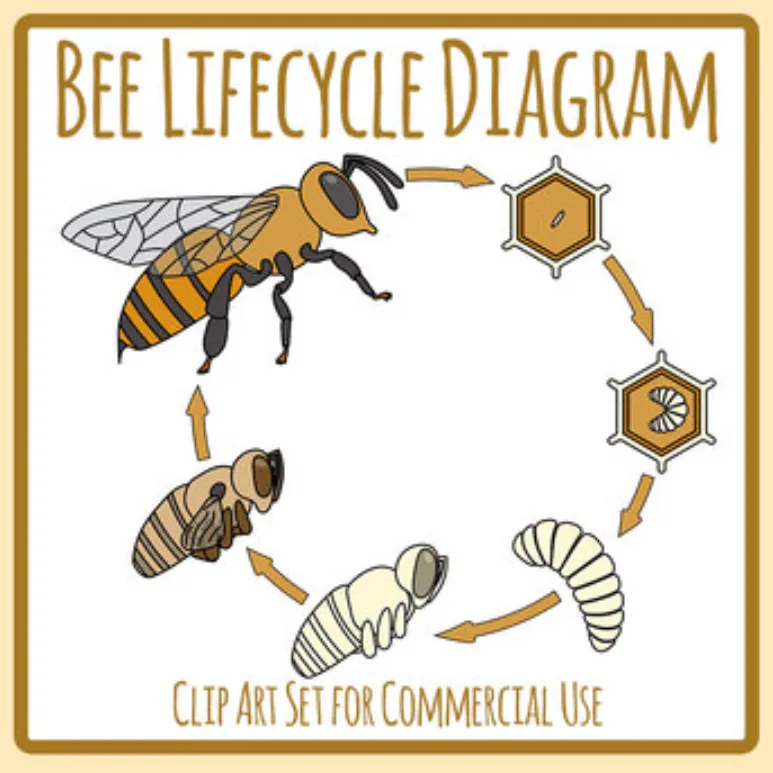
The egg stage is the first stage in the life cycle of the bees. A queen bee lays tiny white eggs inside wax cells. These eggs are very small and look like thin grains of rice. In honey bees, the egg stage usually lasts about three days before the egg hatches into a larva.
This stage is simple but very important. The queen’s ability to lay healthy eggs controls the growth and strength of the whole colony.
Larva Stage
After hatching, the bee enters the larva stage. The larva looks like a small white grub and cannot fly, see, or feed itself. Nurse bees feed it many times a day.
This is a period of rapid growth. The larva continuously eats and sheds its outer skin as it grows. Food quality matters a lot at this stage. Larvae chosen to become queens receive richer royal jelly for a longer period.
Pupa Stage
The pupa stage is the stage of transformation. Worker bees cap the cell with wax, and inside that sealed cell, the larva changes into an adult bee.
During this stage, the bee develops wings, legs, antennae, eyes, body hairs, and adult organs. Although it looks quiet from the outside, a major biological change is happening inside.
Adult Stage
The adult bee finally chews through the wax cap and emerges from the cell. Its role depends on whether it is a queen, worker, or drone.
A worker bee begins by cleaning cells, then becomes a nurse bee, wax producer, guard bee, and finally a forager. A queen focuses on reproduction. A drone’s main role is mating with a virgin queen.
Important Things That You Need To Know
Bees are not just honey-making insects. They are among the most important pollinators on Earth. Different bees live in different ways. Some live in large colonies, while others live alone in soil, wood holes, or plant stems.
The most popular type is the honey bee, but many wild bees are also powerful pollinators. Bumblebees can pollinate crops in cooler weather, while many native bees are excellent at pollinating local flowers and food plants.
One key thing to know is that not all bees make honey. Honey bees store honey for colony survival, especially during seasons when flowers are limited. Many solitary bees do not make honey, but they are still valuable because they move pollen from flower to flower.
Bees also have different life patterns. Honey bees have a clear colony system with a queen, worker bees, and drones. Solitary bees usually have no worker caste. A female solitary bee builds her own nest, lays eggs, leaves food for the larvae, and does not form a large hive.
Important LSI terms connected to this topic include bees, honey bees, queen bees, worker bees, and pollinator bees. Understanding these terms helps readers learn the full picture of bee biology, not only the honey bee life cycle.
Their main diet, food sources, and collection process are explained
Nectar as Energy Food
Bees collect nectar from flowers. Nectar is a sugary liquid that gives bees the energy to fly and work. Honey bees also turn nectar into honey, which is stored inside the hive for future use.
Pollen as Protein Food
Pollen is the main protein source for bees. It is especially important for larvae because young bees need protein to grow. Worker bees collect pollen on their bodies and legs while visiting flowers.
Water and Minerals
Bees also collect water. Water helps cool the hive, dilute honey, and support colony needs during hot weather. Some bees may also collect mineral-rich moisture from soil or wet surfaces.
How Bees Collect Food
A forager bee visits flowers and uses its tongue-like mouthpart to drink nectar. Pollen sticks to the bee’s hairy body. In honey bees, pollen is packed into pollen baskets on the hind legs.
After returning to the hive, forager bees share nectar with house bees. Honey bees are famous for using a waggle dance to communicate food location, distance, and quality to other bees. Britannica describes this dance as a way honey bees share information about food sources.
How Long Does A Bee Live
The lifespan of a bee depends on its species, caste, season, food availability, weather, predators, and disease pressure. Honey bees are the easiest to explain because their colony has clear roles.
- Queen bee lifespan: A queen honey bee can live for several years, though many managed queens are replaced earlier when egg-laying declines. Britannica reports that adult queens emerge in about 16 days after the egg is laid.
- Worker bee lifespan: Worker bees usually live much shorter lives than queens. Summer workers may live only a few weeks because they spend much energy flying, collecting nectar, and working inside and outside the hive.
- Winter worker bees: In colder regions, winter worker bees can live for several months. They do less foraging and focus on keeping the colony warm and alive.
- Drone bee lifespan: Drones are male bees. Their main role is mating with a queen. Drones generally live for a shorter period than queens. A drone that successfully mates dies afterward, while other drones may be removed from the colony before winter.
- Solitary bee lifespan: Solitary bees often live only a few weeks as active adults. However, their full life cycle may last much longer if they spend months inside the nest as developing larvae or pupae.
- Bumblebee lifespan: In many bumblebee species, worker bees live for weeks, males live for a short mating period, and only new queens survive through winter to start new colonies.
- The main reason lifespan varies: Bees that work harder outside the nest usually live shorter lives because flying exposes them to predators, weather, pesticides, and fatigue.
- Best general answer: A bee may live from a few weeks to several years, depending on whether it is a worker, drone, queen, or solitary species.
Life Cycle of the Bees Lifespan in the Wild vs. in Captivity
Bees in the Wild
In the wild, bees face many natural challenges. These include predators, storms, parasites, disease, lack of flowers, habitat loss, and pesticide exposure. Wild bees must find safe nesting places and enough food without human support.
Solitary bees in the wild may lose nests due to soil disturbance, mowing, flooding, or lack of native flowers. Honey bee colonies in the wild must build nests, store food, and defend themselves without beekeeping support.
Bees in Captivity or Managed Hives
Managed honey bees live in human-maintained hives. Beekeepers may provide hive boxes, disease checks, extra food during scarcity, and protection from some threats. This support can improve colony survival when done responsibly.
However, managed bees are not free from risk. Crowded apiaries, poor hive management, parasites, and chemical exposure can still harm them. Managed hives may also be moved for crop pollination, which can stress colonies.
Main Difference
Wild bees depend fully on nature, while managed honey bees receive human care. But both need clean habitat, safe flowers, and balanced ecosystems to survive.
Importance of the Life Cycle of the Bees in this Ecosystem
Pollination and Plant Reproduction
Bees help plants reproduce by moving pollen from one flower to another. This process supports fruits, seeds, vegetables, and wildflowers. USDA states that about three-fourths of the world’s flowering plants and about 35% of food crops depend on animal pollinators.
Food Chain Support
When bees pollinate plants, those plants produce fruits and seeds. These fruits and seeds feed birds, mammals, insects, and humans. So, bees indirectly support many parts of the food chain.
Biodiversity Protection
Bees help maintain plant diversity. A diverse array of flowers supports more insects, birds, and other animals. Without bees and other pollinators, many ecosystems would become weaker and less balanced.
Agriculture and Economy
Honey bees and wild bees both support farming. USDA reports that honey bees pollinate many crops, including fruits, nuts, and vegetables, and contribute billions of dollars in crop value in the United States alone.
Natural Balance
The life cycle of the bees keeps pollinator populations active. When bees reproduce successfully, ecosystems remain stronger, farms become more productive, and flowering plants continue their natural cycles.
What to do to protect them in nature and save the system for the future
Plant More Native Flowers
- Grow native flowering plants that bloom in different seasons.
- Choose flowers that provide nectar and pollen.
- Keep a mix of small, medium, and large flowers for different bee species.
Reduce Harmful Pesticide Use
- Avoid spraying pesticides during flowering periods.
- Use natural pest control where possible.
- Follow safe application timing to protect foraging bees.
Protect Natural Nesting Places
- Keep some bare soil for ground-nesting bees.
- Leave hollow stems or dead wood in safe garden corners.
- Avoid destroying wild nesting sites unnecessarily.
Support Clean Water Sources
- Place shallow water dishes with stones for bees to land on.
- Keep water sources clean.
- Avoid chemical contamination near gardens and farms.
Support Bee-Friendly Farming and Gardening
- Grow hedgerows, wildflower strips, and pollinator gardens.
- Reduce unnecessary mowing.
- Buy from farms that protect pollinators and biodiversity.
Fun & Interesting Facts About the Life Cycle of the Bees
- Bees undergo complete metamorphosis, meaning they change from egg to larva, pupa, and adult.
- A honey bee colony has three main castes: queen, worker, and drone.
- A queen honey bee develops faster than workers and drones, emerging in about 16 days.
- Worker bees are female but usually do not reproduce.
- Drone bees are male and develop from unfertilized eggs.
- Honey bees use a waggle dance to guide other bees to good food sources.
- Bees have hairy bodies that help collect and transfer pollen.
- Not all bees live in hives. Many wild bees are solitary bees.
- Not all bees make honey, but almost all bees help with pollination.
- Bees can recognize flower colors and patterns, helping them find nectar and pollen more efficiently.
Frequently Asked Questions (FAQs)
Q: What is the life cycle of the bees?
A: The life cycle of the bees includes four stages: egg, larva, pupa, and adult. This is called complete metamorphosis.
Q: How many days does a honey bee take to grow?
A: A queen honey bee takes about 16 days, a worker bee about 21 days, and a drone about 24 days to develop from egg to adult.
Q: What do bees eat?
A: Bees mainly eat nectar for energy and pollen for protein. Honey bee larvae are also fed royal jelly in the early stage.
Q: Do all bees live in colonies?
A: No. Honey bees and bumble bees live in social colonies, but many wild bees are solitary and live alone.
Q: Why should we protect bees?
A: Bees support pollination, food production, biodiversity, and ecosystem balance. Without healthy bee populations, many plants and crops would decline.
Conclusion
The life cycle of the bees is a powerful example of nature’s design. From a tiny egg to a growing larva, then a transforming pupa, and finally an active adult bee, every stage has a clear purpose. Bees are more than small flying insects. They are pollinators, supporters of the food system, honey producers, and protectors of biodiversity.
Understanding bees helps us understand the health of the environment around us. Their survival depends on flowers, clean water, safe nesting places, and reduced chemical pressure. When we protect bees, we also protect plants, crops, animals, and future food security.
A bee’s life may seem short, but its impact is huge. By planting native flowers, protecting habitats, and supporting pollinator-friendly practices, we can help keep the natural system strong for generations.
Also Read: life cycle of honey bee