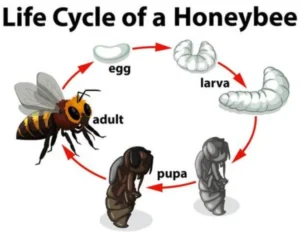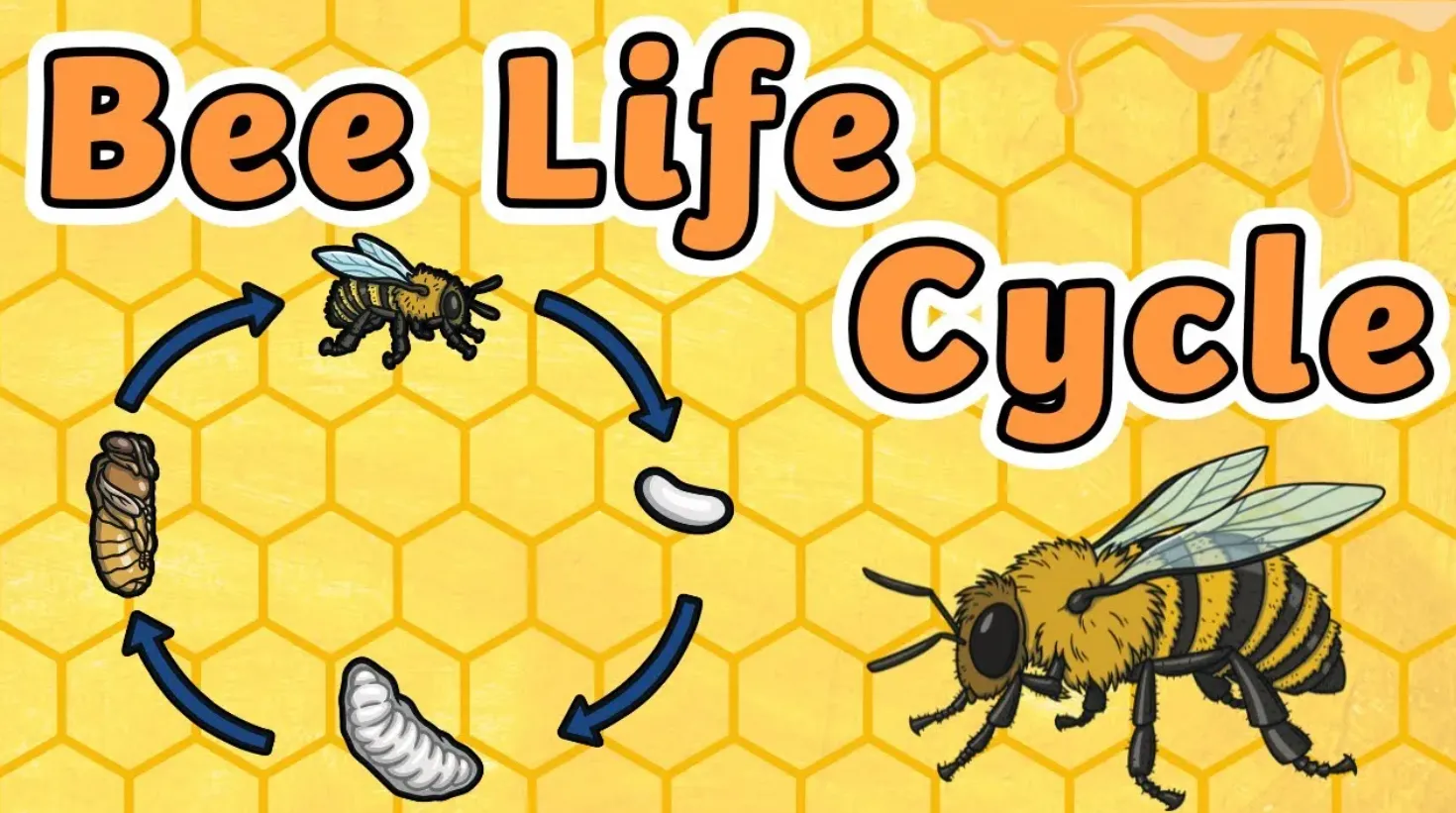
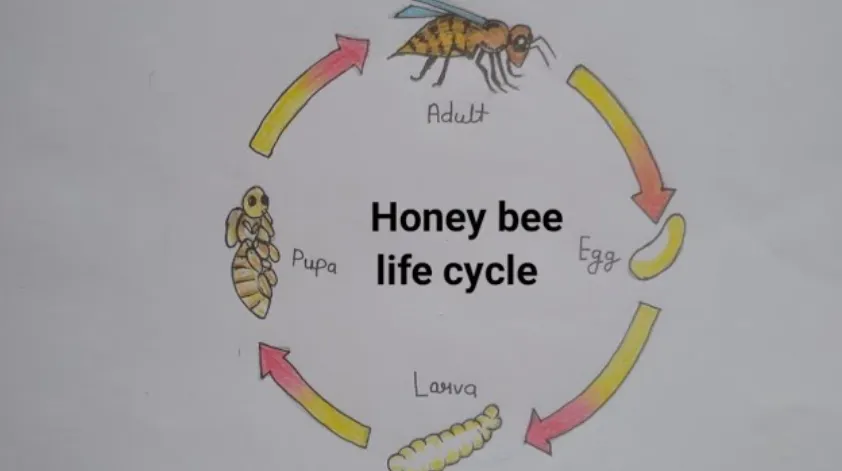
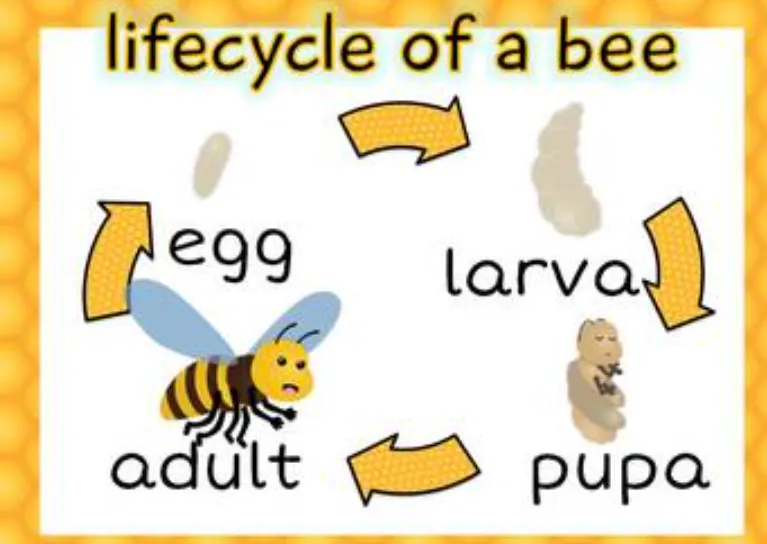
The life cycle of the honey bee is one of nature’s most organized biological systems. A honey bee does not simply grow from a baby bee into an adult. It undergoes a complete transformation called complete metamorphosis, which includes four distinct stages: egg, larva, pupa, and adult. Inside the honey bee hive, thousands of bees work together so that each new bee receives food, warmth, cleaning, protection, and the right space to develop.
The best-known species is the western honey bee, scientifically called Apis mellifera. It is widely managed by beekeepers for honey production and crop pollination. A queen usually lays one egg in a wax cell, and that egg can become a queen, worker, or drone depending on fertilization, diet, and colony needs. Queens develop in about 16 days, workers in about 21 days, and drones in about 24 days.
Honey bees are also important because they support food production through pollination. At the same time, modern colonies face serious pressure from Varroa mites, diseases, pesticides, poor nutrition, and habitat loss. The latest USDA honey bee colony report shows that Varroa mites remained the top reported colony stressor for U.S. operations with five or more colonies in surveyed quarters of 2024 and 2025.
Q: How many stages are in the honey bee life cycle?
A: There are four stages: egg, larva, pupa, and adult.
Q: How long does a worker honey bee take to develop?
A: A worker honey bee usually takes about 21 days from egg to adult emergence.
Q: What is the main difference between a bumblebee and a honeybee?
A: Honey bees usually live in long-lasting perennial colonies, while many bumblebee colonies are annual and die out after one season, except for newly mated queens.
Quick Life Cycle Table
| Honey Bee Stage | Average Time | What Happens |
| Egg | About 3 days | The queen lays a tiny white egg in a wax cell. Fertilized eggs become females, while unfertilized eggs become drones. |
| Larva | Queen: 5.5 days Worker: 6 days Drone: 6.5 days | The larva eats heavily, grows fast, and is cared for by nurse bees. |
| Pupa | Queen: 8 days Worker: 12 days Drone: 14.5 days | The larva changes into an adult bee inside a capped cell. |
| Adult Queen | Emerges around day 16 | She becomes the main egg-laying female of the colony. |
| Adult Worker | Emerges around day 21 | She cleans, feeds larvae, builds comb, guards, and later forages. |
| Adult Drone | Emerges around day 24 | His main role is to mate with a queen. |
These numbers are averages. Temperature, food availability, colony strength, and brood care can slightly change the timing.
The History of Their Scientific Naming
The scientific name of the western honey bee is Apis mellifera. This name was given by Carl Linnaeus in 1758, the scientist famous for developing the modern binomial naming system. In Latin, Apis means “bee,” while mellifera means “honey-bearing” or “honey-carrying.”
Important naming points:
Apis identifies the genus of honey bees. It separates honey bees from other bee groups such as bumble bees, carpenter bees, and solitary bees.
Mellifera describes the honey-producing nature of this species. This is why the name fits the bee’s strong connection with honey storage.
The western honey bee is the common name because this species originally became widespread across Europe, Africa, and western Asia before being transported to many other regions.
The European honey bee is also used in many countries, especially where it was introduced through beekeeping.
Today, Apis mellifera is the main honey bee species managed in modern beekeeping. It is famous not only for honey but also for its value in agriculture, pollination, genetics, behavior studies, and ecosystem research.
Their Evolution And Their Origin
The origin of honey bees is connected with the much older history of bees and flowering plants. Scientific research suggests that bees likely evolved from ancient wasp-like ancestors. These ancestors were probably predatory insects, but over millions of years, some lineages shifted toward collecting pollen and nectar from flowers.
Modern research places the early origin of bees around the Early Cretaceous period, roughly when flowering plants were becoming more diverse. One major genomic and fossil-based study concluded that bees likely originated in Western Gondwana, linked to ancient African and South American landmasses, before spreading to other parts of the world.
This evolutionary relationship is important because flowers and bees shaped each other’s survival. Flowers offered nectar and pollen as food. Bees carried pollen from flower to flower, helping plants reproduce. Over time, this partnership became one of the most important mutual relationships in nature.
The honey bee became especially successful because it developed social living. Unlike many solitary bees, honey bees live in organized colonies with a queen, thousands of workers, and seasonal drones. This social system allows them to store honey, defend the hive, regulate temperature, and survive difficult seasons.
The western honey bee later spread widely through human beekeeping. Today, it is found on most continents except Antarctica, largely because humans have managed colonies for honey production and crop pollination.
Their main food and its collection process
The main foods of honey bees are nectar, pollen, water, and small amounts of plant resins known as propolis. Each food has a different purpose inside the colony.
Nectar is the main source of carbohydrates. Forager bees collect nectar from flowers using their long tongue and store it in a special honey stomach. After returning to the hive, they pass it to the house bees. Through repeated processing and evaporation, nectar becomes honey.
Pollen is the main source of protein, fat, vitamins, and minerals. Worker bees collect pollen on their hind legs in pollen baskets. Inside the hive, pollen is mixed with nectar and bee secretions to form bee bread, which is used to feed larvae and young adult bees.
Water helps control hive temperature and humidity. Bees collect water during hot weather and spread it inside the hive. Then workers fan their wings to cool the colony.
Propolis is collected from tree buds and plant resins. Bees use it like natural glue to seal cracks, smooth hive surfaces, and improve colony hygiene.
Food collection is not random. Worker bees use communication, smell, memory, and dance behavior to share information about food sources. The waggle dance helps other bees understand the direction and distance of a useful flower source.
The food system inside a honey bee hive is deeply connected to the life cycle. Without enough pollen, larvae may suffer nutritional stress. Without enough honey, the colony may fail during winter.
Important Things That You Need To Know
The life cycle of the honey bee becomes easier to understand when you know a few important related terms. The first term is honey bee, which usually refers to social bees in the genus Apis that make and store honey. Among them, the most widely managed species is the western honey bee, or Apis mellifera.
A honey bee hive is not just a wooden box or natural cavity. It is a living system where wax comb, stored honey, pollen, eggs, larvae, pupae, workers, drones, and the queen all function together. The hive works like a superorganism because the colony survives through cooperation rather than individual strength.
The phrase “bumble bee vs. honey bee” is also important. Bumble bees are usually larger, fuzzier, and many species form seasonal colonies. Honey bees, especially managed western honey bees, form perennial colonies that can survive for more than one year when food and health conditions are good.
The keyword honey bee stamps may appear in searches because many countries have used bees on postage stamps to celebrate pollination, agriculture, biodiversity, and conservation. These stamps are not part of bee biology, but they show how deeply bees are valued in human culture.
Finally, honey bees are not the only pollinators. Wild bees, butterflies, birds, bats, flies, and beetles also support ecosystems. A healthy future depends on protecting both managed honey bees and wild pollinators.
Their life cycle and ability to survive in nature
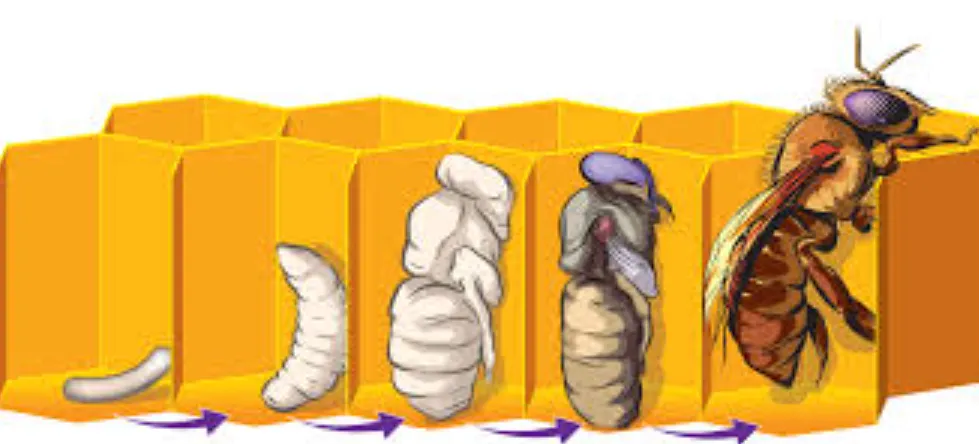
Egg stage
The life cycle begins when the queen lays one egg in a wax cell. The egg is tiny, white, and difficult to see. Fertilized eggs can become workers or queens, while unfertilized eggs become drones. The egg stage lasts about three days.
Larva stage
After hatching, the bee becomes a soft white larva. It has no legs and stays inside its cell. Nurse bees visit larvae many times and provide food. Young larvae receive jelly-like food, while worker and drone larvae later receive a mixture of pollen and nectar. Queen larvae continue receiving rich royal jelly.
Pupa stage
When the larva is fully grown, workers cap the cell with wax. Inside, the larva changes into a pupa. During this stage, the adult body forms: eyes, wings, legs, antennae, and body hair. The bee does not feed during this transformation.
Adult stage and survival
After development is complete, the adult bee chews through the wax capping and emerges. Workers begin with cleaning duties, then become nurses, builders, guards, and foragers.
Honey bees survive in nature through cooperation. They store honey, form winter clusters, regulate hive heat, and defend the colony. University extension guidance notes that honey bee colonies can survive more than one year, and workers and queens cluster in cold weather while consuming honey and producing heat.
Their Reproductive Process and raising their children
Honey bee reproduction happens at two levels: individual bee reproduction and whole-colony reproduction.
Queen egg-laying:
The queen is the main reproductive female. After mating, she stores sperm in a special organ called the spermatheca. She can then lay fertilized or unfertilized eggs, depending on the type of cell and the colony’s needs.
Fertilized eggs:
Fertilized eggs become female bees. They may become workers or queens. The difference depends mainly on larval diet, cell type, and colony conditions.
Unfertilized eggs:
Unfertilized eggs become male drones. Drones do not collect food, build comb, or care for larvae. Their main biological role is mating with virgin queens.
Raising larvae:
Worker bees act as nurses. They inspect brood cells, feed larvae, maintain the brood nest’s temperature, remove unhealthy brood, and keep the brood nest clean.
Queen production:
When a colony needs a new queen because of swarming, queen failure, or emergency replacement, workers raise larvae in special queen cells. These larvae receive richer and more continuous royal jelly.
Swarming:
Swarming is colony-level reproduction. When a colony becomes crowded, it may produce a new queen. The old queen leaves with many workers to start a new colony elsewhere. Honey bee swarming often happens in late spring and early summer.
The importance of them in this Ecosystem
Pollination and food production
Honey bees are valuable pollinators. As they move from flower to flower, collecting nectar and pollen, pollen grains stick to their bodies and transfer between flowers. This process supports fruit, seed, and crop production.
The Food and Agriculture Organization explains that bees and other pollinators help improve food production and contribute to food security and nutrition.
Biodiversity support
Pollination is not only about farms. Wild plants also depend on pollinators. When plants reproduce successfully, they provide seeds, fruits, shelter, and food for birds, mammals, insects, and soil organisms.
FAO also notes that pollination services directly connect wild ecosystems with agricultural production, and many flowering plants need animal pollination to produce seeds.
Economic value
Honey bees support honey production, beeswax, royal jelly, propolis, queen production, and crop pollination services. Beekeeping creates income for farmers, small businesses, and commercial pollination operations.
Scientific importance
The western honey bee is also important in research. Scientists study honey bees to understand social behavior, communication, learning, memory, genetics, pesticide exposure, and disease resistance.
Warning sign for environmental health
When honey bee colonies become weak, it can signal broader environmental problems, such as pesticide pressure, limited forage diversity, climate stress, disease spread, and habitat loss.
What to do to protect them in nature and save the system for the future
- Plant diverse flowering plants: Grow flowers, herbs, trees, and shrubs that bloom in different seasons so bees have food year-round.
- Avoid unnecessary pesticide use: Use pest control only when needed, and avoid spraying blooming plants where bees are actively foraging.
- Support local beekeepers: Buying local honey and bee products can help responsible beekeepers maintain healthy colonies.
- Protect wild habitats: Meadows, hedgerows, forest edges, wetlands, and roadside flowers provide important forage for honey bees and wild pollinators.
- Provide clean water: A shallow water source with stones or floating material helps bees drink safely without drowning.
- Reduce lawn-only landscapes: A perfect grass lawn may look clean, but it often provides little food for bees.
- Control Varroa mites responsibly: For managed colonies, regular monitoring and science-based mite control are essential. USDA data shows Varroa mites remain a major reported stressor in honey bee colonies.
- Protect native pollinators too: Honey bees are important, but they should not be the only focus. Bumble bees, solitary bees, butterflies, flies, and other pollinators also need protection.
- Create pollinator-friendly farms: Farmers can use cover crops, field margins, flowering strips, and integrated pest management to reduce stress on pollinators.
- Educate children and communities: Schools, gardens, and local groups can teach people why bees matter and how small actions help the future food system.
Frequently Asked Questions (FAQs)
Q1: What is the life cycle of the honey bee?
A: The life cycle of the honey bee has four stages: egg, larva, pupa, and adult. This is called complete metamorphosis.
Q2: How long does it take for a honey bee to become an adult?
A: It depends on caste. A queen takes about 16 days, a worker takes about 21 days, and a drone takes about 24 days.
Q3: What does a honey bee larva eat?
A: Young larvae receive jelly-like food from nurse bees. Worker and drone larvae later receive pollen and nectar, while queen larvae continue receiving rich royal jelly.
Q4: What is the role of the queen honey bee?
A: The queen’s main role is laying eggs. She also produces pheromones that help maintain colony organization.
Q5: What is the role of worker honey bees?
A: Worker bees clean cells, feed larvae, build wax comb, guard the hive, regulate temperature, collect food, and make honey.
Q6: What is the role of drone honey bees?
A: Drones are male bees. Their main role is mating with virgin queens. They do not collect nectar or pollen.
Q7: What is the difference between a bumblebee and a honeybee?
A: Honey bees usually live in perennial colonies and store large amounts of honey. Bumble bees are often larger and fuzzier, and many bumble bee colonies are seasonal.
Q8: Why are honey bees important to humans?
A: Honey bees help pollinate crops and wild plants. They support food production, biodiversity, honey production, and agricultural income. FAO highlights bees and other pollinators as important for food security and nutrition.
Conclusion
The life cycle of the honey bee shows how a tiny egg can become a highly specialized member of one of nature’s most organized societies. From egg to larva, pupa, and adult, every stage depends on careful care inside the honey bee hive. The queen lays eggs, nurse bees feed the young, workers protect and maintain the colony, and drones support reproduction.
Honey bees are more than honey producers. They are pollinators, ecosystem supporters, agricultural partners, and indicators of environmental health. Yet they face serious threats from parasites, diseases, pesticides, habitat loss, and nutritional stress. Protecting them requires flowers, clean habitats, responsible farming, careful beekeeping, and public awareness.
By understanding the life cycle of honey bees, we understand a larger truth: healthy bees help create healthy food systems, healthy ecosystems, and a stronger future for nature and people.
Also Read: life cycle of bed bugs