Penguins are one of nature’s most remarkable creatures, capturing our imagination with their charming waddles, tuxedo-like feathers, and remarkable ability to thrive in some of the harshest environments on Earth. These flightless birds have adapted exceptionally well to life in cold climates, particularly in the Southern Hemisphere, where they dominate the coastal regions of Antarctica, South America, and several sub-Antarctic islands.
In this comprehensive article, we will explore the fascinating life cycle of Penguins, detailing their reproductive processes, feeding habits, survival strategies, and evolutionary history. Whether you’re curious about penguin chicks, their survival instincts, or their environmental significance, this guide will provide you with everything you need to know about the world of penguins.
Quick Answers to Common Questions:
- Where do penguins live? Penguins are found mostly in the Southern Hemisphere, with the majority residing in Antarctica, although they also inhabit other areas such as South Africa, South America, New Zealand, and Australia.
- What do penguins eat? Penguins are carnivores, consuming fish, squid, and krill depending on the species and their habitat.
- How long do penguins live? The lifespan of penguins varies, but most species can live from 15 to 20 years in the wild, with some reaching up to 30 years in captivity.
Quick Life Cycle Table
| Life Stage | Duration | Key Characteristics |
| Egg Stage | 1-2 months | Eggs are incubated by parents, with the mother laying one or two eggs. |
| Chick Stage | 2-3 months | Chicks hatch and are nurtured by both parents. They rely on their parents for warmth and food. |
| Juvenile Stage | 1-3 years | Penguins begin to learn hunting techniques and how to swim. They gradually become more independent. |
| Adult Stage | 15-20 years | Penguins reach sexual maturity and enter the reproductive cycle. They mate and care for their young. |
The History of Their Scientific Naming
Penguins are part of the family Spheniscidae, a group of flightless birds adapted to life in the water. The word “penguin” is believed to come from the Welsh word pen gwyn, meaning “white head,” which likely referred to the physical appearance of some penguin species.
Penguin species are classified under different genera, with well-known examples such as the Aptenodytes (Emperor Penguin) and Pygoscelis (Adélie Penguin). The first scientific descriptions of penguins date back to the 18th century, and since then, their study has expanded to encompass their behavior, ecology, and evolutionary history.
Their Evolution and Origin
Penguins evolved approximately 60 million years ago from flying birds. Evidence suggests they originally lived in warmer climates but later adapted to colder environments. The ancestors of modern penguins were capable of flight, but as they transitioned to a life spent in water, their wings evolved into flippers, making them superb swimmers.
Penguins’ adaptation to the aquatic environment was key to their survival. Their wings, now modified for underwater propulsion, allow them to glide through the oceans at remarkable speed, and their streamlined bodies enable them to dive to great depths in search of food. Penguins also developed a thick layer of fat, or blubber, and specialized feathers to provide insulation against the freezing temperatures of their habitats.
Their Main Food and Collection Process
Penguins are opportunistic hunters, feeding primarily on fish, squid, and krill, a small crustacean. Their hunting strategies depend on the species: some penguins dive deep into the ocean to catch fish, while others hunt near the surface. Penguins use their powerful flippers to propel themselves underwater at speeds of up to 22 miles per hour, making them incredibly efficient at capturing prey.
Types of Food:
- Fish
- Squid
- Krill
Hunting Techniques:
- Penguins often dive in groups to corral fish or use individual hunting strategies tailored to their habitat.
- Some species rely on diving to great depths, while others hunt closer to the surface.
Feeding Habits:
- Penguins consume up to 2-3 kilograms of food per day, depending on their species and energy needs.
Their Life Cycle and Ability to Survive in Nature
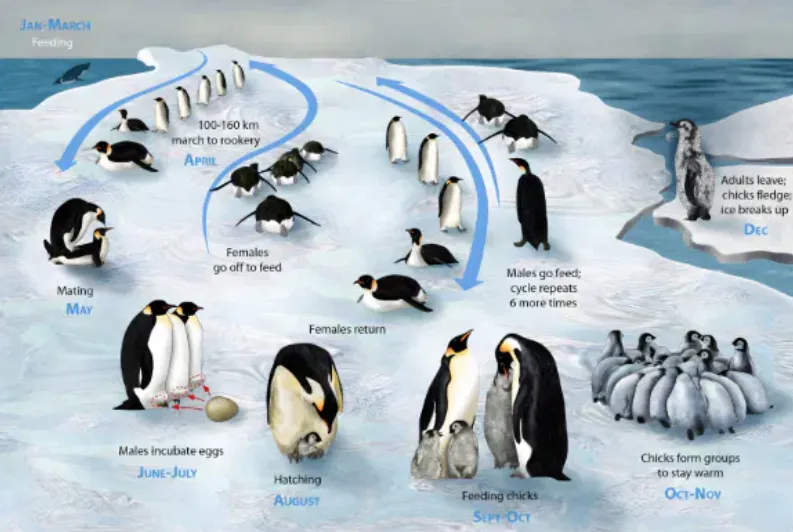
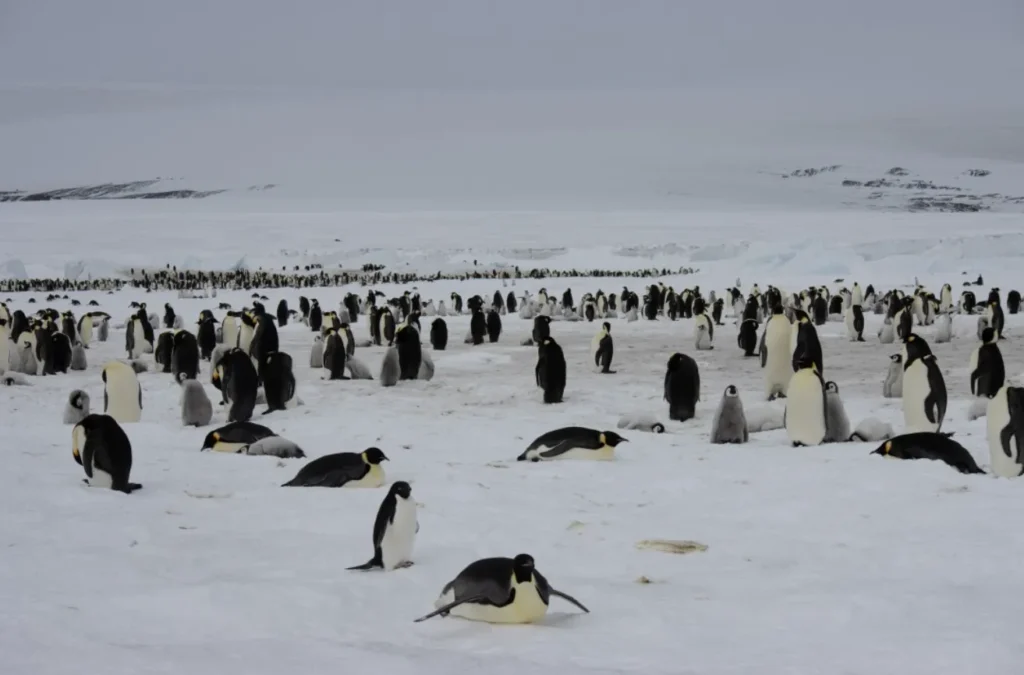
Egg to Chick: Once penguins mate, the female lays one or two eggs, which the parents incubate. In species such as the Emperor Penguin, the male incubates the egg, keeping it warm for about 2 months until it hatches.
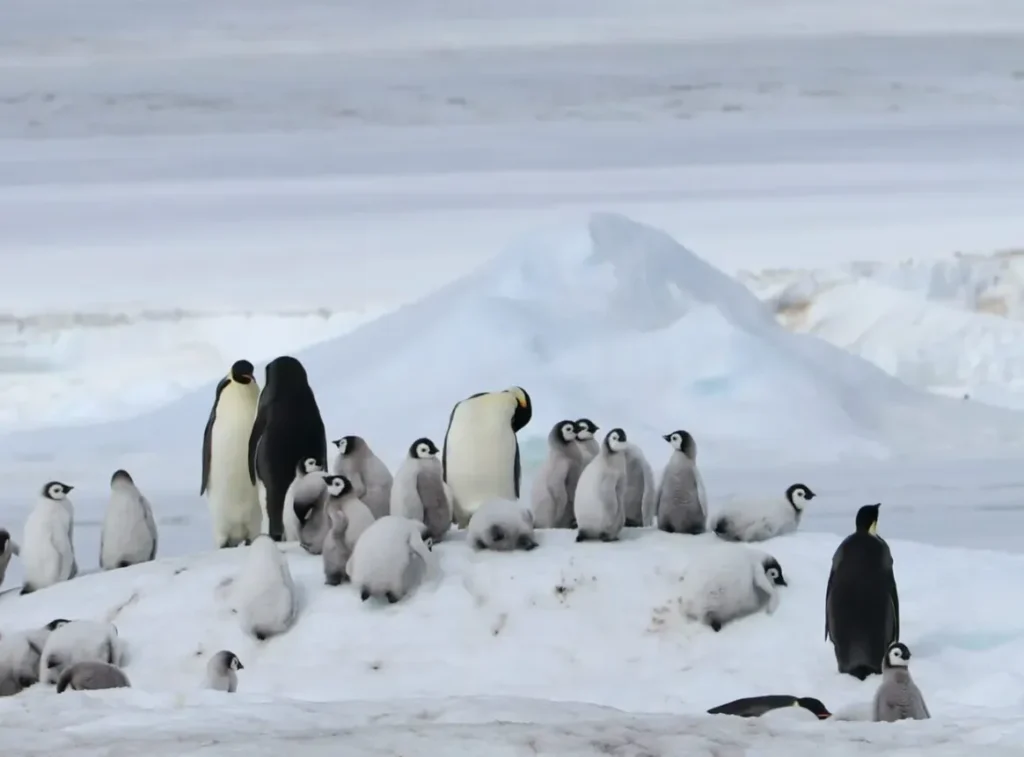
Chick to Juvenile: After hatching, penguin chicks are vulnerable and depend on their parents for food, warmth, and protection. Over the next few months, they grow rapidly, learning vital survival skills like swimming and hunting.
Survival in Nature: Penguins face numerous challenges, including harsh weather conditions, predators such as seals, and food scarcity. However, their thick layer of fat, waterproof feathers, and efficient swimming abilities enable them to survive and thrive in some of the most extreme environments on Earth.
Their Reproductive Process and Raising Their Children
Penguins have a fascinating reproductive process. After mating, the female lays one or two eggs. Both parents share the responsibility of incubating the eggs. The male Emperor Penguin, for example, takes on the incubating role while the female goes to sea to feed. Once the eggs hatch, both parents take turns feeding the chick with regurgitated food until it is strong enough to forage on its own.
- Egg Incubation: Penguins incubate their eggs for 1-2 months, providing warmth and protection for the developing chicks.
- Parental Care: After the chicks hatch, both parents provide warmth, shelter, and food, and the chicks remain dependent on them for several weeks.
Importance of Penguins in the Ecosystem
Penguins play a crucial role in their ecosystems, particularly in the marine food chain. As apex predators in their environment, they regulate fish and krill populations, which helps maintain the balance of the food web. Additionally, penguins are considered an “indicator species” because changes in their populations can signal shifts in the overall health of the marine ecosystem.
- Regulation of Fish and Krill Populations: Penguins help control the populations of small fish and crustaceans, preventing overpopulation and maintaining a healthy ecosystem.
- Indicator Species: Penguins’ responses to environmental changes, such as temperature fluctuations, can provide early warning signs of broader ecological changes.
What to Do to Protect Penguins and Save the System for the Future
To protect penguins and their habitats, it is essential to take proactive conservation measures. Here are some ways we can help:
- Support conservation programs: Donate to or volunteer with organizations focused on penguin conservation.
- Combat climate change: Reducing carbon emissions can help prevent the loss of penguin habitats, such as melting ice in Antarctica.
- Reduce ocean pollution: Minimizing plastic pollution and harmful fishing practices can help protect penguins’ food sources and habitat.
Important Things That You Need to Know About Penguins
- Penguins Are Endangered: Several penguin species are threatened by climate change, habitat loss, and overfishing. The Emperor Penguin, for example, is particularly vulnerable to the effects of global warming.
- Penguins Are Monogamous: Most penguin species form lifelong bonds with their mates, working together to care for their offspring.
- Penguins Are Superb Swimmers: Penguins can swim at impressive speeds, using their powerful flippers to chase down fish and squid.
Frequently Asked Questions (FAQs)
- How do penguins stay warm in the cold?
- Penguins have a thick layer of blubber and dense feathers that keep them insulated against freezing temperatures, making them well-adapted to the coldest climates.
- Do penguins fly?
- No, penguins are flightless birds. However, they are excellent swimmers and use their flippers to propel themselves through water.
- What is the difference between a penguin and a puffin?
- Penguins are flightless and primarily live in the Southern Hemisphere, whereas puffins can fly and are found in the Northern Hemisphere.
- How deep can penguins dive?
- Penguins can dive as deep as 500 meters, depending on the species. The Emperor Penguin holds the record for the deepest dive.
- Are penguins endangered?
- Some penguin species, such as the Emperor Penguin, are endangered due to climate change and habitat loss. Conservation efforts are vital to their survival.
- What is the average lifespan of a penguin?
- Penguins typically live between 15 and 20 years in the wild, with some species living longer in captivity.
- Do penguins live in the North Pole?
- No, penguins are found only in the Southern Hemisphere, particularly in Antarctica, though some species live in warmer climates.
- How do penguins communicate?
- Penguins communicate through vocalizations, body language, and specific calls to identify their mates, chicks, and other colony members.
Conclusion
Penguins are incredible animals that have evolved to thrive in some of the most inhospitable environments on Earth. Understanding their life cycle, their importance to the ecosystem, and the threats they face is crucial for their conservation. By supporting efforts to protect their habitats and reducing our carbon footprint, we can help ensure that these charming birds continue to thrive for generations to come.
Also Read: life cycle a mosquito